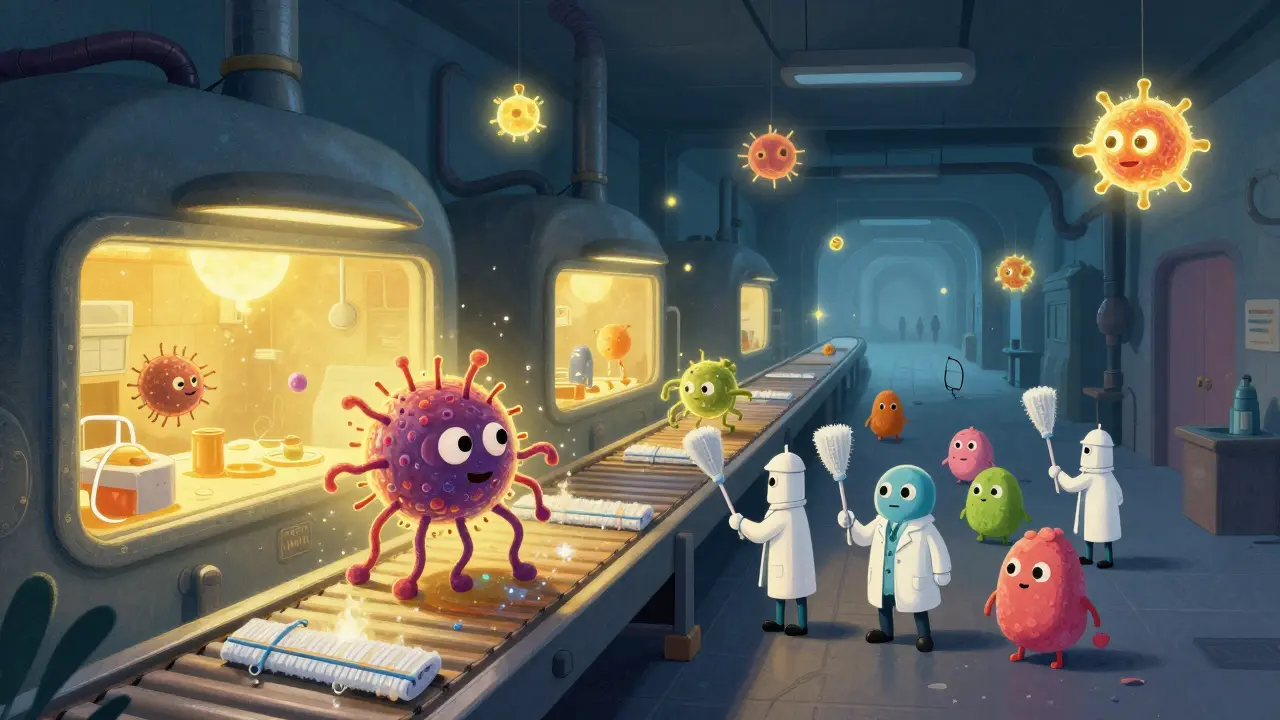
When you think about how safe your food, medicine, or cosmetics are, you might picture lab tests on the final product. But the real work happens long before that - in the air, on the floors, and on the surfaces inside the facility where it’s made. Environmental monitoring isn’t just a checklist item; it’s the frontline defense against contamination that could make people sick or ruin entire batches of products. Without it, even the cleanest-looking facility can be hiding dangerous microbes.
What Exactly Is Environmental Monitoring?
Environmental monitoring (EM) is the process of regularly testing air, surfaces, water, and equipment in manufacturing areas to find and stop contamination before it touches the product. It’s not about checking the final bottle or box - it’s about checking everything around it. The goal? Catch problems early so they never reach consumers.
Think of it like a smoke alarm for contamination. You don’t wait for the fire to spread before you act. You install the alarm, test it monthly, and fix the wiring if it beeps. Same logic applies here. The CDC calls it a basic method to sample environmental surfaces for microorganisms. The FDA and EMA treat it as a non-negotiable part of quality control, especially in pharmaceuticals, food processing, and cosmetics.
For example, if a food plant makes ready-to-eat sandwiches, a single Listeria monocytogenes bacterium on a conveyor belt can spread to thousands of products. Environmental monitoring catches that before it happens. In 2022, the USDA estimated foodborne illnesses tied to poor environmental controls cost the U.S. economy $77.7 billion. That’s not just a number - it’s hospital stays, recalls, and lost trust.
The Zone System: How Facilities Divide Risk
Not all surfaces are created equal. That’s why every serious facility uses a zone classification system to prioritize where and how often they test. It’s simple, practical, and based on real risk - not guesswork.
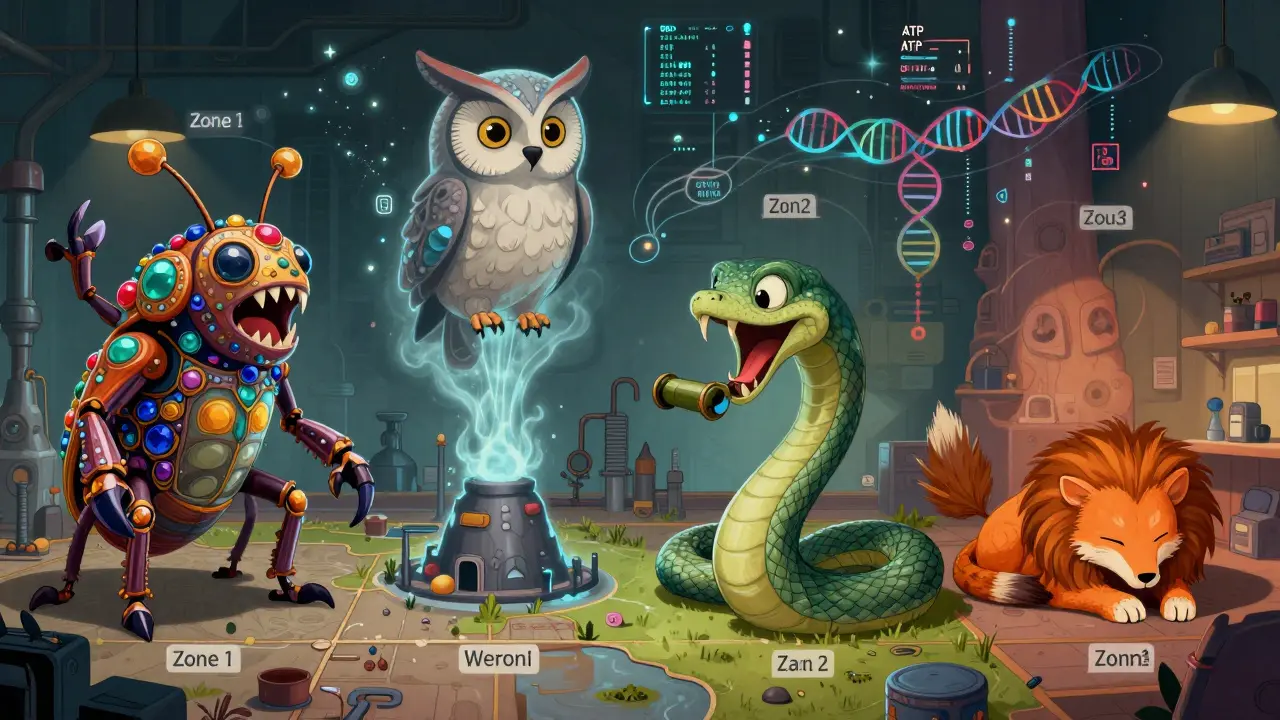
- Zone 1: Direct food or product contact surfaces - slicers, mixers, filling nozzles, packaging rollers. These are the highest risk. If something contaminates here, it goes straight into the product.
- Zone 2: Non-food contact surfaces near Zone 1 - equipment housings, refrigeration units, nearby carts. Splashes, droplets, or air currents can carry contaminants here.
- Zone 3: Areas close to processing but not directly involved - forklifts, storage racks, overhead pipes. Surprisingly, a 2013 PPD Laboratories study found floors (a Zone 3 surface) were the source of 62% of all contamination alerts.
- Zone 4: Remote areas - break rooms, hallways, offices. Low risk, but still monitored to spot trends.
Here’s the catch: One facility might treat an overhead pipe as Zone 1 because it drips condensation onto products. Another might call it Zone 3. That inconsistency is one of the biggest problems in the industry. Without clear, documented criteria for zone classification, you’re gambling with safety.
How Testing Works: Tools and Methods
Testing isn’t one-size-fits-all. Different contaminants need different tools.
- Microbial testing: Swabs and sponges collect samples from surfaces. These are sent to labs to grow bacteria like Salmonella or Listeria. Results take 24-72 hours.
- Air sampling: Liquid impingers or solid impactors pull air through devices, capturing airborne particles and microbes. Results are measured in CFU/m³ (colony-forming units per cubic meter). The CDC says these are the most practical for large-volume sampling.
- ATP testing: This isn’t a microbial test - it’s a cleanliness test. ATP (adenosine triphosphate) is found in all living cells. A handheld device gives a reading in seconds: high ATP = dirty surface. Facilities using ATP see 32% faster turnaround between production runs because they don’t wait for lab results.
- Water testing: Pharmaceutical plants test purified water for conductivity and total organic carbon (TOC) to meet USP <645> standards. Food plants check for EPA compliance on municipal water.
- Chemical and metal testing: ICP (Inductively Coupled Plasma) detects heavy metals. Chromatography (GC, HPLC) finds chemical residues.
Many facilities still treat these tests separately. But experts warn that data from ATP, microbiology, and allergen tests often don’t talk to each other. That’s a gap. If your ATP test says the floor is clean, but your microbiology test finds Listeria, you’ve got a problem - and you need to fix the system, not just the surface.
Regulations That Drive the Process
Environmental monitoring isn’t optional. It’s enforced.
In pharmaceuticals, EU GMP Annex 1 (updated August 2023) requires continuous monitoring of air particles in cleanrooms - down to ISO Class 5 (EU Grade B). That means real-time sensors, not monthly swabs. The FDA expects the same level of rigor.
Food facilities? The USDA’s Listeria Rule (9 CFR part 430) forces RTE (ready-to-eat) producers to test Zone 1 surfaces weekly for Listeria. No exceptions. The FDA’s Food Safety Modernization Act (FSMA) from 2011 made environmental monitoring a legal requirement, not a best practice.
And it’s working. In 2022, 98% of pharmaceutical manufacturers had formal EM programs. Only 76% of food processors did. The gap? Cost, training, and complexity. But regulators aren’t backing down. FDA inspections now include environmental sampling as a routine part of audits.
What Happens When It’s Done Right
Look at the numbers. A 2017 PPD Laboratories study tracked contamination events across two facilities (Wisconsin and Ireland) for three years. Out of thousands of samples, fewer than 0.01% triggered alert limits. That’s not luck - it’s discipline.
Facilities with strong EM programs report:
- 90%+ reduction in product recalls
- Faster regulatory inspections (no major findings)
- Lower employee turnover because systems are clear and trusted
- Higher customer confidence - and repeat business
One food plant in Ohio started using ATP testing alongside traditional swabs. Within six months, they cut their cleaning downtime by 40%. Why? They stopped over-cleaning. Before, they’d clean everything every shift. Now, they only clean when ATP readings show contamination. Less waste. Less labor. Better results.
Where Most Facilities Fail
It’s not about the tools. It’s about the people and the process.
According to the IDFA’s 2020 survey:
- 68% of facilities have inconsistent sampling techniques - like using different swab pressure or not sterilizing samplers.
- 42% have unclear zone definitions - one manager says a pipe is Zone 1, another says Zone 3.
- 37% can’t combine data from ATP, microbiology, and allergen tests. They’re stuck with paper logs and spreadsheets.
Training is another weak spot. The FDA recommends at least 40 hours of hands-on training before someone can take official samples. But many small facilities train staff for a few hours and send them out. That’s a ticking time bomb.
And don’t forget the hidden cost: A medium-sized food plant spends $15,000-$25,000 a year just on testing supplies and lab fees. Add two full-time staff to manage it all. That’s real money. But it’s cheaper than a recall.
The Future: AI, Real-Time Data, and Faster Results
The next wave of environmental monitoring isn’t about more tests - it’s about smarter data.
Next-generation sequencing (NGS) is already being tested by the FDA. Instead of waiting 72 hours to identify a microbe, labs can now sequence its DNA in under 24 hours. That means faster responses and fewer false alarms.
Real-time monitoring is becoming standard in pharma. Sensors now track air particles, temperature, and humidity 24/7, feeding data into dashboards. If a spike happens at 3 a.m., an alert goes out. No waiting for Monday morning reports.
AI is coming fast. MarketsandMarkets predicts AI-powered EM systems will jump from 12% adoption in 2022 to 38% by 2027. These systems don’t just collect data - they predict where contamination is likely to happen next. Think of it like weather forecasting, but for microbes.
And then there’s antimicrobial resistance. The CDC found 19% of Listeria isolates from food plants now resist multiple antibiotics. That’s not just a contamination issue - it’s a public health emergency. EM systems will need to track not just presence, but resistance patterns.
Final Thought: It’s Not About Compliance. It’s About Control.
Environmental monitoring isn’t about passing an inspection. It’s about knowing your facility inside and out. It’s about having data that tells you when something’s wrong before anyone gets sick.
Start with zones. Train your team. Use ATP for quick feedback. Link your data. Don’t just collect samples - understand them. Because in manufacturing, the quietest surfaces are often the most dangerous.
What are the most common contaminants in manufacturing environments?
The most common contaminants are microorganisms like Listeria monocytogenes, Salmonella spp., and molds. In pharmaceutical settings, endotoxins and airborne particulates are also major concerns. Chemical residues and heavy metals like lead or arsenic can appear in water or on equipment surfaces, especially in facilities handling raw materials or cleaning agents.
How often should environmental monitoring be done?
Frequency depends on the zone. Zone 1 (direct product contact) should be tested daily to weekly. Zone 2 (near-contact) is typically sampled weekly to monthly. Zone 3 and 4 (remote areas) are monitored monthly to quarterly. High-risk facilities like ready-to-eat food plants must test for Listeria in Zone 1 at least weekly under USDA regulations.
Can ATP testing replace microbial testing?
No. ATP testing measures organic residue, not specific pathogens. It’s great for verifying cleaning effectiveness in seconds, but it won’t tell you if Listeria or Salmonella is present. The best approach is to use ATP for daily checks and microbial testing for weekly or monthly validation.
Why do some facilities have more contamination alerts than others?
It’s not always about hygiene. Differences come from inconsistent zone classification, poor sampling technique, lack of staff training, or failure to integrate data from multiple tests. A 2013 study found that even across different countries, contamination rates stayed below 0.01% when protocols were followed - proving consistency matters more than location.
Is environmental monitoring only for large companies?
No. While large facilities have more resources, even small operations (<50 employees) need basic EM. The USDA found only 48% of small food processors had fully compliant programs. The good news? You can start small: focus on Zone 1, use ATP testing, and train staff on proper swabbing. Compliance isn’t about budget - it’s about system.
matthew runcie
March 19, 2026 AT 23:55shannon kozee
March 21, 2026 AT 17:55Shaun Wakashige
March 22, 2026 AT 13:17Thomas Jensen
March 23, 2026 AT 08:37trudale hampton
March 24, 2026 AT 17:16Paul Cuccurullo
March 25, 2026 AT 10:05Solomon Kindie
March 25, 2026 AT 19:49Natali Shevchenko
March 25, 2026 AT 20:40Johny Prayogi
March 27, 2026 AT 16:23