
That burning sensation rising in your chest after a heavy meal is more than just discomfort-it’s a signal that something is wrong with the valve between your stomach and esophagus. Gastroesophageal reflux disease (GERD) affects roughly 20% of adults in the U.S., turning dinner into a gamble and sleep into a struggle. While proton pump inhibitors are the go-to prescription for millions, they aren’t a permanent fix for everyone. The real solution lies in balancing medication with specific lifestyle shifts that address the root cause: a malfunctioning lower esophageal sphincter.
| Action Step | Impact on Symptoms | Timeline for Results |
|---|---|---|
| Weight loss (5-10%) | Reduces symptoms by 50% | 3-6 months |
| Stop eating 3 hours before bed | Cuts nocturnal acid exposure by 40-60% | Immediate |
| Eliminate trigger foods (coffee, alcohol) | Prevents flare-ups in 70-80% of patients | 2-4 weeks |
| PPI therapy (short-term) | Heals esophagitis in 70-90% of cases | 4-8 weeks |
Understanding the Mechanics of Acid Reflux
To manage GERD, you first need to understand what’s happening inside your body. It isn’t just "too much acid." It’s acid in the wrong place. Your lower esophageal sphincter (LES) acts as a one-way valve at the junction of your esophagus and stomach. Normally, it relaxes to let food down, then snaps shut to keep stomach contents out. In GERD, this valve stays loose or opens at the wrong times.
When the LES fails, gastric acid-which has a pH of 1.5 to 3.5-washes up into the esophagus. Unlike the stomach, the esophagus lacks a protective mucous layer. This causes inflammation, known as esophagitis. If left unchecked, chronic exposure can lead to serious complications like Barrett's esophagus, a precancerous condition affecting 10-15% of long-term GERD patients, or strictures that narrow the esophagus and make swallowing difficult.
The diagnostic standard for GERD is experiencing heartburn or regurgitation at least twice a week. But don’t ignore subtle signs. Chronic cough, hoarseness, and bad breath are reported in up to 75% of cases yet often misdiagnosed as respiratory issues. Recognizing these early signals allows for intervention before permanent damage occurs.
Lifestyle Modifications: The First Line of Defense
Medication masks symptoms, but lifestyle changes treat the mechanism. The American College of Gastroenterology recommends lifestyle modifications as initial therapy for all patients. Here is how to implement them effectively:
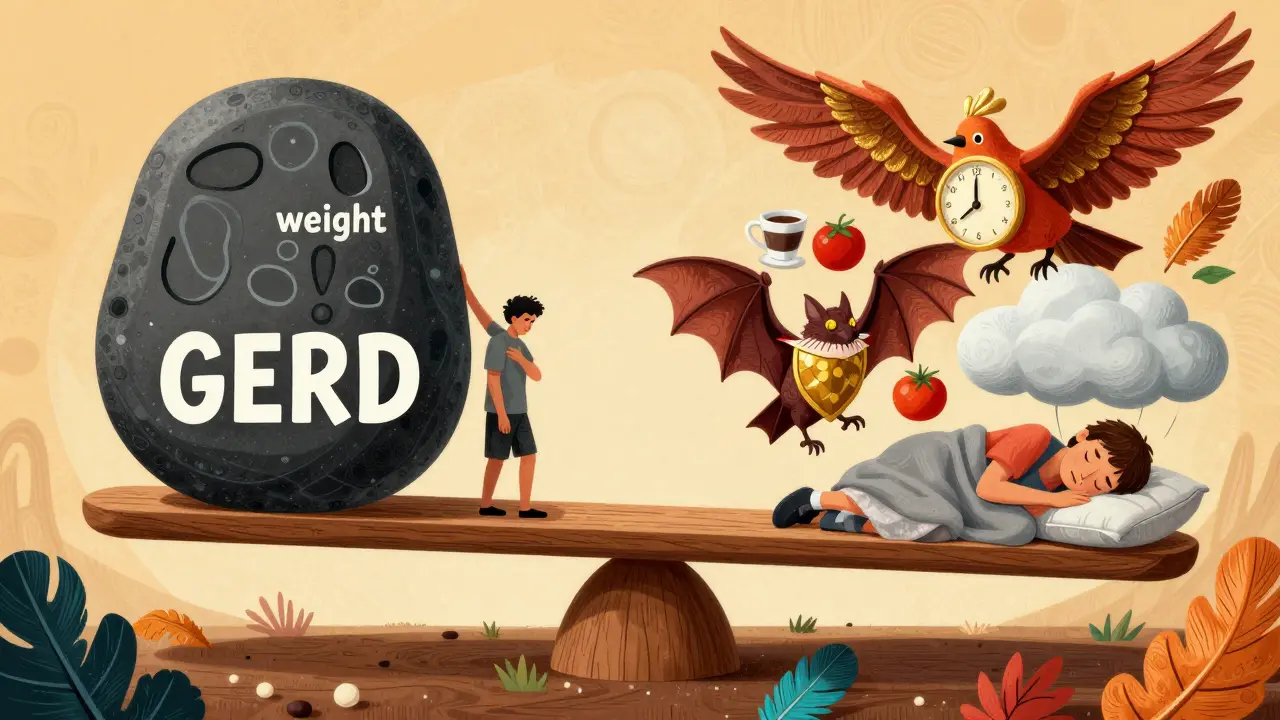
- Weight Management: Obesity increases abdominal pressure, forcing the LES open. Losing just 5-10% of your body weight can reduce symptoms by half. This isn’t about aesthetics; it’s about physics. Less pressure on the stomach means less reflux.
- Timing Matters: Gravity is your ally when upright, but your enemy when lying down. Eating within two to three hours of bedtime increases nocturnal acid exposure significantly. Aim to finish dinner by 7 PM if you sleep at 10 PM.
- Identify Triggers: Common culprits include coffee, tomatoes, alcohol, chocolate, and fatty foods. Studies show these exacerbate symptoms in 70-80% of patients. Keep a food diary for two weeks to pinpoint your personal triggers rather than guessing.
- Elevate Your Head: If nighttime symptoms persist, raise the head of your bed by 6 inches using blocks or a wedge pillow. Extra pillows under your head often worsen reflux by bending the torso, increasing abdominal pressure.
Social pressures make dietary changes hard. You might feel isolated avoiding spicy foods at dinners. Plan ahead by communicating your needs to hosts or bringing a safe dish. Consistency here yields better results than intermittent perfection.
Proton Pump Inhibitors: Potent but Powerful
When lifestyle changes aren’t enough, proton pump inhibitors (PPIs) like omeprazole, pantoprazole, and esomeprazole step in. They are the most potent class of acid-suppressing drugs, reducing acid secretion by 90-98%. They work by blocking the final step of acid production in parietal cells.
PPIs are highly effective for healing erosive esophagitis, achieving success rates of 70-90% compared to 50-60% for H2 blockers like famotidine. However, timing is critical. You must take them 30-60 minutes before your first meal of the day. Taking them with food or after meals drastically reduces their effectiveness because the drug needs active proton pumps to bind to.
Despite their efficacy, PPIs are not harmless. Long-term use (beyond one year) carries risks. The FDA has issued warnings about increased fracture risk in older adults, vitamin B12 deficiency, and magnesium depletion. A study in JAMA Internal Medicine linked prolonged PPI use to a 20-50% increased risk of enteric infections. Use PPIs at the lowest effective dose for the shortest duration necessary.
H2 Blockers vs. Antacids: Knowing Your Options
Not every case requires a PPI. For mild or intermittent symptoms, other medications may suffice:
- Antacids (Tums, Rolaids): These neutralize existing stomach acid rapidly. They provide quick relief for occasional heartburn but do not heal tissue damage or prevent future reflux. They are a band-aid, not a cure.
- H2 Receptor Blockers (Famotidine/Pepcid): These block histamine receptors to reduce acid production by 60-70%. They kick in within an hour and last 8-12 hours. They are ideal for nighttime symptoms or as a step-down therapy from PPIs.
A strategic approach involves using antacids for immediate rescue, H2 blockers for maintenance of mild symptoms, and reserving PPIs for severe cases or confirmed esophagitis. This tiered strategy minimizes long-term drug exposure.
Navigating PPI Withdrawal and Rebound
One of the biggest challenges in GERD management is stopping PPIs. About 44% of users experience rebound acid hypersecretion when discontinuing abruptly. Your stomach overcompensates for the suppressed acid, causing symptoms to flare worse than before.
To avoid this, never stop cold turkey. Taper gradually over 4-8 weeks. Switch to an H2 blocker like famotidine for a few weeks, then reduce the frequency of that medication while relying heavily on lifestyle measures. This bridging technique helps stabilize acid levels without triggering a severe rebound effect.

When to Seek Surgical Intervention
If maximum medical therapy and strict lifestyle changes fail, surgery may be the answer. Fundoplication wraps the top of the stomach around the LES to reinforce the valve. It has a 90% success rate at 10 years. Newer endoscopic options like the LINX device offer a less invasive alternative, with 85% of patients reporting symptom reduction at five years.
Surgery is typically reserved for young patients who want to avoid lifelong medication or those with large hiatal hernias. It’s a significant decision requiring thorough evaluation by a gastroenterologist.
New Developments in GERD Care
The landscape of GERD treatment is evolving. In 2023, the FDA approved Vonoprazan (Voquezna), a potassium-competitive acid blocker. It represents the first new class of acid-suppression drugs in 30 years, showing faster onset and potentially higher healing rates for erosive esophagitis compared to traditional PPIs.
Digital health tools are also gaining traction. AI-powered food diaries can predict individual triggers with high accuracy, helping patients personalize their diets beyond generic advice. These ecosystems combine monitoring, dietary guidance, and targeted medication to create a more sustainable management plan.
How long does it take for PPIs to start working?
PPIs typically begin reducing acid production within 1-4 hours, but full therapeutic effect and symptom relief may take 2-4 days of consistent daily use. Healing of esophageal inflammation usually requires 4-8 weeks of continuous therapy.
Can I stop taking PPIs suddenly?
No, stopping PPIs abruptly often leads to rebound acid hypersecretion, causing severe symptom flare-ups. It is recommended to taper off gradually over 4-8 weeks, possibly switching to an H2 blocker during the transition period.
What are the most common side effects of long-term PPI use?
Long-term PPI use (over 1 year) is associated with increased risks of vitamin B12 deficiency, magnesium depletion, bone fractures, and certain infections like Clostridium difficile. Regular reevaluation by a doctor is essential to minimize these risks.
Does losing weight really help GERD?
Yes, weight loss is one of the most effective lifestyle interventions. Losing just 5-10% of body weight can reduce GERD symptoms by 50% by decreasing abdominal pressure on the lower esophageal sphincter.
When should I see a doctor for acid reflux?
Seek medical attention if you experience heartburn more than twice a week, have difficulty swallowing, unintended weight loss, persistent vomiting, or if over-the-counter medications provide no relief. These could indicate complications like Barrett's esophagus or strictures.