
That intense, itching sensation that makes sitting through a meeting or sleeping impossible is familiar to millions of women. It’s not just an annoyance; it’s a sign that your body’s natural balance has been disrupted. Candida vaginitis, clinically known as vulvovaginal candidiasis (VVC), is a fungal infection caused by the overgrowth of Candida species, predominantly Candida albicans. While this yeast lives harmlessly in about 10-20% of asymptomatic women, certain triggers can cause it to multiply rapidly, leading to inflammation and distressing symptoms.
You are not alone in this struggle. The Centers for Disease Control and Prevention (CDC) reports that approximately 75% of women of reproductive age will experience at least one episode in their lifetime. For 40-45% of those women, it becomes a recurring issue, defined as four or more episodes annually. Understanding exactly what you are dealing with-and knowing which over-the-counter (OTC) options actually work-is the first step toward relief.
Identifying True Yeast Infection Symptoms
Mistaking another condition for a yeast infection is the most common reason OTC treatments fail. In fact, misdiagnosis occurs in 50-70% of self-treated cases. To use OTC medications effectively, you need to be sure you have VVC.
The CDC diagnostic criteria highlight specific manifestations that distinguish yeast infections from bacterial vaginosis or other forms of vaginitis. Look for these key signs:
- Vulvar Pruritus (Itching): This is the hallmark symptom, reported in 97% of cases. It is often described as an intense, burning itch on the vulva and vagina.
- Abnormal Discharge: About 45% of patients report discharge that appears thick, white, and curd-like, resembling cottage cheese. It may occasionally look yellowish or pinkish-green but typically lacks a strong odor.
- Vulvar Erythema and Edema: Physical examination often reveals redness (85% of cases) and swelling (60%) of the vulvar tissue.
- Pain and Soreness: Vaginal soreness affects 77% of patients, while pain during intercourse (dyspareunia) occurs in 45%. External dysuria (pain when urine touches irritated skin) is present in 25% of cases.
If your discharge is thin, gray, or has a strong fishy odor, you likely have bacterial vaginosis, not a yeast infection. Using antifungal creams for BV will not help and may worsen the imbalance. When in doubt, especially if this is your first time experiencing these symptoms, consult a healthcare provider before starting treatment.
Why Does This Happen? Risk Factors Explained
Your vagina naturally maintains a delicate ecosystem dominated by Lactobacillus bacteria, which keep yeast populations in check. When this balance is disturbed, Candida thrives. Several specific factors contribute to this disruption:
- Antibiotic Use: This is a major trigger, contributing to 30-50% of cases. Broad-spectrum antibiotics kill the beneficial Lactobacillus bacteria, removing the natural barrier against yeast overgrowth.
- Pregnancy: Elevated estrogen levels during pregnancy affect 20-30% of pregnant women, creating an environment where yeast flourishes.
- Uncontrolled Diabetes: High blood sugar feeds yeast. Women with an HbA1c level above 7% face a 2.3-fold increased risk of infection.
- Immunosuppression: Conditions like HIV, particularly with CD4 counts below 200 cells/μL, weaken the body’s ability to control fungal growth.
- Hormonal Changes: Postmenopausal women on hormone therapy also see elevated rates, affecting 15-20% according to American Academy of Family Physicians (AAFP) data.
Understanding your personal risk profile can help you anticipate outbreaks and take preventive measures, such as managing blood sugar levels or discussing antibiotic prophylaxis with your doctor.

Over-the-Counter Treatment Options
For uncomplicated cases-defined as sporadic, mild-to-moderate symptoms likely caused by C. albicans-OTC antifungals are highly effective. The CDC 2021 Guidelines identify three main categories of topical azole antifungals available without a prescription.
| Active Ingredient | Formulation | Dosing Regimen | Cure Rate (Uncomplicated) |
|---|---|---|---|
| Clotrimazole | 1% Cream | Twice daily for 7-14 days | ~90% |
| Clotrimazole | 2% Cream or Tablet | Once daily for 3-7 days | ~85% |
| Miconazole | 2% Cream or Suppository | Once daily for 7 days | ~85% |
| Tioconazole | 6.5% Ointment | Single dose | ~80-90% |
These products demonstrate 80-90% clinical cure rates when used correctly. Symptom relief typically begins within 24-72 hours. Interestingly, comparative efficacy data shows no statistically significant difference in cure rates between single-dose oral therapies (like fluconazole, which requires a prescription) and multi-day topical regimens for uncomplicated cases. However, OTC topicals remain the standard first-line approach for self-treatment due to accessibility and safety profiles, especially for women who cannot take oral medications.
How to Use OTC Medications Correctly
Even the best medication fails if applied incorrectly. A 2023 University of Michigan study found that 40% of first-time users apply products incorrectly, highlighting a critical gap in consumer education. Here is how to maximize effectiveness:
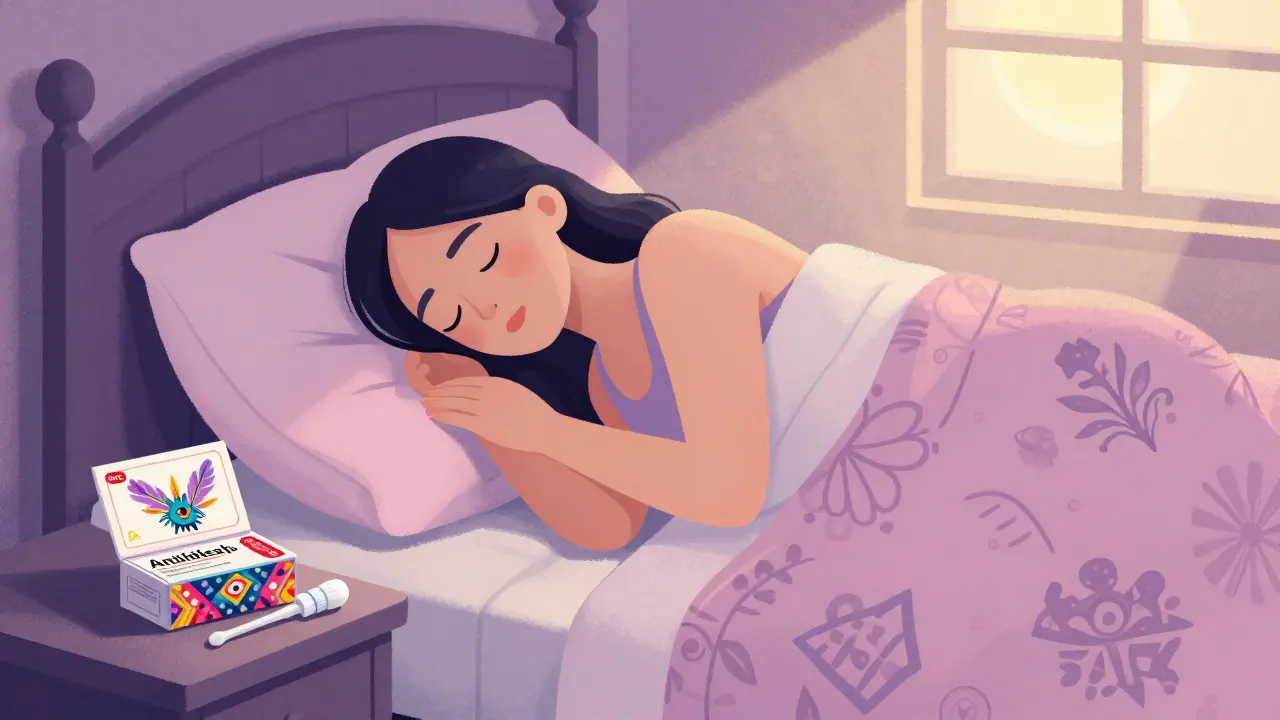
- Apply at Bedtime: The CDC specifies that topical antifungals should be applied at night. This allows gravity to help retain the medication in the vagina. An 85% success rate was linked to adherence to bedtime application in a Johns Hopkins study.
- Complete the Full Course: Only 65% of users complete the full treatment duration even if symptoms improve early. Stopping early can allow surviving yeast to rebound, leading to resistance or recurrence.
- Avoid Intercourse During Treatment: Sexual activity can reduce efficacy by 30% if not avoided during the treatment window. It can also irritate already inflamed tissues.
- Use Proper Insertion Technique: For suppositories or tablets, ensure they are inserted fully into the vagina. Improper placement is linked to 70% of treatment failures in some analyses.
User reviews consistently emphasize that timing matters. Starting treatment within 24 hours of symptom onset leads to a 79% success rate, compared to only 42% when delayed beyond 48 hours. Don’t wait for the itching to become unbearable; act quickly.
When OTC Isn't Enough: Red Flags and Next Steps
While OTC options are powerful, they are not a cure-all. You should stop self-treatment and seek medical evaluation if:
- Symptoms Persist Beyond 7 Days: If proper OTC use doesn’t resolve symptoms within a week, you may have a resistant strain or a different condition entirely.
- You Have Severe Symptoms: Extensive erythema, edema, or excoriations (fissures) indicate severe VVC, which may require longer or prescription-strength therapy.
- You Are Pregnant: Oral fluconazole is never recommended during pregnancy. Only topical azoles are safe, and a doctor should confirm the diagnosis.
- You Experience Recurrent Infections: Four or more episodes per year define recurrent VVC. This requires a different management strategy, often involving maintenance therapy prescribed by a specialist.
- Fever Occurs: Fever alongside vaginal symptoms could indicate pelvic inflammatory disease (PID), a serious condition requiring immediate medical attention.
Additionally, be aware of emerging antifungal resistance. The WHO’s 2023 Fact Sheet notes that azole resistance now affects 7-10% of C. glabrata isolates globally. Non-albicans species account for 5-10% of cases and respond poorly to standard OTC azoles, with cure rates dropping to 50-60%. If you frequently get "yeast infections" that don’t respond to Monistat or Lotrimin, ask your doctor for a culture test to identify the specific species.
Prevention and Long-Term Management
Preventing future outbreaks involves maintaining the vaginal microbiome’s health. Consider these evidence-based strategies:
- Wear Breathable Clothing: Cotton underwear and loose-fitting pants reduce moisture buildup. Seasonal patterns show a 25% higher incidence in summer months, likely due to sweating and humidity.
- Manage Blood Sugar: For diabetic women, keeping HbA1c below 7% significantly reduces risk.
- Probiotics: While evidence varies, some studies suggest that probiotics containing Lactobacillus rhamnosus and Lactobacillus reuteri may help restore microbial balance after antibiotic use.
- Avoid Irritants: Douches, scented soaps, and bubble baths disrupt the natural pH and bacterial flora, increasing susceptibility to yeast overgrowth.
The global vaginal antifungal market reflects the widespread nature of this issue, valued at $1.87 billion in 2022. With new formulations emerging, such as bioadhesive tablets designed for better retention, treatment options continue to improve. However, the foundation of successful management remains accurate diagnosis, correct usage, and knowing when to call a professional.
Can I use OTC yeast infection treatment if I am pregnant?
Yes, but with caution. Topical azole creams (like clotrimazole or miconazole) are generally considered safe during pregnancy. However, oral fluconazole is strictly contraindicated. Because misdiagnosis is common, it is crucial to see a healthcare provider to confirm the diagnosis before treating yourself, especially during your first trimester.
How long does it take for OTC yeast infection medication to work?
Most women begin to feel relief from itching and discomfort within 24 to 72 hours of starting treatment. However, you must complete the full course of medication (whether it’s 1, 3, 7, or 14 days) to ensure the infection is completely eradicated. Stopping early because symptoms improve is a leading cause of recurrence.
What is the difference between yeast infection and bacterial vaginosis?
Yeast infections are caused by fungal overgrowth (Candida) and typically present with thick, white, cottage-cheese-like discharge and intense itching. Bacterial vaginosis (BV) is caused by an imbalance of bacteria and usually presents with thin, grayish-white discharge and a strong fishy odor, with less itching. Treating BV with antifungal yeast medication will not work and may delay proper treatment.
Why do I keep getting yeast infections?
Recurrent yeast infections (four or more per year) can be caused by several factors, including uncontrolled diabetes, frequent antibiotic use, hormonal changes, or a compromised immune system. Another possibility is infection with non-albicans Candida species, which are resistant to standard OTC azole treatments. If you experience recurrent infections, consult a doctor for a culture test and potential maintenance therapy.
Is it safe to have sex while treating a yeast infection?
It is generally recommended to avoid sexual intercourse during treatment. Friction can irritate inflamed tissues, worsening pain and itching. Additionally, sexual activity can displace topical medications, reducing their efficacy by up to 30%. If you do choose to have sex, use condoms to prevent cross-contamination, though note that latex condoms can be weakened by oil-based antifungal creams.