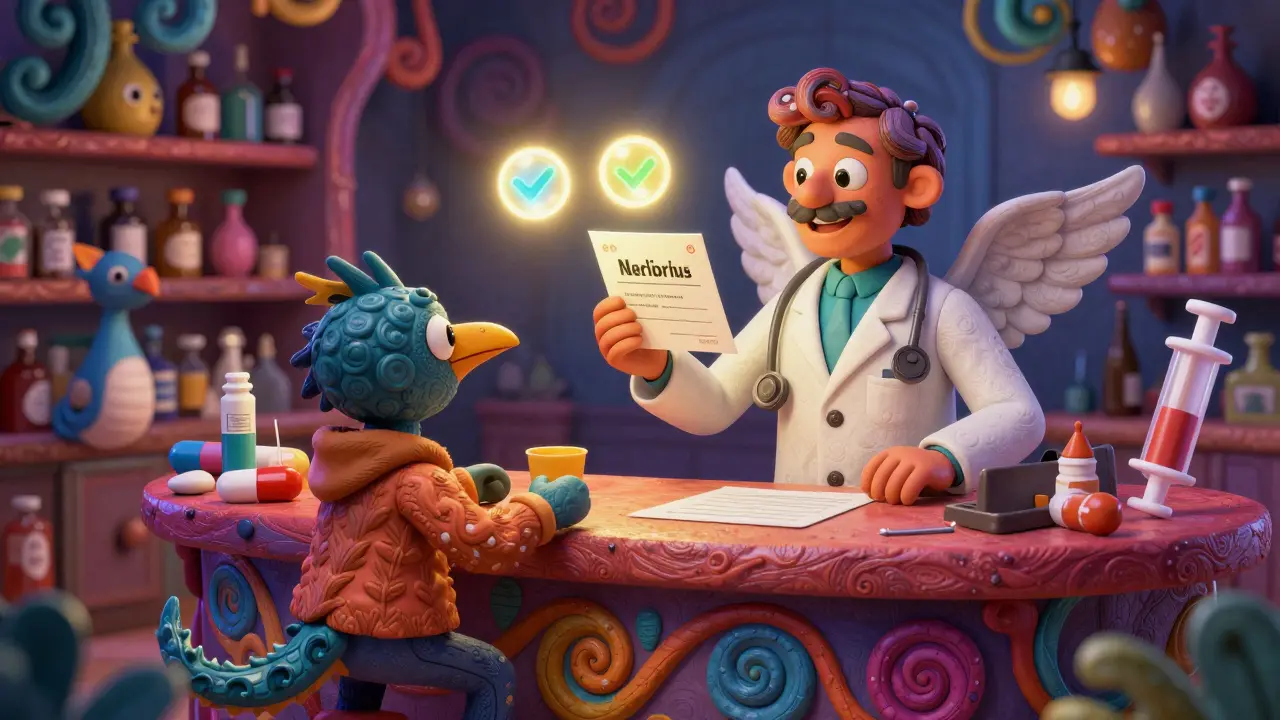
Every year, thousands of people walk into pharmacies to pick up their prescriptions - a simple act, but one that carries hidden risks. What if the medication you’re handed isn’t meant for you? It sounds impossible, but wrong-patient errors happen more often than most people realize. A patient gets someone else’s blood pressure pill, a child is given an adult’s antibiotic, or worse - someone with a severe allergy receives a drug they’re known to react to. These aren’t rare mistakes. They’re preventable ones. And they’re happening right now, at counters just like yours.
Why Wrong-Patient Errors Are So Dangerous
Wrong-patient errors aren’t just about confusion. They’re about life-or-death consequences. The Institute for Safe Medication Practices (ISMP) calls these errors one of the most dangerous types of medication mistakes because they often go unnoticed until harm is done. Imagine taking a drug meant for someone else - maybe it clashes with your own medications, triggers an allergic reaction, or doesn’t treat your condition at all. The result? Emergency room visits, hospital stays, or even death. According to the Agency for Healthcare Research and Quality, medication errors contribute to over 1.3 million emergency room visits in the U.S. each year. About 18% of those errors involve the wrong patient getting the wrong drug. And while hospitals have strict protocols, community pharmacies - where most people pick up their prescriptions - have historically relied on human memory and judgment. That’s not enough.The Two-Step Verification System That Works
The simplest, most proven way to stop wrong-patient errors is to verify identity with two pieces of information every single time. No exceptions. The standard? Full legal name and date of birth. Not just first name. Not just last name. Full name and DOB - exactly as they appear on the prescription label and in the pharmacy’s system. This isn’t a suggestion. It’s now required by the National Association of Boards of Pharmacy (NABP) in its updated Model State Pharmacy Act (2024). CVS, Walgreens, Walmart, and other major chains have enforced this since 2015-2018. But many smaller pharmacies still skip it during rush hours. Don’t. Here’s how it works in practice:- When a patient arrives, the pharmacist or technician asks: “Can I have your full name and date of birth?”
- They compare that to the name and DOB on the prescription label.
- Then they check the pharmacy’s digital record - not just glancing, but confirming.
- If anything doesn’t match, they stop. No exceptions.
Barcode Scanning: The Game-Changer
Barcode scanning isn’t just for groceries. In pharmacies, it’s a lifesaver. The system works like this:- The patient presents a photo ID or pharmacy loyalty card with a barcode.
- The technician scans it before dispensing the medication.
- The system checks if the scanned ID matches the patient record linked to the prescription.
- If it doesn’t - the system blocks the transaction.
RFID and Biometrics: What’s Next
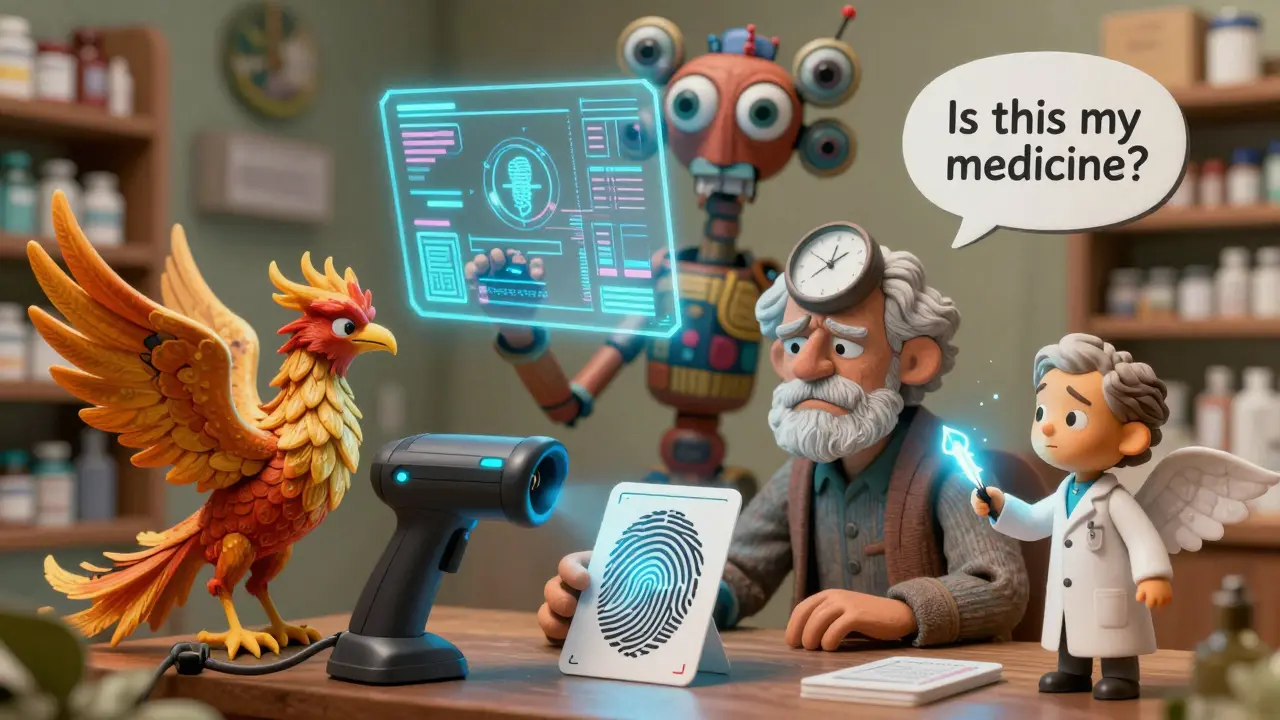
Some pharmacies are already testing the next level. RFID wristbands - like those used in hospitals - are being piloted in outpatient settings. A 2023 study showed a 78% drop in errors when patients wore RFID bands and pharmacists scanned them at pickup. Even more advanced? Biometric systems. In January 2025, Walgreens launched a fingerprint verification pilot in 500 stores. Preliminary results showed 92% accuracy in matching patients to prescriptions. But privacy concerns are real. Patients don’t want their fingerprints stored. So, the industry is working on encrypted, anonymized matching - not storing data, just verifying identity on the spot. Voice recognition and facial recognition are also in testing. Experts predict that by 2027, 70% of pharmacies will use some form of AI-assisted identification. But again - tech alone won’t fix this. It has to be part of a bigger system.The Final Safety Net: Patient Counseling
Here’s something most people don’t know: about 83% of dispensing errors are caught during the final conversation between the pharmacist and the patient. That’s right. When a pharmacist says, “This is your new diabetes pill. You take one daily with breakfast,” and the patient replies, “I don’t have diabetes,” the error is caught. Right there. Before the patient walks out. That’s why counseling isn’t optional. It’s critical. And it’s not just about explaining side effects. It’s about asking: “Is this the same medication you’ve taken before?” “Have you had this prescription before?” “Does this look right to you?” Patients who feel involved in their care are more likely to speak up. And that’s the last line of defense.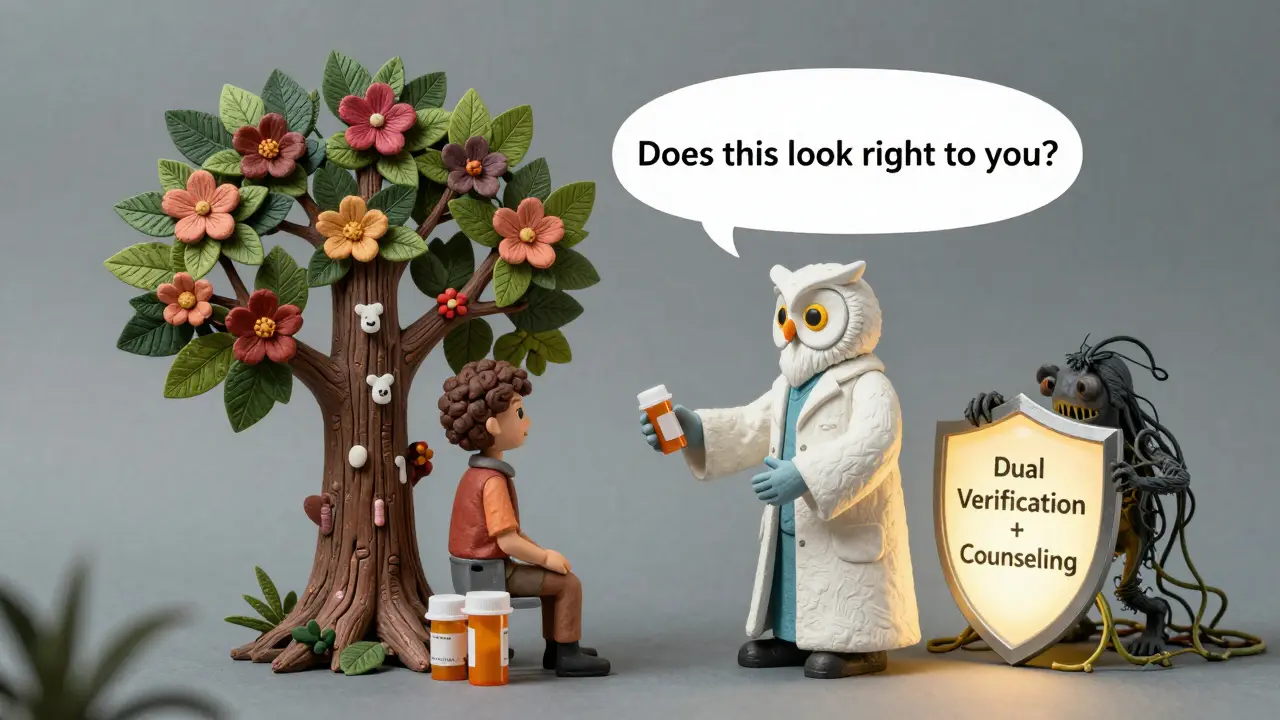
Why Some Pharmacies Still Struggle
You’d think this would be easy to fix. But it’s not. Here’s what gets in the way:- Time pressure. During lunch rush or flu season, staff rush. Verification becomes a formality. “I know this person,” they say. Bad idea.
- Patient frustration. Elderly patients or those with memory issues get annoyed when asked the same questions repeatedly. Some even refuse to answer.
- Cost. Independent pharmacies can’t always afford barcode scanners or RFID systems.
- Training gaps. Staff aren’t always trained to stop the process when something feels off.
What You Can Do - As a Pharmacist, Tech, or Patient
If you work in a pharmacy:- Make dual verification non-negotiable - every time, no exceptions.
- Advocate for barcode scanning. Show your manager the data: 63% fewer errors.
- Don’t skip counseling. Ask the patient one simple question: “Does this look right to you?”
- Report near-misses. If something almost went wrong, log it. That’s how systems improve.
- Bring your ID and know your DOB. It helps.
- Don’t be afraid to ask: “Is this my prescription?”
- Check the label. Does the name match? Does the drug match what your doctor told you?
- Speak up if something feels off. You’re not being difficult - you’re being safe.
The Bottom Line
Wrong-patient errors are not inevitable. They’re preventable. And they’re being prevented - in pharmacies that use the right tools and the right mindset. The most effective approach? Combine three things:- Dual verification (name + DOB) - mandatory, every time.
- Barcode scanning - even if you’re a small pharmacy, find a low-cost system.
- Final patient check - never skip counseling.
What are the most common causes of wrong-patient errors at pharmacies?
The most common causes include similar-sounding patient names (like "John Smith" and "Jon Smyth"), staff rushing during peak hours, skipping verification steps, patients picking up prescriptions for others without clear labeling, and outdated or mismatched records in the pharmacy system. Sound-alike names account for about 22% of errors, according to ECRI Institute.
Is asking for name and date of birth really enough to prevent errors?
It’s a necessary step - but not always sufficient on its own. Manual verification reduces errors by about 45%, but human error still happens. Combining it with barcode scanning or RFID verification increases effectiveness to 70-89%. The best practice is to use dual identifiers AND technology, plus final patient counseling.
Why do some patients get annoyed when pharmacists ask for ID?
Many patients, especially older adults, feel questioned or mistrusted. Some have memory issues and struggle to recall their date of birth. But when pharmacists explain why - “We do this to make sure you get the right medicine and avoid dangerous interactions” - patient resistance drops. Education helps. So does consistency: if every pharmacy asks the same questions, it becomes normal, not personal.
Can small independent pharmacies afford barcode scanning systems?
Yes - but it takes planning. Entry-level barcode systems start around $15,000, which is a stretch for small shops. But many states offer safety grants, and some software providers offer tiered pricing for independents. The cost of one wrong-patient error - legal fees, insurance hikes, reputation damage - can exceed $12,500. Many small pharmacies find that the investment pays for itself in under a year.
What role do patients play in preventing these errors?
Patients are the final safety check. Studies show that 83% of dispensing errors are caught when pharmacists ask patients to confirm their medication. Patients should always check the label, compare it to what their doctor told them, and speak up if something looks wrong. You’re not being difficult - you’re protecting your health.
Are there any laws requiring pharmacies to verify patient identity?
Yes. The National Association of Boards of Pharmacy (NABP) updated its Model State Pharmacy Act in 2024 to require dual patient identifiers - full name and date of birth - for all prescription dispensing. Many states have adopted this rule. Additionally, Medicare Part D plans now penalize pharmacies with error rates above 0.5%, creating financial pressure to improve safety.
Korn Deno
March 24, 2026 AT 12:11Grace Kusta Nasralla
March 25, 2026 AT 10:16Jacob Hessler
March 27, 2026 AT 05:43Aaron Sims
March 27, 2026 AT 13:50Katie Putbrese
March 28, 2026 AT 04:33Chris Farley
March 29, 2026 AT 09:35Chris Crosson
March 30, 2026 AT 12:16Donna Fogelsong
April 1, 2026 AT 03:02Amber Gray
April 2, 2026 AT 18:36Alex Arcilla
April 3, 2026 AT 00:24