
Every year, thousands of people in the U.S. end up in the hospital because they didn’t realize their medications were clashing. It’s not always a mistake - sometimes, the warning was there, but it was buried in tiny text or written in confusing language. The good news? You don’t need a pharmacy degree to understand interaction warnings on your medication guides. You just need to know where to look and what to look for.
Why Interaction Warnings Matter
Medication interactions happen when two or more drugs, supplements, or even foods affect how your body handles one of them. This can make a drug too strong - leading to dangerous side effects - or too weak, so it stops working. The drug interactions you see on your prescription label aren’t just fine print. They’re lifesaving. According to the FDA, about 6-7% of all adverse drug events are caused by interactions. That’s not rare. It’s common enough that the FDA requires every high-risk medication to come with a Medication Guide written in plain language. These guides exist because interactions cause around 7,000 deaths in the U.S. each year, mostly from preventable errors.Where to Find Interaction Warnings
Not all warnings are in the same place. Prescription drugs and over-the-counter (OTC) meds follow different rules. For prescription medications, look for the Drug Interactions section - usually labeled as Section 7 in the full prescribing information. This is where you’ll find the most detailed info: what drugs interact, how they interact, and what to do about it. For OTC medicines like pain relievers, cold meds, or sleep aids, check the Warnings section on the Drug Facts label. This is where you’ll see things like “Do not take with MAO inhibitors” or “May increase bleeding risk.” Don’t forget supplements. Many people think vitamins and herbal products are harmless. But St. John’s wort can make birth control fail. Calcium supplements can block thyroid meds. Garlic pills can thin your blood like aspirin. These are all real risks - and they’re often left out of doctor’s conversations.Understanding the Severity Levels
Not all interactions are created equal. Medication guides use clear language to tell you how serious something is:- Contraindicated - Do NOT take together. This means a dangerous or deadly reaction is likely. For example, warfarin and NSAIDs like ibuprofen are contraindicated because together they can cause severe bleeding.
- Major - Avoid if possible. If you must take them together, your doctor will monitor you closely. Example: Simvastatin and clarithromycin. Together, they can cause muscle damage so severe it leads to kidney failure.
- Moderate - Watch for side effects. You might still take both, but space them out or check your blood levels. Example: Taking sertraline and tramadol together can raise serotonin levels and cause serotonin syndrome - a rare but dangerous condition.
- Minor - Usually safe. May cause mild side effects like dizziness or upset stomach. Still worth noting, but not urgent.
How Interactions Actually Work
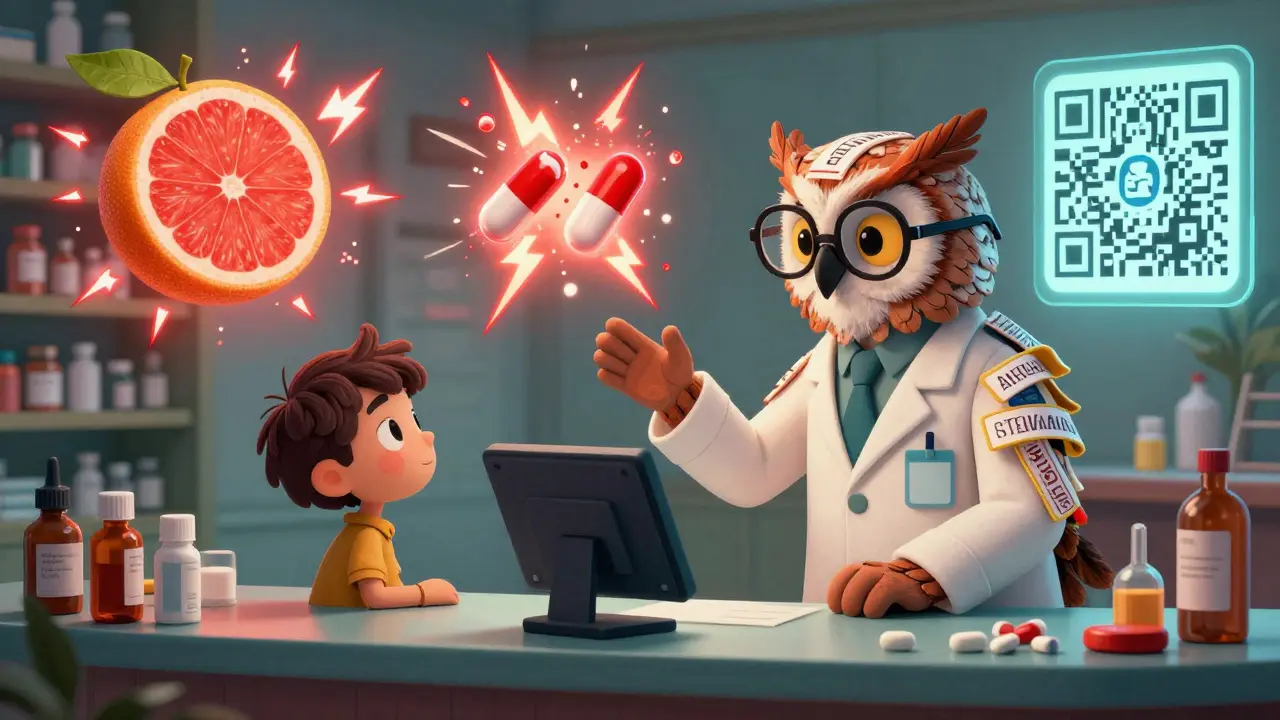
There are two main ways drugs interfere with each other:- Pharmacokinetic - One drug changes how your body absorbs, breaks down, or gets rid of another. This is the most common type. For example, grapefruit juice blocks an enzyme (CYP3A4) that breaks down over 50% of prescription drugs. One glass of grapefruit juice can make your cholesterol med, blood pressure pill, or even your anti-anxiety drug become too strong. That’s why simvastatin’s guide says “Avoid grapefruit juice completely.”
- Pharmacodynamic - Two drugs have similar effects on your body and multiply them. For example, taking two drugs that both lower blood pressure can make you dizzy or faint. Or combining two drugs that both cause drowsiness - like allergy meds and sleep aids - can leave you too sleepy to drive or operate machinery.
What Most People Miss
A 2021 FDA report found that 37% of serious drug interactions involve OTC meds or supplements - not prescriptions. People forget about them. They think, “It’s just a pill I bought at the store,” or “It’s natural, so it’s safe.” Here are the top three hidden interaction risks:- Antibiotics - Some, like clarithromycin or ciprofloxacin, can make your blood thinner, seizure med, or heart rhythm drug way more powerful.
- Herbal supplements - St. John’s wort, ginkgo biloba, garlic, and ginger can all interfere with blood thinners, antidepressants, and even cancer drugs.
- Food and drinks - Grapefruit juice is the big one. But alcohol, caffeine, and even high-sodium foods can change how your meds work. Warfarin users need to keep vitamin K intake steady - sudden changes in leafy greens can throw off their INR levels.
How to Read the Warnings Like a Pro
Here’s a simple system to follow every time you get a new prescription or refill:- Make a list - Write down every pill, patch, liquid, vitamin, herb, and supplement you take. Include dosages and times. Keep it updated. Most people take 4-5 meds daily, and that number grows with age.
- Find the guide - Open the Medication Guide that came with your bottle. If you lost it, go to the FDA’s website or ask your pharmacist for a copy. Don’t rely on random websites.
- Look for bold text - The FDA requires contraindications to be in bold. If it says “DO NOT TAKE IF...” in bold, that’s your red flag.
- Check for italics - Italics mean “Ask your doctor first.” These aren’t absolute bans, but they’re warnings you shouldn’t ignore.
- Look for bullet points - These are the specific interactions listed. Don’t skip them. For example, apixaban’s guide lists 12 drugs to avoid - including fluconazole and rifampin.
What to Do If You’re Unsure
If you see a warning you don’t understand, don’t guess. Don’t search Google and hope for the best. Go to your pharmacist. Pharmacists are trained to spot interactions. They see hundreds of prescriptions a day. They know what’s dangerous and what’s just a footnote. Ask them: “Does this interact with my other meds?” Show them your list. They’ll tell you if you need to space out doses, switch drugs, or avoid something entirely. A 2021 study found that simply spacing doses 2-4 hours apart reduced moderate interactions by 60%. That’s a simple fix - if you know to ask.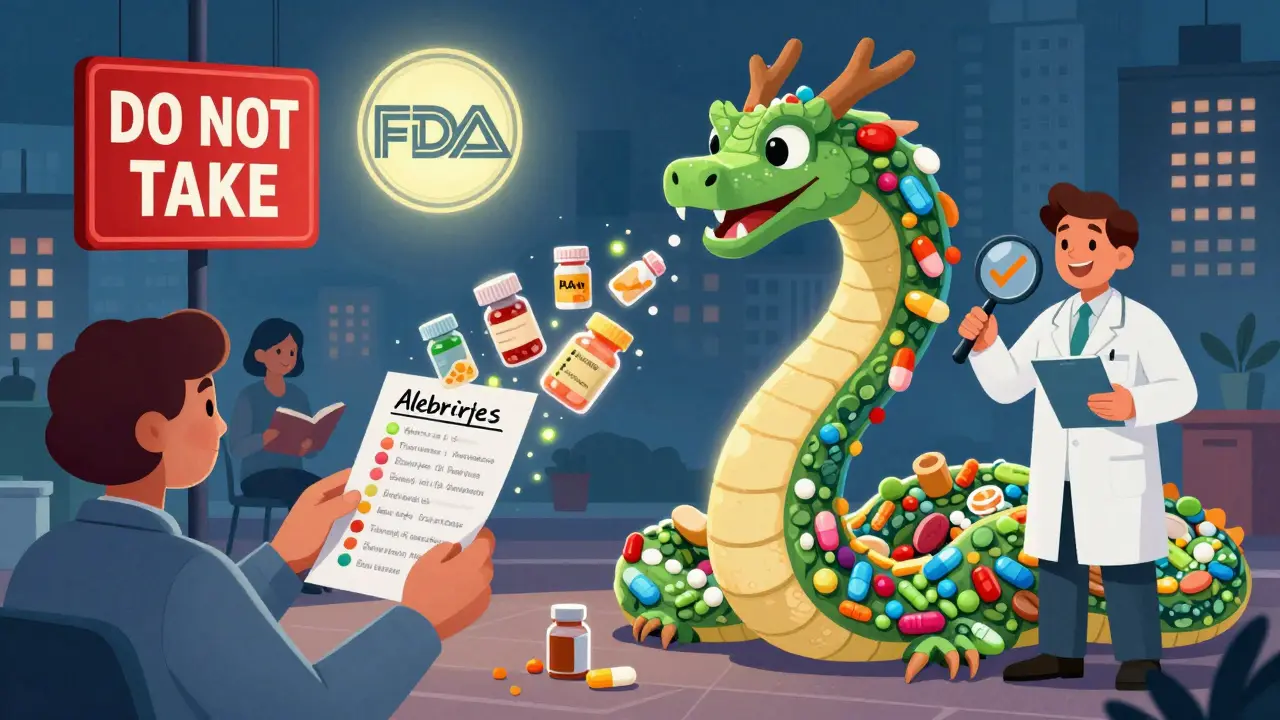
Technology Is Helping - But Don’t Rely on It Alone
Newer medication guides now include QR codes. Scan one with your phone, and you’ll get a digital version with videos, voiceovers, and interactive checkers. The FDA started requiring these on all new drugs after January 1, 2025. That’s a big step forward. But don’t assume the app or website will catch everything. Your pharmacist’s system is more complete. Your doctor’s EHR might not even know about the turmeric supplement you take daily. The best tool is still you - with a written list and the courage to ask questions.Real Stories, Real Risks
One patient on Reddit shared how she caught a dangerous interaction between sertraline and tramadol after reading both guides. She noticed both mentioned “serotonin syndrome” and called her pharmacist before taking them together. She avoided hospitalization. Another patient took warfarin and drank grapefruit juice every morning. He didn’t realize the guide meant “no grapefruit at all.” His INR jumped from 2.5 to 4.8 in 24 hours - almost a fatal bleed. He didn’t know the juice was the culprit until his doctor asked about his diet. These aren’t rare cases. They’re everyday mistakes.Your Action Plan
Here’s what to do right now:- Grab every medication bottle you take - prescriptions, OTC, supplements.
- Find the Medication Guide or Drug Facts label for each one.
- Write down every interaction warning you see, even if it seems small.
- Bring that list to your next doctor or pharmacist visit.
- Ask: “Are any of these dangerous together?”
What should I do if I see a drug interaction warning I don’t understand?
Don’t guess. Don’t search online. Call your pharmacist or ask your doctor during your next visit. Pharmacists are trained to interpret interaction warnings and can tell you whether it’s safe to take the drugs together, if you need to space them out, or if you should switch medications. Always bring a current list of everything you take - including supplements and OTC meds.
Are herbal supplements really dangerous with prescription drugs?
Yes. Many people assume natural means safe, but that’s not true. St. John’s wort can make birth control, antidepressants, and blood thinners stop working. Garlic and ginkgo can increase bleeding risk when taken with warfarin or aspirin. Even high doses of vitamin E can thin your blood. Always tell your doctor or pharmacist about every supplement you use - even if you think it’s harmless.
Can I still take grapefruit juice if my medication has an interaction warning?
No - if the warning says to avoid grapefruit juice, skip it completely. Even one glass can block the enzyme that breaks down your drug, making it 2 to 10 times stronger. This can lead to serious side effects like muscle damage, kidney failure, or dangerous drops in blood pressure. There’s no safe amount. Substitute with orange juice or water instead.
Why do some medication guides say “avoid” while others say “do not take”?
The FDA now requires standardized language: “Contraindicated” means absolutely do not take together - it’s dangerous. “Avoid” means it’s risky and should only be done under close supervision. “Use with caution” means monitor for side effects. “Minor” means it’s usually safe. If you see “do not take,” treat it like a red light. If you see “avoid,” treat it like a yellow light - talk to your doctor before proceeding.
Do I need to check interaction warnings every time I refill a prescription?
Yes. Medication guides are updated regularly - sometimes when new interactions are discovered. A drug that was safe with another last year might now carry a major warning. Always check the guide each time you get a refill, even if it’s the same medication. Also, if you start a new drug, go back and check all your others. Interactions are a team sport - adding one player changes the whole game.
evelyn wellding
January 17, 2026 AT 12:48OMG this is SO needed!! 🙌 I literally just had my pharmacist yell at me for taking ibuprofen with my blood thinner 😅 I thought it was 'just a painkiller'... now I check every label like a hawk. Thank you for making this so clear!!
Corey Sawchuk
January 18, 2026 AT 00:35Been reading these guides for years but never knew the bold vs italics thing. That’s actually useful. Also grapefruit juice is the silent killer of prescriptions. Learned that the hard way.
Rob Deneke
January 18, 2026 AT 12:17You’re right about the pharmacist thing. They’re the real MVPs. I used to just Google everything and panic. Now I walk in with my list and say 'what’s dangerous here' and they give me the real talk. No fluff. Just facts. Do this people.
Samyak Shertok
January 19, 2026 AT 18:12Oh wow so we’re supposed to read the tiny print now? How radical. Next you’ll tell us to wash our hands before eating or that the sun is hot. I mean… I guess if you’re into avoiding death
Stephen Tulloch
January 20, 2026 AT 12:47Bro the fact that you need a PhD to decode a pill bottle is insane. This isn’t medicine it’s a fucking puzzle game designed by lawyers who hate patients. And don’t even get me started on ‘natural’ supplements. I take turmeric like it’s candy and my doc still doesn’t know. 😎
Joie Cregin
January 20, 2026 AT 16:01I love how you made this feel so human. Like you actually care. I used to skip the guides because they felt like homework. Now I keep a little notebook next to my meds. I even color-code the warnings. Red = stop. Yellow = ask. Green = chill. It’s my little safety ritual now 💛
Melodie Lesesne
January 21, 2026 AT 18:19Same! I started doing this after my grandma almost went to the ER because of her fish oil and blood thinner. Now I check every single thing. Even the gummy vitamins. No joke. I’ve saved myself from at least three bad combos already.
vivek kumar
January 21, 2026 AT 21:15While the general advice is sound, the article lacks nuance regarding pharmacokinetic interactions. CYP3A4 inhibition is not binary; it's dose-dependent and varies by individual genetic polymorphism. Not all grapefruit juice has equal furanocoumarin content. Also, the term 'contraindicated' is legally defined, not clinically absolute. Context matters.
Riya Katyal
January 22, 2026 AT 00:58Wow you actually read the whole thing? I thought everyone just trusted their doctor. I mean why bother when they’re the 'expert'? 😏
waneta rozwan
January 23, 2026 AT 06:48People are still dying because they don’t read? This isn’t 2005. If you can’t read a label, maybe you shouldn’t be taking meds at all. This isn’t rocket science. It’s basic literacy. And no, ‘I didn’t know’ isn’t an excuse when your life’s on the line.
Nicholas Gabriel
January 24, 2026 AT 15:04PLEASE PLEASE PLEASE-write down EVERYTHING. I mean EVERYTHING. Even that one gummy you take for sleep. Even that herbal tea your aunt swears by. Even the turmeric latte you drink every morning. I’ve seen patients forget things like 'just a little garlic' or 'one capsule a week'-and it’s always the little things that kill.
Cheryl Griffith
January 25, 2026 AT 05:17My mom’s on seven meds. She doesn’t trust doctors anymore. So I make her read the guides with me every time she gets a refill. We sit with coffee, highlight the bold parts, and laugh at how scary it all sounds. It’s our thing now. She says she feels safer. I think that’s the real win.
swarnima singh
January 25, 2026 AT 08:46they say 'read the guide' like it's that simple... but what if you're poor? what if you can't afford to see a pharmacist? what if you're elderly and blind? what if english isn't your first language? this is all just performative wellness for people who already have privilege
Isabella Reid
January 27, 2026 AT 06:54This is beautiful. I’m from India and my mom takes ayurvedic herbs with her BP meds. I showed her this and she finally stopped mixing ashwagandha with lisinopril. We’re going to get her guide translated. This info should be everywhere.
Jody Fahrenkrug
January 28, 2026 AT 20:05I used to ignore all this until I had a panic attack from mixing melatonin and an SSRI. Didn’t even know it was a thing. Now I keep a QR code scanner on my phone. Scan. Read. Breathe. Repeat. It’s not hard. It’s just… new.