You wake up one morning and notice your eyes look puffy. Your rings feel tight on your fingers. When you go to the bathroom, your urine looks unusually foamy. These aren't just signs of a bad night's sleep or drinking too much coffee. They could be early warning signals of nephrotic syndrome, a serious kidney condition characterized by heavy protein loss in urine, low blood protein levels, swelling, and high cholesterol. It’s not a single disease but a cluster of symptoms that tell us something is wrong with the filters in your kidneys.
Understanding this condition can mean the difference between catching it early and facing long-term complications. Whether you are a parent noticing changes in your child or an adult dealing with unexplained swelling, knowing what happens inside your body helps you take control. This guide breaks down exactly what nephrotic syndrome is, why it happens, and how modern medicine treats it.
The Core Problem: Leaky Kidney Filters
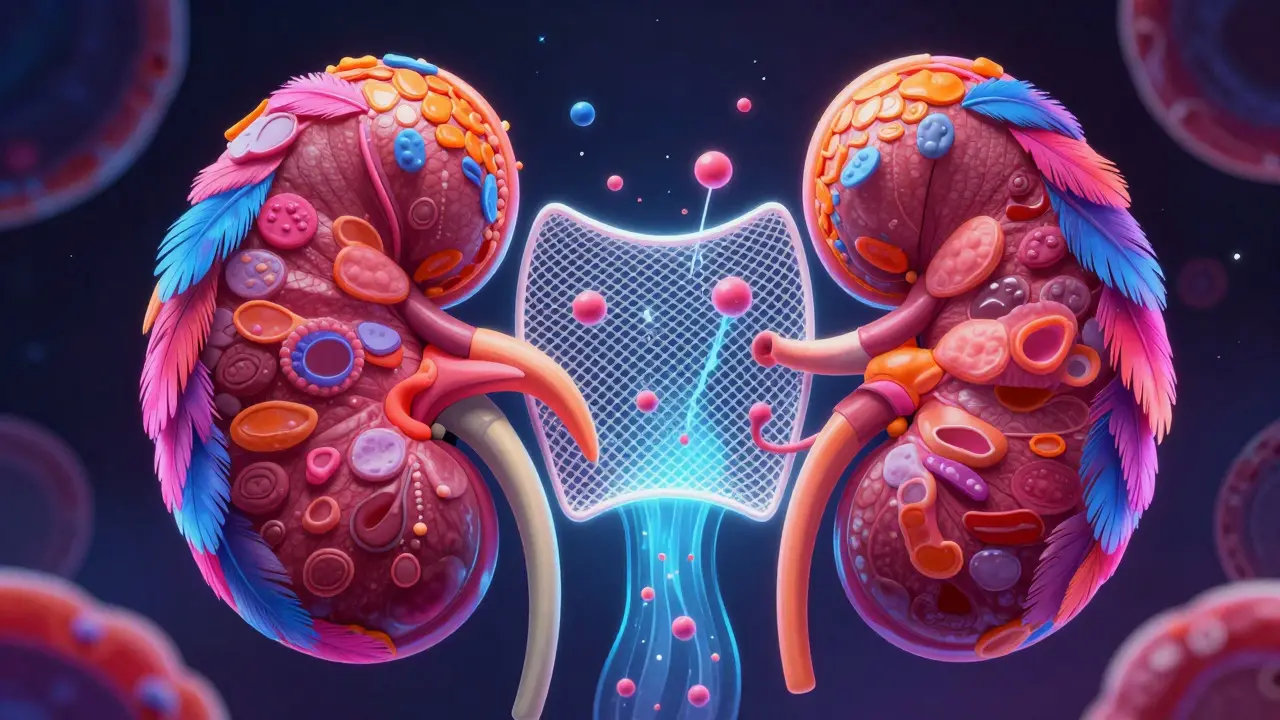
To understand nephrotic syndrome, you first need to picture how healthy kidneys work. Your kidneys act like sophisticated water treatment plants. They filter waste from your blood while keeping essential nutrients, like proteins, where they belong-in your bloodstream. The key players here are tiny structures called glomeruli, microscopic filtering units in the kidneys responsible for removing waste while retaining blood cells and proteins. Inside these glomeruli are specialized cells known as podocytes, specialized kidney cells with foot-like projections that form a critical barrier preventing protein leakage into urine. Think of podocytes as the fine mesh screens at the end of a filtration system.
In nephrotic syndrome, this mesh gets damaged. The barriers become porous, allowing large amounts of protein-specifically albumin-to slip through into your urine. This massive protein loss is called proteinuria, the presence of excessive protein in the urine, typically defined as more than 3.5 grams per day in adults. Normally, you lose only trace amounts of protein. In this condition, adults may lose over 3.5 grams in a single day. Children have different benchmarks, often losing more than 40 mg per square meter of body surface area per hour.
When so much albumin leaves your body, the balance in your blood shifts. Albumin acts like a sponge that holds water in your blood vessels. Without enough of it, fluid leaks out into your tissues, causing swelling. This creates a domino effect that defines the four main features of the syndrome:
- Heavy Proteinuria: Excessive protein in the urine (foamy appearance).
- Hypoalbuminemia: Low levels of albumin in the blood (usually below 3.0 g/dL).
- Edema: Swelling in the legs, feet, abdomen, and around the eyes.
- Hyperlipidemia: High cholesterol and triglycerides, as the liver ramps up production to compensate for lost proteins.
Who Gets Nephrotic Syndrome? Age Matters
Nephrotic syndrome doesn’t affect everyone the same way. The cause often depends heavily on age. In children, it is relatively common, affecting about 16 out of every 100,000 kids each year in the United States. The peak age is between 1 and 6 years old. In adults, it is rarer, occurring in 2 to 7 out of every 100,000 people annually.
The most common type in young children is minimal change disease, the most common cause of nephrotic syndrome in children, where kidney tissue looks normal under light microscopy but has functional defects in podocyte foot processes. Despite the name "minimal change," the impact is significant. Under a regular microscope, the kidneys look normal, but electron microscopy reveals that the podocyte foot processes have flattened out, breaking the seal. This accounts for 80-90% of childhood cases. The good news? It responds very well to treatment.
In adults, the landscape changes. Focal segmental glomerulosclerosis (FSGS), a leading cause of nephrotic syndrome in adults, characterized by scarring in parts of the kidney's filtering units becomes a major player, representing about 40% of adult cases. Other common causes include membranous nephropathy, an autoimmune disorder causing thickening of the glomerular basement membrane, a frequent cause of nephrotic syndrome in older adults (30%) and diabetic kidney disease (20-30%). Secondary causes like lupus, hepatitis B or C, and certain medications can also trigger the syndrome in both groups.
Spotting the Signs: Beyond Swelling
Swelling is the most obvious sign, but it’s not always the first thing you notice. For many adults, the first clue is actually their urine. Patients often describe it as looking like beer foam or soap suds that doesn’t flush away easily. This happens because protein changes the surface tension of the urine.
Swelling usually starts in areas with loose tissue, like around the eyes (periorbital edema), especially in the morning. As the day progresses, gravity pulls the fluid down, leading to swollen ankles, feet, and legs. In severe cases, fluid accumulates in the abdomen (ascites) or chest cavity (pleural effusion), making breathing difficult. You might also notice rapid weight gain-not from fat, but from retained water. Some patients gain 5 to 15 pounds in just a few days.
Children often present differently. Parents frequently mistake the initial puffiness around the eyes for allergies or a lack of sleep. A survey of parents found that nearly 80% experienced a delay of 7 to 10 days before getting the correct diagnosis because they assumed it was minor. If your child seems lethargic, irritable, or has swollen legs after playing outside, don’t ignore it.
| Feature | Nephrotic Syndrome | Nephritic Syndrome |
|---|---|---|
| Primary Issue | Massive protein loss | Inflammation and bleeding |
| Protein in Urine | Very High (>3.5g/day) | Mild to Moderate |
| Blood in Urine | Usually absent or microscopic | Common (visible red/brown urine) |
| Swelling (Edema) | Severe | Mild to Moderate |
| Blood Pressure | Normal or slightly high | Often significantly high |
| Cholesterol | High | Normal |

Diagnosis: What Doctors Look For
If you suspect nephrotic syndrome, your doctor will start with simple tests. A urine dipstick test can quickly detect protein. However, to confirm the diagnosis, they need to quantify exactly how much protein you are losing. This usually involves collecting all your urine for 24 hours. In children, doctors often use a spot urine sample comparing protein to creatinine levels, which is easier and just as effective for screening.
Blood tests check your albumin levels and kidney function (creatinine and eGFR). They also look at lipid profiles, as high cholesterol is a hallmark of the condition. If the protein loss is confirmed, the next big question is: why?
For children with typical minimal change disease, doctors often skip invasive procedures initially. They may start treatment based on clinical presentation alone. However, for adults, or if the child doesn’t respond to steroids, a kidney biopsy, a procedure where a small sample of kidney tissue is removed for examination to determine the exact cause of kidney disease is usually necessary. This procedure allows pathologists to see the specific pattern of damage-whether it’s FSGS, membranous nephropathy, or something else. This distinction is crucial because treatments vary wildly depending on the underlying cause.
Treatment Strategies: From Steroids to New Drugs
Treating nephrotic syndrome isn’t one-size-fits-all. The goal is to stop the protein leakage, reduce swelling, and prevent complications like blood clots or infections. Treatment depends entirely on the cause identified during diagnosis.
Corticosteroids: The First Line of Defense
For children with minimal change disease, corticosteroids, anti-inflammatory drugs like prednisone that suppress the immune system and are the primary treatment for minimal change disease (like prednisone) are highly effective. About 80-90% of children go into remission within four weeks. The dosage is high initially (60 mg/m²/day) for 4-6 weeks, followed by a slow taper over several months. Adults respond less consistently, with only 60-70% achieving remission, and they face higher rates of relapse.
Steroids work by calming the immune system, which is often mistakenly attacking the kidney filters. However, they come with side effects. Parents report increased appetite, weight gain, mood swings, and facial rounding ("moon face"). Long-term use requires monitoring for bone density loss and growth suppression in kids.
Managing Fluid and Diet
Medication alone isn’t enough. Lifestyle changes play a huge role in managing symptoms. Sodium restriction is critical. Limiting salt intake to less than 2,000 mg per day can reduce swelling by 30-50% within three days in responsive patients. You don’t need to eliminate salt entirely, but you must avoid processed foods, canned soups, and fast food.
There’s a common myth that you should eat lots of protein to replace what you’re losing. This is incorrect. Eating too much protein can actually stress the kidneys further and worsen proteinuria. The recommended intake is moderate: 0.8 to 1.0 grams of protein per kilogram of body weight per day. Focus on high-quality sources like fish, chicken, and eggs rather than red meat.
Advanced Therapies for Resistant Cases
When steroids fail or cause too many side effects, doctors turn to other immunosuppressants. Calcineurin inhibitors like tacrolimus, an immunosuppressive drug used to treat steroid-resistant nephrotic syndrome by inhibiting T-cell activation or cyclosporine are common second-line options. Biologics like rituximab, a monoclonal antibody therapy that targets B-cells, used in resistant cases of nephrotic syndrome to reduce relapses have shown promise in reducing relapse rates in children and adults with difficult-to-treat forms.
Recent advancements offer hope for chronic management. Dual endothelin/angiotensin receptor antagonists, such as sparsentan, have demonstrated significant reductions in proteinuria in clinical trials compared to traditional ACE inhibitors. These newer drugs target multiple pathways involved in kidney scarring and inflammation.

Living with Nephrotic Syndrome: Risks and Monitoring
Nephrotic syndrome increases your risk for several complications. Because you lose protective proteins in your urine, your blood becomes thicker and more prone to clotting. The risk of deep vein thrombosis or pulmonary embolism is 2 to 4 times higher than in the general population. Doctors may prescribe blood thinners if your albumin drops below 2.0 g/dL.
Infection is another major concern. The loss of antibodies in the urine weakens your immune defense. Additionally, steroids and other immunosuppressants lower your resistance to bacteria and viruses. Keep vaccinations up to date, but avoid live vaccines (like MMR or varicella) while on high-dose steroids. Wash your hands frequently and avoid crowded places during flu season.
Monitoring is lifelong for many. Even after remission, relapses can happen. Viral infections are the most common trigger. Home urine dipsticks allow you to track protein levels weekly. Remission is defined as three consecutive negative or trace readings. Relapse is flagged when you see three consecutive 2+ or 3+ readings. Catching a relapse early means you can adjust medication before swelling returns.
Prognosis: What Does the Future Hold?
The outlook varies dramatically by cause. Minimal change disease has an excellent prognosis, with 95% of children maintaining healthy kidney function for at least ten years. FSGS is more challenging, with a 50-70% chance of preserving kidney function over a decade. Membranous nephropathy falls in between at 60-80%. Diabetic nephropathy remains the hardest to manage, emphasizing the importance of strict blood sugar control.
Persistent proteinuria is the biggest predictor of poor outcomes. If you continue to lose more than 1 gram of protein per day despite treatment, your risk of progressing to end-stage kidney disease jumps significantly. This is why aggressive treatment to achieve complete remission is so vital.
Research is moving toward precision medicine. Studies like NEPTUNE are identifying molecular subtypes of kidney diseases, which may help predict who will respond to which drugs. Genetic testing is now recommended for infants and children with family histories, helping to avoid unnecessary immunosuppression in congenital cases.
Is nephrotic syndrome curable?
It depends on the underlying cause. Minimal change disease in children is often considered curable in the sense that patients can achieve long-term remission and live normal lives, though relapses may occur. Forms like FSGS or those caused by diabetes are chronic conditions that require ongoing management to slow progression rather than a permanent cure.
Why does my urine look foamy?
Foamy urine indicates high levels of protein. Protein changes the surface tension of urine, creating bubbles similar to soap suds. While occasional foam can result from dehydration or fast urination, persistent foam that doesn't disappear after flushing is a classic sign of proteinuria and should be checked by a doctor.
Can diet reverse nephrotic syndrome?
Diet cannot reverse the underlying kidney damage, but it is essential for managing symptoms. Low-sodium diets reduce swelling, and moderate protein intake prevents further kidney stress. However, medication is almost always required to stop the immune attack or structural damage causing the protein leak.
What is the difference between nephrotic and nephritic syndrome?
Nephrotic syndrome is primarily a problem of protein loss, leading to heavy proteinuria, severe swelling, and high cholesterol. Nephritic syndrome is an inflammatory condition characterized by blood in the urine, high blood pressure, and reduced kidney filtration rate. While both involve kidney damage, their symptoms and treatments differ significantly.
Are steroids safe for children with nephrotic syndrome?
Steroids are the standard first-line treatment and are generally safe when monitored. Side effects like weight gain, mood changes, and facial rounding are common but usually reversible after stopping the medication. Doctors carefully weigh the benefits of saving kidney function against these temporary side effects.
How often do relapses happen?
Relapses are common, especially in minimal change disease. About 60-70% of children experience at least one relapse, often triggered by viral infections like the cold or flu. Most children eventually outgrow the tendency to relapse, but some may require long-term maintenance therapy.
Do I need a kidney biopsy?
Not always. Children with typical symptoms of minimal change disease often start treatment without a biopsy. However, adults almost always need a biopsy to determine the specific type of kidney damage. Biopsies are also required for children who do not respond to initial steroid therapy or have unusual symptoms.