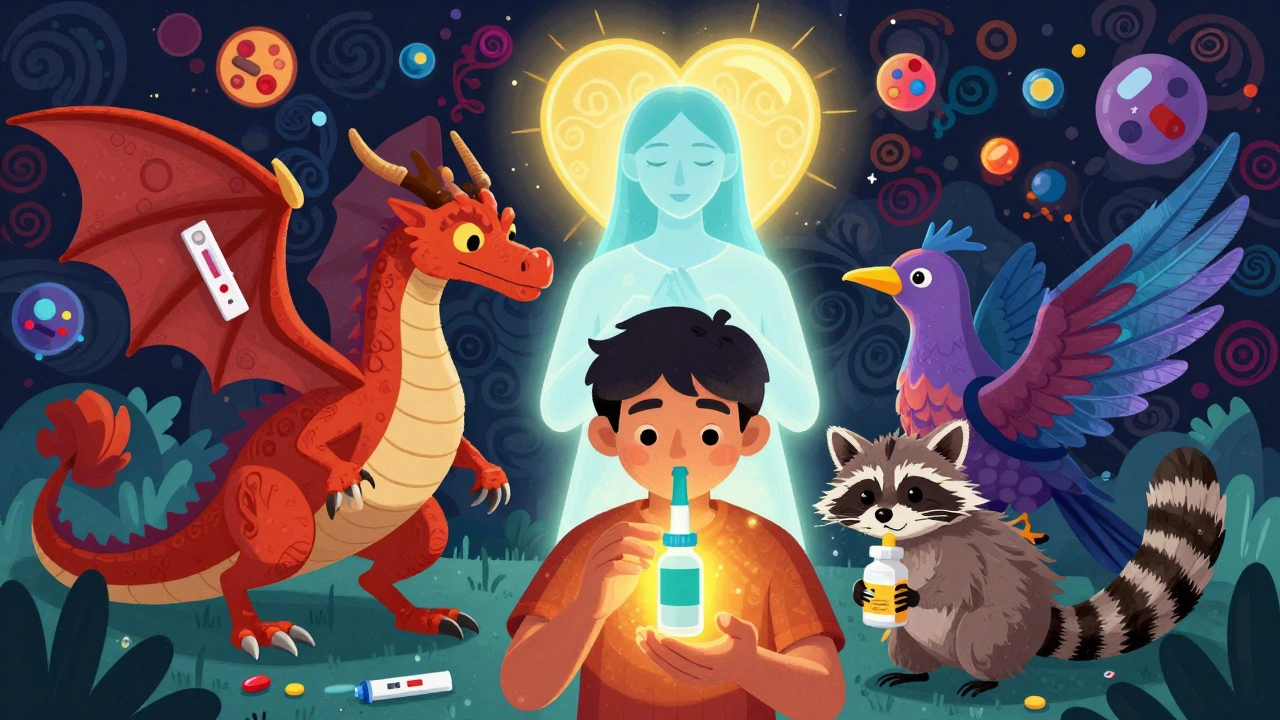
Every day, more than 175 people in the U.S. die from drug overdoses. Most of them aren’t strangers-they’re neighbors, family members, coworkers. And the majority of these deaths are preventable. The problem isn’t just drugs-it’s how we respond to them. For people with substance use disorders, overdose isn’t a failure of willpower. It’s a medical emergency that can be stopped with the right tools, knowledge, and support.
Know the Real Danger: Fentanyl and Polysubstance Use
The biggest threat today isn’t heroin or prescription pills alone. It’s fentanyl-a synthetic opioid 50 to 100 times stronger than morphine. It’s not always labeled. It’s mixed into cocaine, meth, counterfeit pills that look like oxycodone or Xanax, and even MDMA. In 2022, fentanyl was involved in about 80% of opioid-related overdose deaths. And it doesn’t take much: just two milligrams can kill someone who hasn’t built up a tolerance. Even worse, 78% of overdose deaths in 2022 involved more than one drug. People aren’t just using opioids-they’re using opioids with alcohol, benzodiazepines, or xylazine (a veterinary sedative now showing up in street drugs). Xylazine isn’t reversed by naloxone, and it can cause severe tissue damage and long-term coma. This means even if you give naloxone, you still need emergency help.Carry Naloxone-It’s Simple, Safe, and Life-Saving
Naloxone (brand names Narcan, Kloxxado) is the only medication that can reverse an opioid overdose. It works by kicking opioids off brain receptors and restoring breathing. It doesn’t work on cocaine, meth, or alcohol overdoses-but since most overdoses now involve opioids, it’s the single most important tool you can have. You don’t need a prescription. Since March 2023, Narcan has been available over the counter at pharmacies across the U.S. It comes in two forms: a nasal spray (easy to use) and an auto-injector. The nasal spray requires no training-just tilt the head back, insert the nozzle, and press the plunger. Studies show 96% of people who get a 20-minute training can successfully use it. Keep naloxone where you keep your keys or wallet. If someone you care about uses drugs, give them naloxone too. Don’t wait for an emergency. Keep two doses on hand-sometimes one isn’t enough, especially with fentanyl. And always call 911 after giving naloxone. Its effects wear off in 30 to 90 minutes, but fentanyl can stay in the body much longer. The person could overdose again.Use Fentanyl Test Strips Before Using
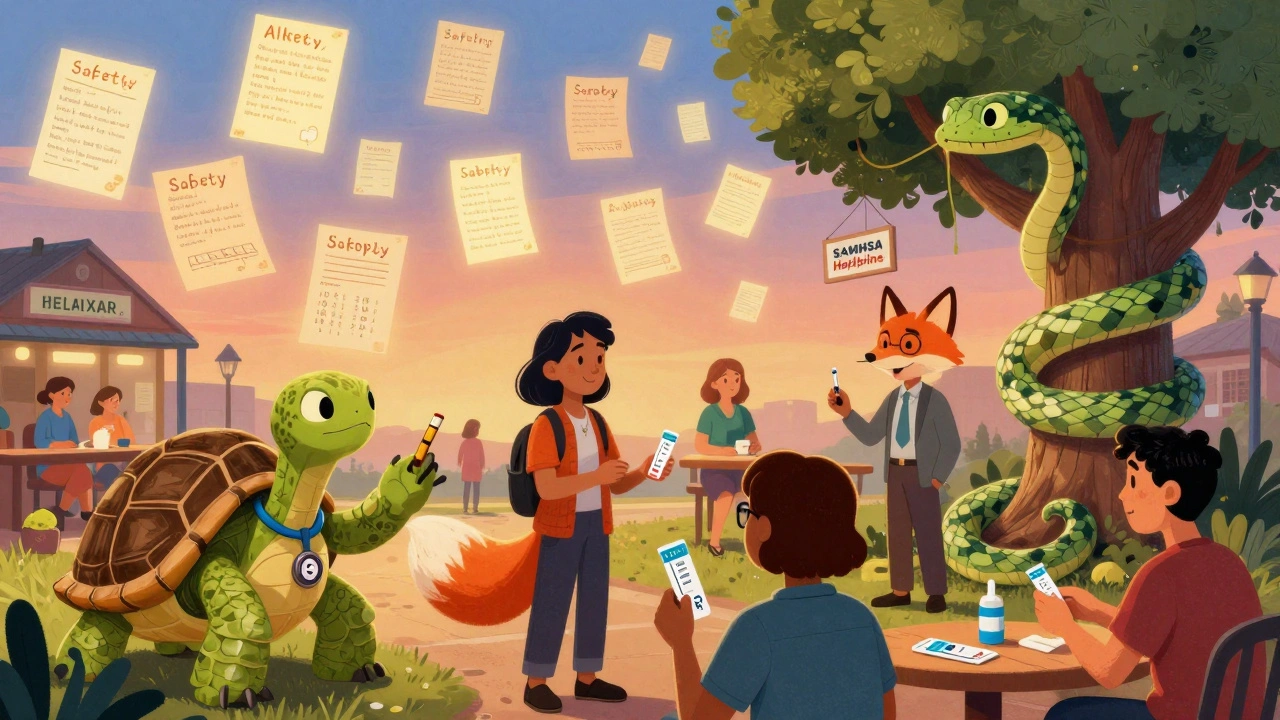
Fentanyl test strips (FTS) cost less than a dollar each. You dip them in water mixed with a tiny bit of the substance-powder, dissolved pill, or liquid-and wait 1-5 minutes. A single line means fentanyl is present. Two lines mean it’s not detected. They’re not perfect. They can miss fentanyl if it’s not evenly mixed, or if the dose is below 0.25 nanograms. But they give you information. If you know fentanyl is in the mix, you can:- Use less
- Use with someone else present
- Start with a tiny amount to test tolerance
- Choose not to use at all
Medication-Assisted Treatment (MAT) Is the Most Effective Long-Term Strategy
If someone has opioid use disorder, medication-assisted treatment (MAT) is the gold standard. It’s not replacing one drug with another. It’s stabilizing the brain so people can rebuild their lives. Three FDA-approved medications are used:- Methadone: Taken daily at a clinic. Reduces cravings and withdrawal.
- Buprenorphine: Can be prescribed by doctors in offices. Less risk of overdose than methadone.
- Naltrexone: Blocks opioids entirely. Comes as a daily pill or monthly injection.
Never Use Alone-Use the ‘Never Use Alone’ Hotline
Most overdoses happen alone. People are scared to use with others. They fear judgment, arrest, or being reported. That’s why the Never Use Alone hotline exists. You call, talk to a live operator, and use while they’re on the line. If you stop responding, they call 911 and send help to your location. In 2023, the service received about 12,000 overdose-related calls per month. They’ve saved hundreds of lives. It’s anonymous. No questions asked. You don’t need to give your real name. You just need to be willing to call before you use. If you can’t call, use a buddy system. Text someone you trust. Set a timer. Agree that if you don’t check in within 15 minutes, they call for help. Simple. Effective. Human.Build a Safety Plan-It’s Not Just for Addiction Professionals
A safety plan isn’t a treatment plan. It’s a practical list of actions you take before, during, and after using. It’s something you write down and keep on your phone or in your wallet. Here’s what a basic safety plan includes:- Who to call if something goes wrong
- Where your naloxone is kept
- Whether you’ll use alone or with someone
- What dose you plan to use (and how you’ll test it)
- What to do if you feel dizzy, slow to breathe, or unresponsive
Know the Signs of an Overdose-and Act Fast
You don’t need to be a medic to recognize an overdose. Look for:- Unresponsiveness (can’t wake them up)
- Slow, shallow, or stopped breathing
- Blue or gray lips and fingernails
- Pinpoint pupils
- Gurgling or snoring sounds
- Call 911 immediately.
- Give naloxone if you have it.
- Start rescue breathing if they’re not breathing-tilt head back, pinch nose, give one breath every 5 seconds.
- Stay with them until help arrives.
Break the Stigma-It’s Killing People
Stigma is why people hide their use. Why they avoid treatment. Why they use alone. Why they don’t carry naloxone. The truth? Addiction is a brain disease. It’s not moral failure. It’s not weakness. It’s biology. People with substance use disorders are not “junkies” or “users.” They’re people trying to cope with trauma, pain, or mental illness. When you talk about overdose prevention, you’re not just talking about drugs. You’re talking about dignity. About access. About compassion. If you know someone struggling, say this: “I care about you. I want you to be safe.” Then hand them naloxone. Or a test strip. Or a number to call.What’s Next? Policy, Funding, and Hope
The federal government is spending $1.5 billion a year on overdose prevention. That’s up from $100 million in 2016. New tools like nalmefene (a longer-acting overdose reversal drug) are coming. Apps are helping people find help faster. But gaps remain. Rural areas still lack treatment. Incarcerated people are released without any support-and face 120 times higher overdose risk in the first two weeks. Xylazine is spreading. Fentanyl is getting stronger. The solution isn’t one thing. It’s many things working together: naloxone in every home, MAT in every clinic, test strips in every community center, safe spaces for use, and zero judgment for those who need help. You don’t have to fix the system to save a life. You just have to be willing to act.Can naloxone harm someone who didn’t overdose on opioids?
No. Naloxone only works on opioid receptors. If someone hasn’t taken opioids, it has no effect. It won’t make them sick or cause side effects. It’s safe to use even if you’re unsure. Giving naloxone to someone who overdosed on fentanyl, heroin, or prescription painkillers could save their life.
Are fentanyl test strips legal?
Yes. Fentanyl test strips are legal in all 50 U.S. states and are classified as harm reduction tools, not drug paraphernalia. Many public health departments and nonprofits distribute them for free. They’re not intended to encourage drug use-they’re meant to reduce harm and save lives.
Can I get naloxone without insurance or a prescription?
Yes. Since March 2023, Narcan nasal spray is available over the counter at pharmacies like CVS, Walgreens, and Walmart without a prescription. Many community health centers, needle exchanges, and local health departments also give it out for free. You don’t need to prove you’re at risk. Just ask.
Is MAT just trading one addiction for another?
No. Medication-assisted treatment helps restore normal brain function. People on methadone or buprenorphine can work, parent, go to school, and live stable lives. Unlike street drugs, these medications are dosed safely and monitored. Studies show people on MAT are far more likely to stay in treatment, avoid overdose, and reduce illegal drug use. It’s not substitution-it’s recovery.
What if I’m afraid to call 911 during an overdose?
Most states have Good Samaritan laws that protect people who call for help during an overdose. You won’t be arrested for possession if you’re calling for yourself or someone else. Emergency responders are there to save lives, not punish. Calling 911 is the most important step you can take. Delaying it can be fatal.
Larry Lieberman
December 10, 2025 AT 07:24Lisa Whitesel
December 10, 2025 AT 12:08Sabrina Thurn
December 10, 2025 AT 22:39iswarya bala
December 12, 2025 AT 07:18Simran Chettiar
December 12, 2025 AT 13:24Anna Roh
December 13, 2025 AT 12:16om guru
December 15, 2025 AT 11:30Richard Eite
December 17, 2025 AT 06:07Philippa Barraclough
December 18, 2025 AT 01:04Olivia Portier
December 18, 2025 AT 03:31Tiffany Sowby
December 19, 2025 AT 16:33Asset Finance Komrade
December 20, 2025 AT 21:47Jennifer Blandford
December 21, 2025 AT 00:20