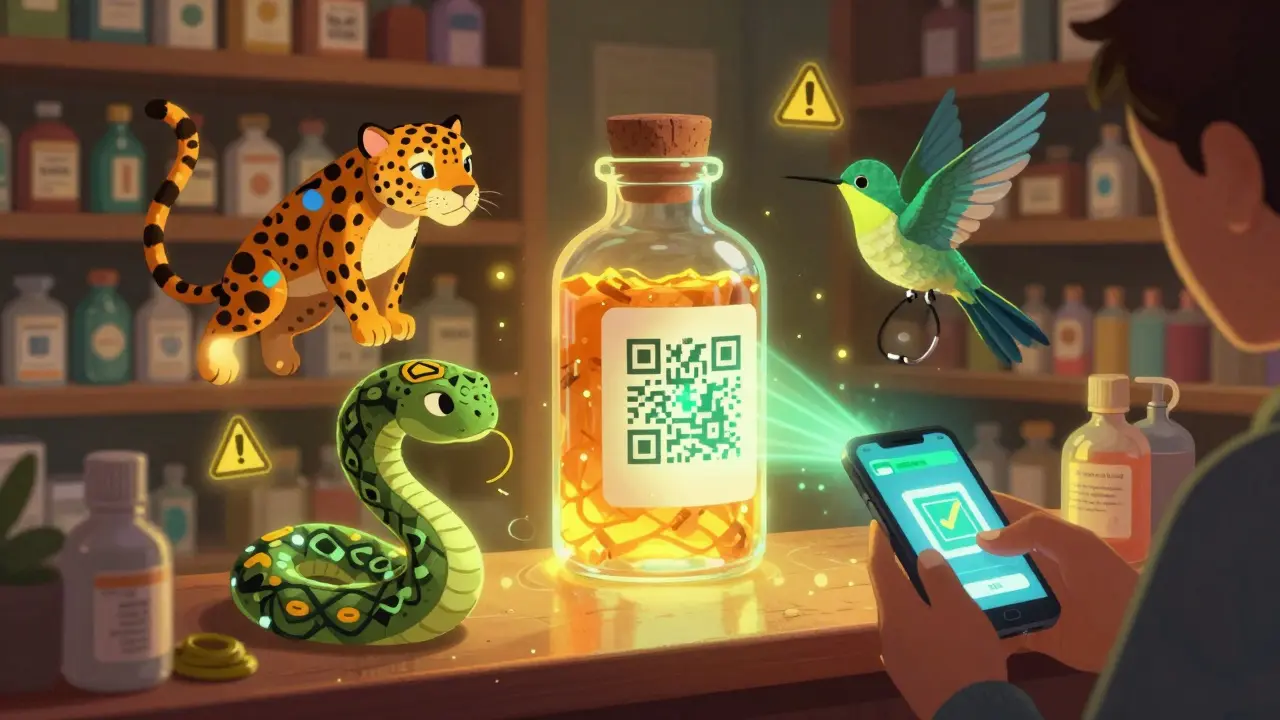
Drug Safety Update Time Calculator
Compare how long it takes to update critical drug safety information using traditional labels versus QR code-linked digital systems.
Imagine you’re at the pharmacy, holding a bottle of your new prescription. The label looks the same as always - small print, faded ink, maybe a few smudges. But this time, there’s a QR code in the corner. You scan it with your phone. In seconds, you’re looking at the latest safety warning from the manufacturer - updated just yesterday. A black box alert about a rare liver risk? It’s right there. A change in dosage instructions? Clear. A recall notice? Already flagged. This isn’t science fiction. It’s happening now.
Why Static Labels Are No Longer Enough
For decades, drug labels have been printed in stone. Once a bottle leaves the factory, the information on it doesn’t change - even if new safety data emerges weeks later. That’s a problem. In the last decade, global regulators issued over 225 black box warnings - the highest level of safety alert for prescription drugs. Each one meant reprinting millions of labels, rerouting shipments, and delaying updates by months. By the time patients saw the change, the risk had already spread. Take a common blood thinner. A 2023 study found that 17% of patients were on outdated dosage instructions because the printed leaflet hadn’t been updated since 2020. In emergency rooms, that delay can be deadly. Paramedics don’t have time to call the pharmacy. Nurses can’t flip through outdated manuals. That’s where QR codes step in.How QR Codes Are Changing Drug Safety
QR codes on drug labels connect directly to a secure, cloud-based database maintained by the manufacturer. Unlike static print, these are dynamic - meaning the content updates in real time without touching the physical label. When a new safety alert is approved by regulators, the content behind the QR code changes within hours. No reprinting. No delays. No confusion. This system works because it’s built on three key pillars:- Real-time updates: Safety information is pushed to the cloud as soon as it’s approved. Patients and providers see the latest version the moment they scan.
- Audit trails: Every scan is logged. Who accessed the information? When? This helps track compliance and investigate adverse events.
- Integration: The same data can feed into electronic health records (EHRs) and pharmacy systems. If your doctor uses a digital chart, the updated warnings may appear right in their notes.
Who’s Using It - And Where
Spain led the way in 2021, becoming the first country to formally allow QR codes linking to official prescribing information. The UK followed in 2024, updating its ABPI Code of Practice to permit their use in promotional materials and patient leaflets. The U.S. military began using them on prescriptions in 2022, replacing printed inserts entirely in VA hospitals. In Europe, adoption is growing fast. The European Federation of Pharmaceutical Industries and Associations (EFPIA) has set standards for QR code placement, size, and security. Companies like DosePacker and sQR.me are now building the backend systems that make this possible - hosting content, managing versions, and ensuring encryption. But adoption isn’t uniform. In rural areas of India or sub-Saharan Africa, smartphone access and internet reliability remain barriers. In the U.S., older adults in low-income neighborhoods still struggle with tech access. That’s why experts stress: QR codes must complement printed labels, not replace them.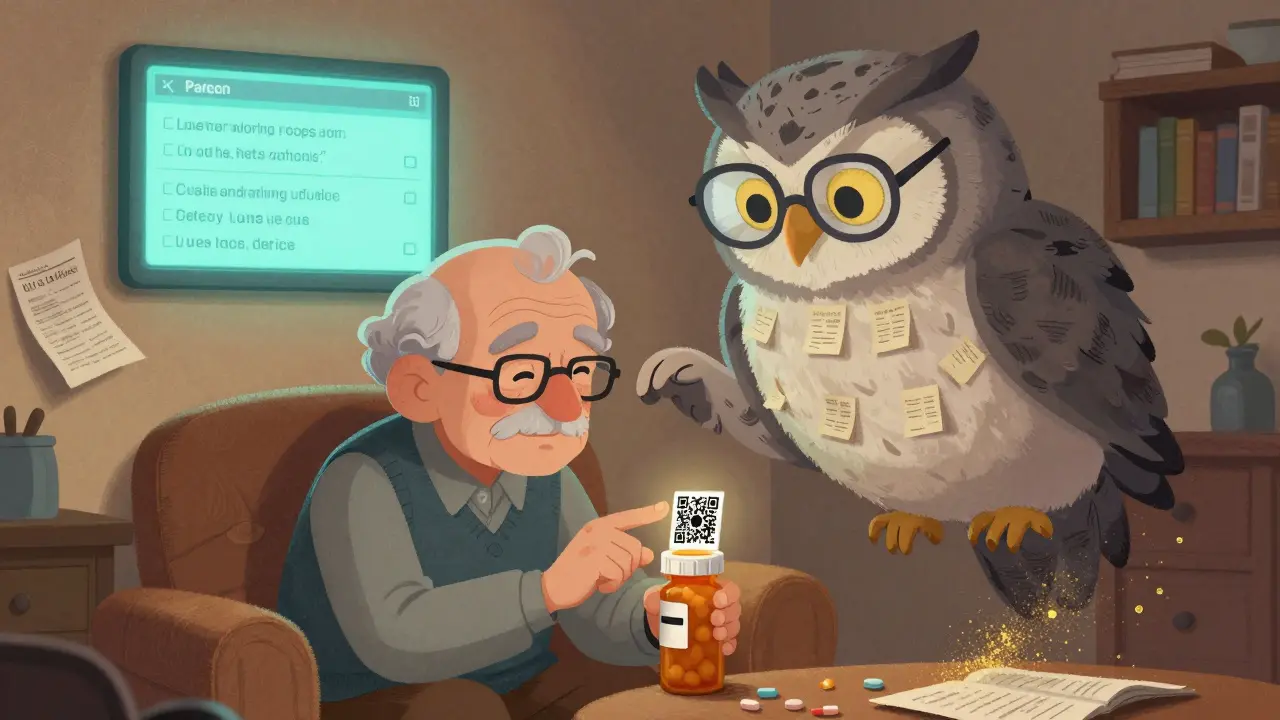
What’s on the Other Side of the Scan?
When you scan a QR code on a drug label, you’re not just getting a PDF. You’re accessing a rich, interactive experience:- Updated Summary of Product Characteristics (SmPC) in your language
- Step-by-step instructions for taking the medication
- Interactive warnings: “Do not mix with alcohol” - with a video showing why
- Direct links to report side effects
- Lot number and expiration verification - helping fight counterfeit drugs
The Hidden Cost: Digital Equity
It’s tempting to celebrate this tech as a win. But there’s a darker side. In 2023, a study of three rural clinics in Alabama found that 60% of patients over 65 couldn’t scan the QR code - not because they didn’t want to, but because their phones were too old, their data plans too weak, or their eyes too tired to focus on the tiny code. This isn’t just inconvenient. It’s dangerous. If only digitally connected patients get the latest safety info, we’re creating a two-tier system: those who can scan, and those who can’t. Regulatory bodies know this. That’s why the ABPI and EFPIA both require printed information to remain available alongside QR codes. No one should be left behind.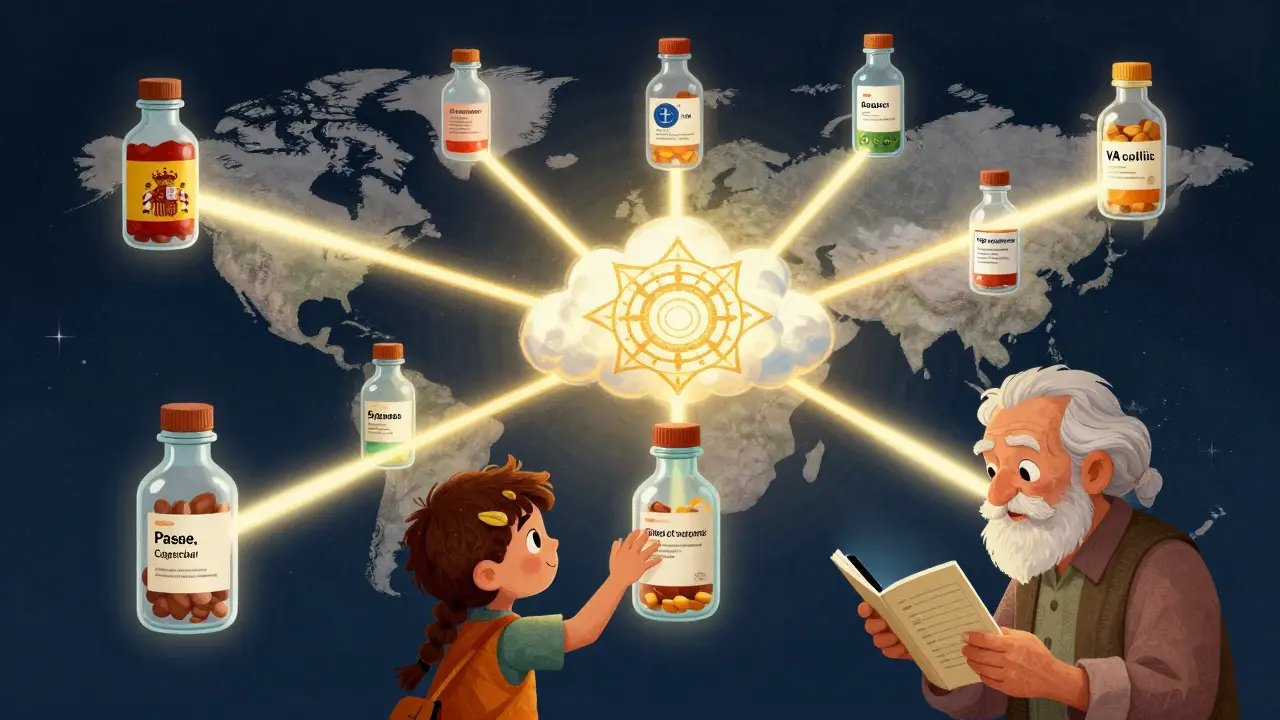
What’s Next? AI, Global Systems, and the Future
The next leap isn’t just about scanning a code. It’s about connecting that scan to your health journey. By 2025, we’ll see QR codes linked to apps like MyDoses - where your medication schedule, refill alerts, and side effect logs sync automatically. If you report nausea after taking a drug, the system might flag it to the manufacturer within minutes. AI could then analyze thousands of similar reports to detect patterns faster than traditional pharmacovigilance systems. Regulators are also moving toward global standards. Imagine a single QR code on a drug sold in Germany, Canada, and Japan - all pointing to the same multilingual, updated database. No more country-specific leaflets. No more delays. Just one source of truth. The goal? Cut the time it takes to update safety info from 6-12 months to under 90 days. That’s not just efficiency. It’s lifesaving.What Patients and Providers Should Do Now
If you’re a patient:- Always scan the QR code - even if you’ve taken the drug before. Updates happen.
- If you can’t scan, ask your pharmacist to show you the digital version on their tablet.
- Don’t rely on old leaflets. Printouts can be years out of date.
- Keep printed leaflets on hand - they’re still required by law.
- Use the QR code content to educate patients. It’s clearer, more current, and easier to explain.
- Report any scanning issues. Tech fails. Your feedback helps fix it.
Final Thoughts
QR codes on drug labels aren’t a gimmick. They’re a necessary upgrade - one that finally matches the speed of modern medicine. We no longer live in a world where safety updates take months to reach the people who need them. The technology exists. The regulatory framework is in place. The question isn’t whether this will become standard - it’s how fast we’ll make sure everyone can use it.Medication safety shouldn’t depend on your phone model, your income, or where you live. But right now, it does. The QR code is the tool. The responsibility - to make sure no one’s left out - is ours.
Are QR codes on drug labels safe to scan?
Yes. QR codes on legitimate drug labels link to secure, encrypted websites hosted by the manufacturer. They don’t download apps or collect personal data. The link goes directly to the official product information page, often protected by HTTPS and verified by regulatory bodies. Always check the URL after scanning - it should match the drugmaker’s official domain.
Can QR codes replace printed drug information entirely?
No. Regulatory agencies like the UK’s ABPI and the EU’s EFPIA require that printed information remain available. QR codes are meant to enhance - not replace - physical leaflets. This ensures access for patients without smartphones, internet, or tech literacy. The future is hybrid: print for everyone, digital for those who can use it.
What if the QR code doesn’t work?
Try again in good light. Clean the code gently with a soft cloth. If it still doesn’t scan, ask the pharmacist. Most pharmacies now have tablets or kiosks that can read the code for you. You can also call the drug manufacturer’s patient support line - they’ll send you the latest safety info by email or mail.
Do QR codes work with all smartphones?
Most modern smartphones can scan QR codes using the built-in camera - no app needed. iPhones since iOS 11 and Android phones from 2017 onward support this. Older or budget phones may need a free QR scanner app. Testing shows 92% of devices in use today can scan pharmaceutical QR codes without issue. The bigger challenge is not the phone, but the user’s comfort with technology.
How often do the updates happen?
Updates occur whenever new safety data is approved - sometimes weekly, sometimes once a year. The key is speed: while printed labels take months to change, QR code content can be updated within 24-72 hours of regulatory approval. This is especially critical for black box warnings, recalls, or new drug interactions.
Sally Lloyd
March 14, 2026 AT 10:01So let me get this straight - QR codes on drug labels are supposed to make us safer? 😏 What’s next? A microchip in the bottle that texts your doctor when you miss a dose? This is just another way for Big Pharma to track us. They don’t care if you understand your meds - they care if you scan it, stay hooked, and keep paying. The ‘real-time updates’? More like real-time surveillance. And don’t even get me started on the ‘audit trails.’ Who’s auditing *them*? 🕵️♀️
Leah Dobbin
March 16, 2026 AT 00:22How quaint. The idea that patients should be trusted to scan a QR code instead of being handed a neatly printed leaflet is frankly elitist. Most people don’t have the cognitive bandwidth to navigate digital interfaces - let alone interpret pharmacovigilance data. This isn’t innovation; it’s a performative gesture for tech-savvy urbanites who think ‘digital’ equals ‘better.’ The real solution? Better training for pharmacists. Not more screens.
Ali Hughey
March 16, 2026 AT 02:17THIS IS A SLEEPWALKING NATION!!! 😱
They’re putting QR codes on pills… and you know what that means?…
…THEY’RE ALREADY TRACKING YOUR SCANS…
…AND THEY’RE CONNECTING THEM TO YOUR EHR…
…AND YOUR INSURANCE COMPANY IS GETTING A LIVE FEED OF YOUR MEDICATION HISTORY…
…AND IF YOU SCAN TOO OFTEN… THEY’LL FLAG YOU AS ‘NON-COMPLIANT’…
…AND THEN YOUR PREMIUMS GO UP…
…AND YOUR DOCTOR GETS A NOTIFICATION THAT YOU’RE ‘HIGH-RISK’…
…AND THEN YOU’RE DENIED COVERAGE…
…AND THEN YOU’RE LEFT WITH NO OPTIONS…
…AND THEN THEY SAY ‘WE TRIED TO HELP’…
…BUT WE DIDN’T REALLY TRY… DID WE?!!
THEY’RE USING ‘SAFETY’ AS A COVER FOR CONTROL. I’M NOT SCANNING ANYTHING. NOT TODAY. NOT EVER.
Alex MC
March 17, 2026 AT 21:37It’s not perfect, but it’s progress. QR codes aren’t meant to replace printed info - they’re meant to give people who *can* use them a better, more current experience. I’ve seen pharmacists use them to show elderly patients videos of how to use inhalers. That’s powerful. The key is making sure the printed version stays available. Tech should serve people, not replace human care. We can do both.
rakesh sabharwal
March 18, 2026 AT 18:53The entire premise is fundamentally flawed. The notion that digitizing static information solves systemic pharmacovigilance gaps is a neoliberal fallacy. You’re not solving information asymmetry - you’re outsourcing it to cloud infrastructure governed by corporate entities with fiduciary obligations to shareholders. The real issue? Underfunded regulatory agencies. Not a QR code. Also, ‘real-time updates’? Please. The FDA takes 18 months to approve a label change. This is performative tech-washing.
Aaron Leib
March 20, 2026 AT 01:15Dylan Patrick
March 20, 2026 AT 09:42My grandma can’t scan a QR code - but she can hold a piece of paper. That’s why we need BOTH. Tech shouldn’t leave people behind. We’ve got tablets in every pharmacy - use them. Help people. Don’t just slap a code on a bottle and call it innovation. Real help? That’s human. That’s now.
Kathy Leslie
March 21, 2026 AT 00:00I scanned mine yesterday. The video on how to take my blood thinner actually showed me how to hold the pill - I’d been doing it wrong for 2 years. I cried. Not because it was emotional - but because I finally understood. I wish I’d had this 10 years ago. Please don’t take the paper away. But please don’t stop the QR code either.
Amisha Patel
March 21, 2026 AT 07:34Interesting. In India, many pharmacies don’t even have consistent electricity. How will this work where internet is patchy? Maybe QR codes are useful in cities - but in rural areas, they become another barrier. I wonder if there’s a way to combine QR codes with SMS updates? For those without smartphones, a simple text could work.
Elsa Rodriguez
March 23, 2026 AT 05:02Oh my GOD. I just found out my antidepressant had a BLACK BOX WARNING I NEVER KNEW ABOUT because I didn’t scan the code. I’ve been taking it for 3 years. I could’ve died. My doctor didn’t tell me. My pharmacist didn’t say anything. And now I’m sitting here shaking because I realize - this system is a trap. We’re being gaslit by Big Pharma. They want us to scan so they can say ‘WE TOLD YOU.’ But what if you can’t? What if you’re poor? What if you’re old? What if you’re just tired? This isn’t progress - it’s cruelty dressed up as innovation.