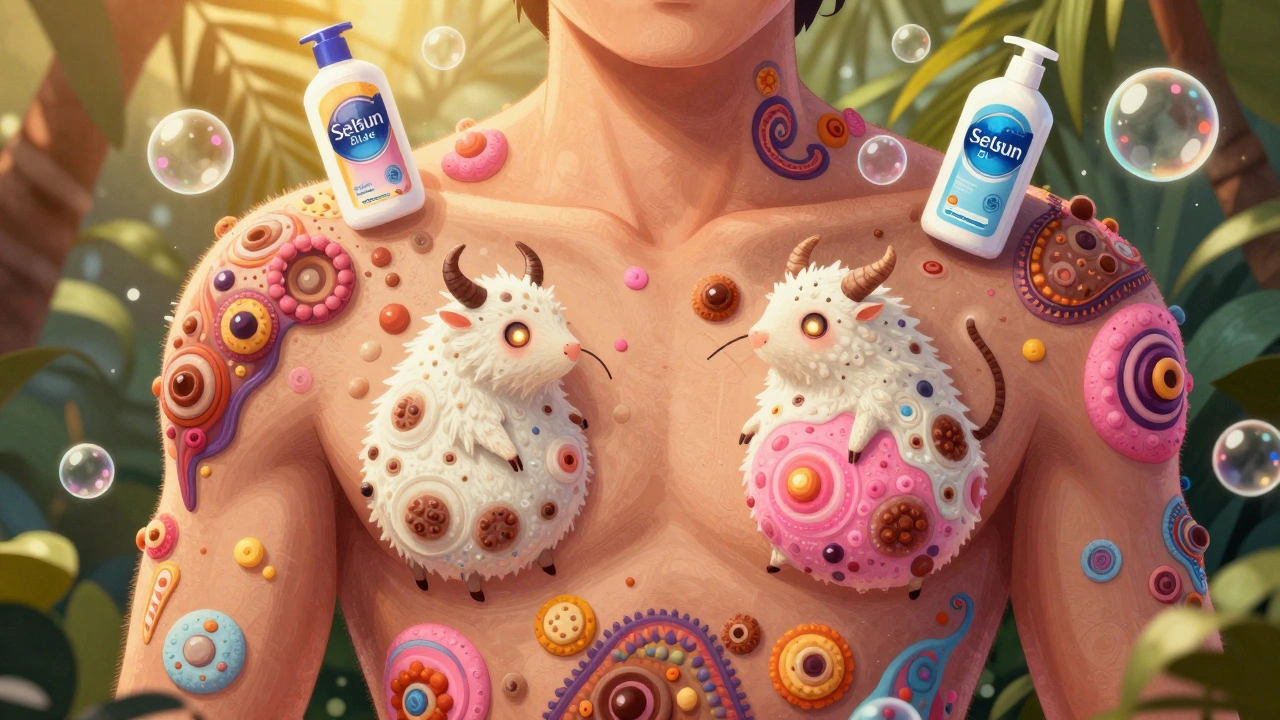
Tinea versicolor isn't dangerous, but it can make you feel like you're constantly on display. Those patches on your chest, back, or shoulders - white, pink, or brown - don't go away with a good scrub. They don't fade with sun exposure. And no, it's not because you're dirty. It's a yeast called Malassezia that's been living on your skin all along, and for some reason, it's decided to throw a party. When it does, it changes how your skin makes pigment. The result? Uneven color that looks like a bad tan gone wrong.
Why This Happens (And Why It Keeps Coming Back)
Malassezia furfur and Malassezia globosa are normal residents on human skin. You’ve had them since birth. But when conditions get warm and oily - think summer, sweat, tight synthetic clothes, or even hormonal shifts during puberty - they multiply fast. That’s why teens and young adults are most likely to get it. The yeast doesn’t spread from person to person. You can’t catch it from a towel, a locker room, or a pool. It’s an inside job: your skin’s environment changed, and the yeast took advantage.What makes it worse? Heat and humidity. If you live in a tropical climate, your risk jumps from 2-8% to 30-50%. Even in places like Birmingham, where summers get damp and sticky, the risk spikes from June to September. Sun exposure doesn’t cause it, but it makes it obvious. Healthy skin tans. The infected areas don’t. So suddenly, you’ve got pale patches that stand out like targets.
And here’s the kicker: even after treatment, it comes back. Studies show 60-80% of people see it return within a year. Why? Because the yeast never really leaves. It hides in the folds of your skin, in your pores, in your hair follicles. Treat the surface, and it waits. Treat the surface and then keep treating it - that’s the only way to break the cycle.
How Doctors Diagnose It (And Why You Might Be Misdiagnosed)
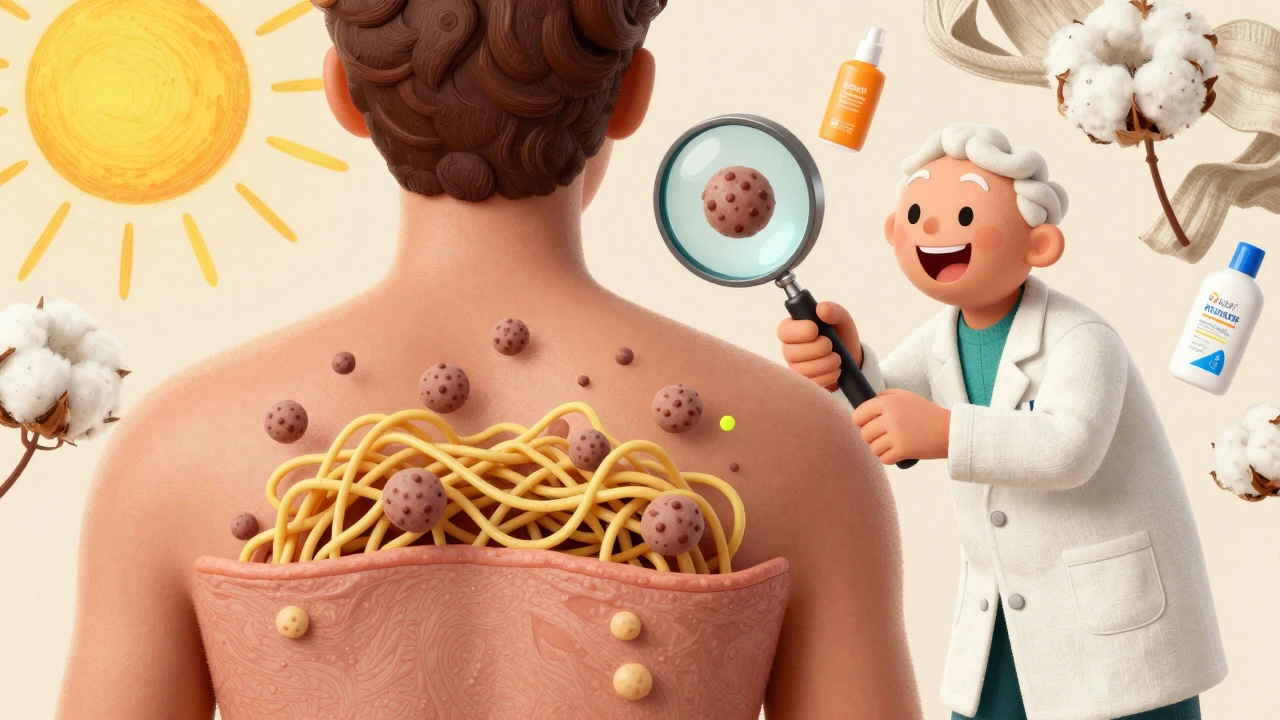
Many people wait months before seeing a doctor. They think it’s eczema. Or ringworm. Or just a weird tan. One study found the average delay in diagnosis was nearly five months. That’s five months of avoiding swimsuits, skipping the gym, feeling self-conscious.Doctors don’t guess. They scrape a tiny bit of skin and look at it under a microscope with potassium hydroxide (KOH). If you’ve got tinea versicolor, you’ll see what they call the "spaghetti and meatballs" sign - tangled strands of yeast (the spaghetti) and round yeast cells (the meatballs). It’s 95% accurate. No blood tests. No biopsies. Just a quick, painless scrape.
If your doctor doesn’t do this, ask for it. Too many cases get labeled as "dry skin" or "vitiligo" and treated wrong. Vitiligo is autoimmune and permanent. Tinea versicolor is fungal and treatable. Mixing them up means you waste time and get frustrated.
What Actually Works to Clear It
There are two paths: topical and oral. Both work well, but they’re not equal.Topical treatments are the first line. The most effective? Selenium sulfide 2.5% shampoo (Selsun Blue). You don’t wash your hair with it. You apply it like a body wash. Lather it on your chest, back, shoulders - anywhere the patches are. Leave it on for 10 minutes. Rinse. Do this daily for two weeks. Studies show it clears the infection in 78% of cases. It’s cheap. It’s available over the counter. And it works.
Another option is ketoconazole 2% shampoo. Same method. Same results. Some people prefer it because it smells better. Clotrimazole cream or terbinafine gel can also be used, but they’re less reliable for widespread cases.
Oral treatment is for stubborn cases or when the patches cover a lot of skin. Fluconazole - one 300mg pill once a week for two to four weeks - clears the infection in 92% of cases. But it’s not without risk. It can affect your liver, so your doctor will check your liver enzymes before and after. You’ll need a prescription. And you can’t take it if you’re pregnant or have liver disease.
Don’t waste money on essential oils, apple cider vinegar, or tea tree oil. They might feel good, but they don’t kill Malassezia effectively. One 2023 study tested 17 home remedies. Only selenium sulfide and ketoconazole showed consistent, measurable results.
The Real Secret: Preventing It From Coming Back
Clearing the infection is half the battle. Keeping it gone is the other half. And most people skip this part.Here’s what works:
- Use ketoconazole shampoo once a month - even after the patches are gone. Do it during warm months (April to October). A UCLA Health study of 200 patients showed this drops recurrence from 80% to 25% in one year.
- Avoid oil-based lotions, sunscreens, and hair products. Oily skin = yeast food. Switch to water-based or "non-comedogenic" products. Check labels for "oil-free."
- Wear loose, breathable clothing. Cotton, linen, moisture-wicking fabrics. Avoid polyester and nylon when it’s hot. One study found this reduced recurrence by 31%.
- Don’t overwash. Scrubbing hard with soap strips your skin’s natural barrier. That makes it easier for yeast to invade. Use a gentle, fragrance-free cleanser. Rinse well. Pat dry - don’t rub.
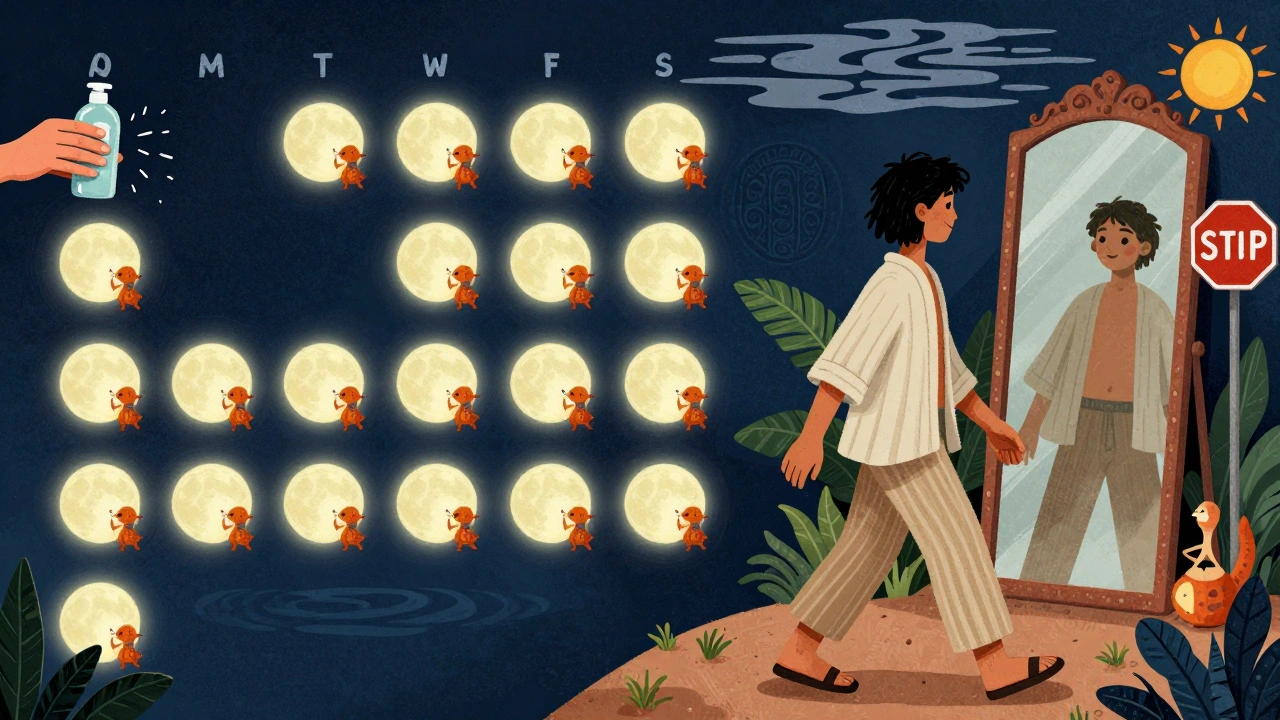
- Set a monthly reminder. People who forget their maintenance treatment are 58% more likely to relapse. Put a phone alert for the first day of every month. Even if you feel fine.
And here’s the hard truth: if you’ve had two or more outbreaks in a year, you need to keep this routine going for at least six to twelve months. Some experts recommend it year-round. Don’t stop because the skin looks normal. The yeast is still there. Waiting.
What Doesn’t Work - And Why People Get Frustrated
You’ll hear a lot of myths.- "I’ll just tan it away." No. Tanning makes the patches more obvious. The yeast blocks pigment. Your skin can’t tan where it’s infected.
- "It’s just dry skin." Moisturizing won’t fix it. In fact, heavy creams make it worse.
- "I’ll use bleach or hydrogen peroxide." That’s dangerous. It burns your skin and doesn’t touch the yeast.
- "I’m not contagious, so I don’t need to change anything." You’re right - you’re not contagious. But your skin environment is. Change your habits, or you’ll keep getting it back.
And the emotional toll? Real. One survey found 37% of people with tinea versicolor felt anxious or depressed because of how their skin looked. Some avoided swimming for a whole summer. Others turned down job interviews because they didn’t want to wear short sleeves. You’re not alone. The American Academy of Dermatology’s Versicolor Support Network has over 12,500 members. They know what you’re going through.
What’s New in Treatment (And What’s Coming)
Science is moving forward. Researchers at UC San Diego found that certain good bacteria - like Staphylococcus epidermidis - can suppress Malassezia growth by 68% in lab tests. That’s promising. Probiotic creams might be on the horizon.But there’s a warning: some strains of Malassezia are becoming less sensitive to ketoconazole. In 8.7% of recurrent cases, the yeast is resisting treatment. That’s why doctors are now testing combination therapies - like using selenium sulfide with a low-dose oral antifungal - in early clinical trials.
For now, stick with what’s proven. Monthly ketoconazole shampoo. Avoid oils. Wear cotton. Keep it simple. Don’t wait for the next big thing. The solution is already in your bathroom cabinet.
When to See a Doctor
You don’t need to rush to a dermatologist if you’ve had this before and recognize the patches. But see one if:- The patches spread quickly or get itchy or red
- They don’t improve after two weeks of selenium sulfide
- You have diabetes, are on steroids, or have a weakened immune system
- You’re not sure what it is - don’t guess
And if you’ve had three or more recurrences in a year? Ask about year-round maintenance. That’s now the standard of care for chronic cases.
Is tinea versicolor contagious?
No. Tinea versicolor is not contagious. It’s caused by a yeast that already lives on your skin. You can’t catch it from someone else, even through shared towels or gym equipment. The infection happens when your skin’s environment changes - like from heat, sweat, or oil - and the yeast overgrows. It’s a personal reaction, not an infection you pass around.
How long does it take for skin color to return after treatment?
It can take anywhere from 6 to 12 months for the skin to tan evenly again. The yeast damages pigment production, and your skin needs time to rebuild its normal color. Sun exposure won’t speed this up - it just makes the contrast more obvious. Be patient. The patches will fade, but it’s a slow process. Don’t treat it as a cosmetic flaw - treat it as a healing process.
Can I use Selsun Blue every day?
Only during the initial two-week treatment phase. After that, using it daily can dry out your skin and cause irritation. For maintenance, use it once a month. Daily use isn’t necessary and may damage your skin barrier, making future outbreaks more likely. Stick to the 10-minute, twice-weekly plan for clearing, then switch to monthly for prevention.
Does stress cause tinea versicolor?
Stress doesn’t directly cause tinea versicolor, but it can make it worse. When you’re stressed, your body produces more oil and hormones like cortisol, which can trigger yeast overgrowth. Stress also weakens your immune system slightly, making it harder to keep the yeast in check. So while stress isn’t the root cause, managing it can help reduce flare-ups.
Should I avoid the sun if I have tinea versicolor?
You don’t need to avoid the sun, but you should protect your skin. Sun exposure doesn’t make the infection worse, but it makes the patches more noticeable because the healthy skin tans and the infected areas don’t. Use a broad-spectrum sunscreen - preferably oil-free - and wear protective clothing. This helps even out your skin tone over time and reduces the emotional impact.
Can tinea versicolor turn into something more serious?
No. Tinea versicolor is a superficial infection that only affects the top layer of skin. It doesn’t spread deeper, doesn’t cause scarring, and isn’t linked to cancer or other diseases. The only real risk is emotional distress or misdiagnosis. If your patches become painful, swollen, or ooze, it’s likely a different condition - like a bacterial infection - and you should see a doctor.
Stop treating tinea versicolor like a one-time fix. It’s a chronic condition that needs ongoing management - not because it’s dangerous, but because it’s stubborn. The yeast doesn’t care if you feel embarrassed. It just wants warmth and oil. Give it neither, and it won’t come back. Simple. Effective. Proven.
Grant Hurley
December 1, 2025 AT 13:51Been dealing with this for years. Selsun Blue saved my life. Used it daily for two weeks, then once a month like the article said. No more pale patches. I used to avoid beach trips - now I wear tank tops like a boss. Simple as that.
Also, stop using that coconut oil lotion. It’s basically yeast buffet.
Conor Forde
December 3, 2025 AT 09:32Oh wow. So the real villain isn’t the yeast - it’s my fucking moisturizer. And I thought I was just ‘too oily’ or ‘bad at hygiene.’ Nope. Turns out I’ve been feeding the enemy with expensive ‘natural’ creams labeled ‘for sensitive skin.’ Classic. I’m buying ketoconazole shampoo tonight. Also, who wrote this? Should be on a billboard. Or at least in every gym locker room.
Lucinda Bresnehan
December 3, 2025 AT 16:08As someone who’s had this since puberty and was misdiagnosed with vitiligo for 3 years - THANK YOU. I cried reading this. I thought I had some permanent autoimmune thing. Turns out I just needed to stop scrubbing my back raw and use a shampoo I already had. The ‘spaghetti and meatballs’ thing made me laugh - but also cry. So many people suffer in silence. This post is a gift.
Monthly ketoconazole? Done. I’m setting a reminder right now.
Shannon Gabrielle
December 5, 2025 AT 08:03Wow. A medical article that doesn’t sound like it was written by a pharma rep. Who even are you? Did you steal this from a dermatologist’s blog or something? Anyway - I’m not surprised essential oils don’t work. People think ‘natural’ means ‘magic.’ I’ve seen someone try to cure eczema with honey. They ended up with a hive of bees. Literally. Don’t be that person.
Declan O Reilly
December 6, 2025 AT 02:46It’s wild how something so common gets treated like a secret shame. We’re talking about a yeast that’s been chilling on our skin since birth - not some exotic curse. And yet people hide like it’s a crime. I’ve seen guys in their 30s avoid swimming pools because of a few patches. Meanwhile, the cure is in the same aisle as dandruff shampoo.
Maybe the real problem isn’t the yeast. It’s the stigma. We’re okay with acne, psoriasis, even eczema - but if your skin doesn’t tan evenly? Suddenly you’re ‘weird.’
Also - yes, stress makes it worse. I had a flare-up after my breakup. Turns out emotional chaos = oily skin = yeast rave. Who knew?
patrick sui
December 8, 2025 AT 01:29Just want to add a data point: I’m in Lagos, Nigeria - tropical heat, 90% humidity year-round. I’ve had tinea versicolor since I was 15. Used to think it was ‘just a Nigerian thing.’ Turns out it’s everywhere. The monthly ketoconazole routine changed everything. Also - cotton shirts are non-negotiable. I now own 12. And yes, I set a phone reminder. I even named it ‘Yeast Patrol.’
Pro tip: If you’re in a humid climate, shower immediately after sweating. Don’t wait. Don’t ‘let it dry.’ Just wash. It’s that simple. Also - avoid silk. It’s a trap. The yeast loves silk.
Kshitij Shah
December 9, 2025 AT 13:43Indian guy here - been using ketoconazole shampoo since 2019. Monsoon season = yeast season. I used to think it was just ‘heat rash.’ Nope. Also, people here think it’s contagious. My aunt tried to burn my clothes with incense. I had to explain it’s not leprosy. She still thinks I’m lying. Anyway - this article is 10/10. No fluff. Just facts. And yes, I use it once a month. Even when I’m not sweating. Better safe than sorry.
ANN JACOBS
December 11, 2025 AT 03:05As a lifelong sufferer and now a healthcare educator, I must commend the meticulous evidence-based approach of this piece. The distinction between superficial fungal colonization and true pathological overgrowth is often misunderstood in primary care settings. The 60–80% recurrence rate is not anecdotal - it is corroborated by longitudinal cohort studies published in the Journal of the American Academy of Dermatology, volume 78, issue 4. The prophylactic regimen outlined - specifically the monthly topical antifungal application during high-risk seasons - represents a paradigm shift from acute intervention to chronic disease management. I have incorporated this protocol into my patient education materials with remarkable adherence and clinical outcomes. For those who have endured multiple recurrences, I urge you to consider this not as a failure of treatment, but as a necessary maintenance strategy - akin to hypertension or diabetes management. Your skin is not broken; it is in dynamic equilibrium. Your role is not to eradicate, but to regulate. This is not a cure. It is a lifestyle. And it is profoundly empowering.
Nnaemeka Kingsley
December 12, 2025 AT 08:35Bro, I’m from Nigeria and I used to think this was just my skin being weird. Then I saw this post and tried the Selsun Blue thing. 10 days later - gone. Now I use it once a month. I tell everyone. Even my cousins. They think I’m crazy but now they’re doing it too. No more hiding in long sleeves in 40°C weather. Life is better now. God bless the internet.