
When you’re on Medicaid, getting your prescriptions shouldn’t mean choosing between medicine and groceries. But understanding what’s covered - and what’s not - can feel like navigating a maze. In 2025, Medicaid covers outpatient prescription drugs for nearly 85 million low-income Americans across all 50 states and D.C. That’s not a guarantee of free access, though. It’s a system built on state rules, tiered formularies, and strict paperwork. Here’s what you actually get - and where the roadblocks are.
Medicaid Covers Almost All Prescriptions - But Not Always the One You Want
Every state provides prescription drug coverage under Medicaid, but no two states are the same. The federal government sets the baseline: states must cover drugs for all categorically eligible people. But after that? It’s up to each state to decide which drugs go on their Preferred Drug List (PDL). This list is split into tiers. Tier 1 is usually generic drugs - lowest cost to you. Tier 2 is brand-name drugs with higher copays. Some states even have Tier 3 or 4 for specialty drugs, which can cost hundreds per month. For example, if your doctor prescribes a brand-name blood pressure pill, Medicaid might require you to try two cheaper, generic alternatives first. This is called step therapy or trial and failure. Thirty-eight states use this rule. North Carolina, for instance, requires you to fail two preferred drugs before covering a non-preferred one - unless there’s only one option in that drug class. If you have Type 1 Diabetes and need premixed insulin, North Carolina allows prior authorization to last up to three years if your doctor documents medical necessity.Why Some Drugs Vanish From the List
Formularies aren’t static. They change. Drugs get added, removed, or moved between tiers based on cost, rebates, and clinical evidence. In July 2025, North Carolina moved Epidiolex® - a seizure medication - from preferred to non-preferred status. In October 2025, they dropped ten drugs entirely, including Vasotec, Trulance, and Solodyn ER, because the manufacturers stopped offering rebates that met state requirements. That doesn’t mean those drugs are banned. It means Medicaid won’t pay for them unless your doctor gets prior authorization proving no other option works. This is where the Medicaid Drug Rebate Program comes in. Since 1990, drugmakers must give states a discount - often 20% or more - just to be included on the formulary. If a company stops offering a good enough deal, the state removes the drug. The goal? Save money without cutting access. North Carolina saved $127 million between 2010 and 2023 just by managing its formulary.Prior Authorization: The Paperwork Hurdle
Before Medicaid pays for many drugs - especially specialty meds - your doctor must submit a prior authorization request. This isn’t a form you fill out. It’s a detailed clinical note explaining why the preferred drug won’t work for you. For mental health drugs like Wellbutrin XL, some patients in North Carolina report having to try and fail two SSRIs before approval. The process can take up to 7.2 business days for an initial decision. If denied, an appeal can take nearly two weeks. But here’s the good news: 78% of denials get overturned on appeal - if the doctor includes full clinical documentation. That means your doctor’s note matters more than your prescription. If your request is denied, ask your provider to resubmit with more detail: lab results, past treatment failures, or specialist notes. Don’t give up.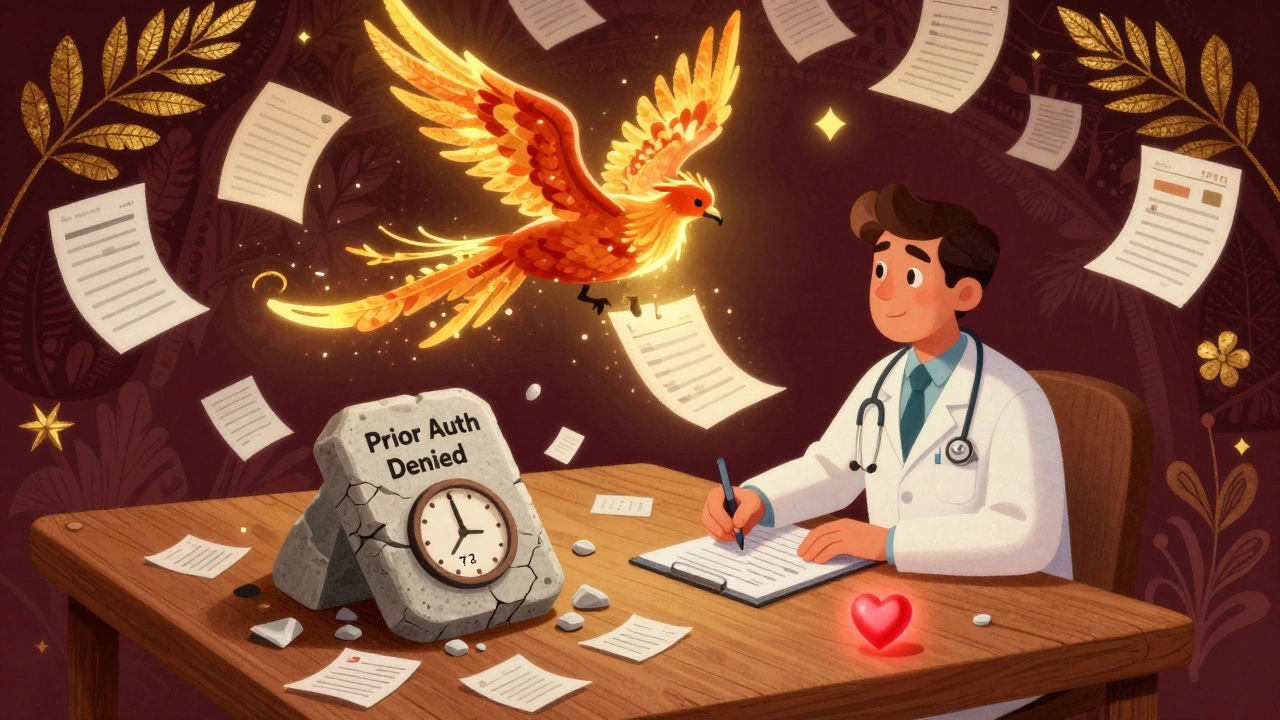
How Much Will You Actually Pay?
Copays vary by state and drug tier. In most states, generic drugs cost $1-$5. Brand-name drugs run $10-$40. Specialty drugs can hit $100 or more. But if you qualify for Extra Help - a federal program for low-income Medicare beneficiaries - your out-of-pocket costs drop dramatically: $0 premium, $0 deductible, $4.90 for generics, $12.15 for brand-name drugs, and $0 after you hit $2,000 in annual drug costs. If you have full Medicaid coverage, you automatically qualify for Extra Help - but many people don’t know it. About 1.2 million eligible people aren’t enrolled. And here’s a recent change: starting in 2025, Medicaid and Extra Help enrollees can switch their drug plan once a month. Before, you were locked in until the annual enrollment period. That’s huge if a drug gets removed from your formulary or your copay jumps.Where to Get Your Meds - And What Happens If You Don’t Use a Network Pharmacy
You can’t just walk into any pharmacy. Medicaid works with specific network pharmacies. If you go outside the network, you’ll pay full price - and Medicaid won’t reimburse you. Most states require maintenance medications (like diabetes or blood pressure pills) to be filled through mail-order services. This saves money and ensures steady supply. Some states even offer 90-day supplies through mail-order with lower copays than 30-day fills at local pharmacies. If you’re unsure which pharmacies accept Medicaid, check your state’s Medicaid website or call your pharmacy benefit manager (PBM). In North Carolina, CVS Caremark and Absolute Total Care manage benefits for most enrollees. These companies publish their formularies online - but they’re long, dense, and hard to read. SHIP counselors report that new beneficiaries need an average of 2.7 help sessions just to understand their coverage.Specialty Drugs: The Big Cost Drivers
While generics make up 89% of all Medicaid prescriptions, they only account for 27% of spending. Why? Because a tiny fraction of drugs - specialty medications - are insanely expensive. Drugs for hepatitis C, rheumatoid arthritis, or multiple sclerosis can cost $50,000 to $300,000 per year. These make up just 3% of prescriptions but 42% of Medicaid’s pharmacy budget. States are trying to manage this. Twenty-two states now use value-based contracts with drugmakers - meaning they only pay if the drug works. For example, if a new gene therapy for spinal muscular atrophy doesn’t improve mobility after six months, the state gets a refund. These models are growing fast: from 12 in 2023 to 37 in 2025. But here’s the looming problem: 12-15 new gene therapies are expected to hit the market between 2025 and 2027, each costing over $2 million per treatment. Medicaid programs aren’t built for that kind of price tag. States are scrambling to find ways to pay without denying care.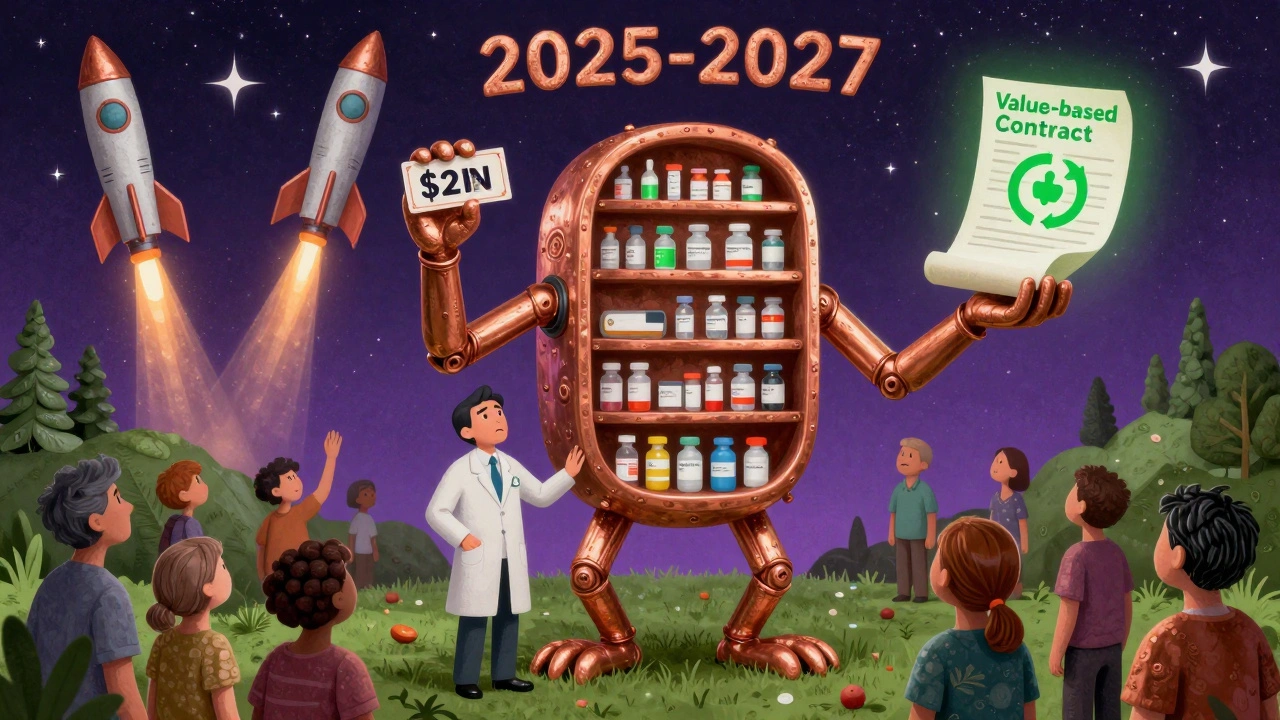
Who Gets Left Behind?
Even with Medicaid, access isn’t perfect. A 2024 survey by the Medicare Rights Center found that 63% of Medicaid beneficiaries experienced delays getting non-preferred drugs. For people with chronic conditions - especially mental health or rare diseases - those delays can be dangerous. In some southern states during 2023-2024, overly strict formularies delayed hepatitis C treatment, leading to worsening liver damage. The American Pharmacists Association warns that step therapy rules must include clear clinical criteria and fast reviews. Otherwise, they become barriers, not safeguards. And for elderly dual-eligible patients (those on both Medicare and Medicaid), drug costs are even higher - they make up just 15% of users but 38% of total spending.What You Can Do Right Now
- Know your formulary. Go to your state’s Medicaid website and download the current Preferred Drug List. Look up your meds. Check the tier and if prior authorization is needed. - Ask your doctor to check for alternatives. If your drug is non-preferred, ask if there’s a preferred generic or brand-name option that’s covered. - Don’t skip prior auth paperwork. Make sure your doctor includes detailed clinical notes. A vague note = denial. A thorough one = approval. - Apply for Extra Help. If you’re on Medicaid, you qualify. Call 1-800-MEDICARE or visit Medicare.gov to apply. It can cut your drug costs by 80%. - Use mail-order for maintenance drugs. It’s cheaper and more reliable. - Call your SHIP counselor. Every state has a State Health Insurance Assistance Program. They help for free. No appointment needed.What’s Changing in 2026?
CMS is expected to release new guidance in early 2026 requiring states to prove their formularies don’t create unreasonable barriers to care. That could mean fewer step therapy rules or faster prior auth decisions. Also, Congress is considering lowering the Federal Upper Limit for generics from 250% to 225% of the average manufacturer price - a move that could save Medicaid $1.2 billion a year. The big question: Can Medicaid keep covering expensive new drugs without raising taxes or cutting other services? The answer isn’t clear. But for now, the system works - if you know how to use it.Does Medicaid cover all prescription drugs?
No. Medicaid covers outpatient prescription drugs for nearly all enrollees, but each state creates its own Preferred Drug List (PDL). Some drugs are excluded if manufacturers don’t offer rebates, or if they’re moved to non-preferred status. You may need prior authorization for certain medications.
Why was my prescription denied by Medicaid?
Common reasons include: the drug isn’t on your state’s formulary, you didn’t try a preferred alternative first (step therapy), or your doctor didn’t submit enough clinical documentation for prior authorization. If denied, you can appeal - and 78% of appeals with full documentation are approved.
How much will I pay for my meds under Medicaid?
Copays vary by state and drug tier. Generics usually cost $1-$5, brand-name drugs $10-$40, and specialty drugs can be $100+. If you qualify for Extra Help (automatic if you have full Medicaid), your copay is $4.90 for generics and $12.15 for brands until you hit $2,000 in annual costs - then you pay $0.
Can I use any pharmacy with Medicaid?
No. You must use a pharmacy in your state’s Medicaid network. Out-of-network pharmacies won’t be paid by Medicaid, and you’ll have to pay full price. Most states require maintenance medications to be filled through mail-order services for lower costs.
What’s Extra Help, and do I qualify?
Extra Help is a federal program that lowers Medicare Part D drug costs. If you have full Medicaid coverage, you automatically qualify - even if you’re not on Medicare. You get $0 premium, $0 deductible, $4.90 for generics, $12.15 for brands, and $0 after $2,000 in annual spending. About 1.2 million eligible people don’t know they qualify. Apply at Medicare.gov or call 1-800-MEDICARE.
Jade Hovet
December 12, 2025 AT 17:26OMG this is SO helpful!! 🙌 I literally cried reading the part about Extra Help-I had NO idea I qualified just because I’m on Medicaid. My copay for my antidepressant was $38 last month… now I’m gonna apply TODAY. Thank you for breaking this down like I’m not a total idiot 😭💖
John Fred
December 13, 2025 AT 03:01As a pharmacy tech in Ohio, I see this daily. Step therapy is a nightmare for patients with chronic pain or mental health conditions. They’ll make you try 3 generics that don’t work, then when you finally get prior auth approved, the drug’s been moved to Tier 4. The PBM algorithms are designed to delay, not heal. 🤦♂️
Lauren Scrima
December 14, 2025 AT 08:15Wow. So let me get this straight: you have to fail at being sick before you can get better? And your doctor’s handwriting (or lack thereof) determines if you live or die? 🙄
Shelby Ume
December 14, 2025 AT 13:20Thank you for this comprehensive overview. It is imperative that individuals enrolled in Medicaid understand the structure of formularies and the mechanisms of prior authorization. The systemic inequities embedded in state-level formulary management disproportionately impact marginalized populations, particularly those with complex comorbidities. Access to medication is not a privilege-it is a human right, and current administrative barriers contravene the foundational intent of the Medicaid program. I urge all readers to engage with their State Health Insurance Assistance Program (SHIP) and advocate for policy reform at the legislative level.
Harriet Wollaston
December 16, 2025 AT 02:29I’m from rural Alabama and this article saved my life. My mom’s insulin got pulled last month-she was crying because she couldn’t afford the $400 out-of-pocket. We called SHIP, they helped us get a prior auth approved with her neurologist’s notes, and now she’s back on it. You’re not alone. Keep fighting. 💪❤️
sharon soila
December 17, 2025 AT 07:33Medicaid is not broken. It is working exactly as designed-to protect the most vulnerable while holding pharmaceutical companies accountable. The rebates, the tiers, the prior auths-they are not punishments. They are the price of a system that gives 85 million people access to life-saving drugs while keeping the entire program from collapsing. We must not lose sight of the miracle here: that anyone earning below the poverty line can get their pills. The struggle is real, but so is the grace.
nina nakamura
December 18, 2025 AT 04:53This is just corporate welfare disguised as healthcare. The drug companies are laughing all the way to the bank while states play puppet with our prescriptions. You think they care if you get your insulin? No. They care about their 20% rebate. And you? You’re just a number on a spreadsheet. Wake up.
nithin Kuntumadugu
December 18, 2025 AT 18:32So… you’re telling me the government is forcing states to choose between paying for drugs or keeping their budgets balanced? 😂 LMAO. Next they’ll tell us the moon landing was fake. This is all a psyop to get us to take cheaper meds so Big Pharma can raise prices on the ones we don’t need. I saw a TikTok that said Medicaid’s formulary changes are coded by AI trained on Wall Street earnings calls. It’s not coincidence. It’s control.
Rawlson King
December 19, 2025 AT 14:00Anyone who thinks this system is fair hasn’t lived. You’re lucky if you get your meds on time. Most people just give up. And you call this healthcare? This is a joke with a clipboard.