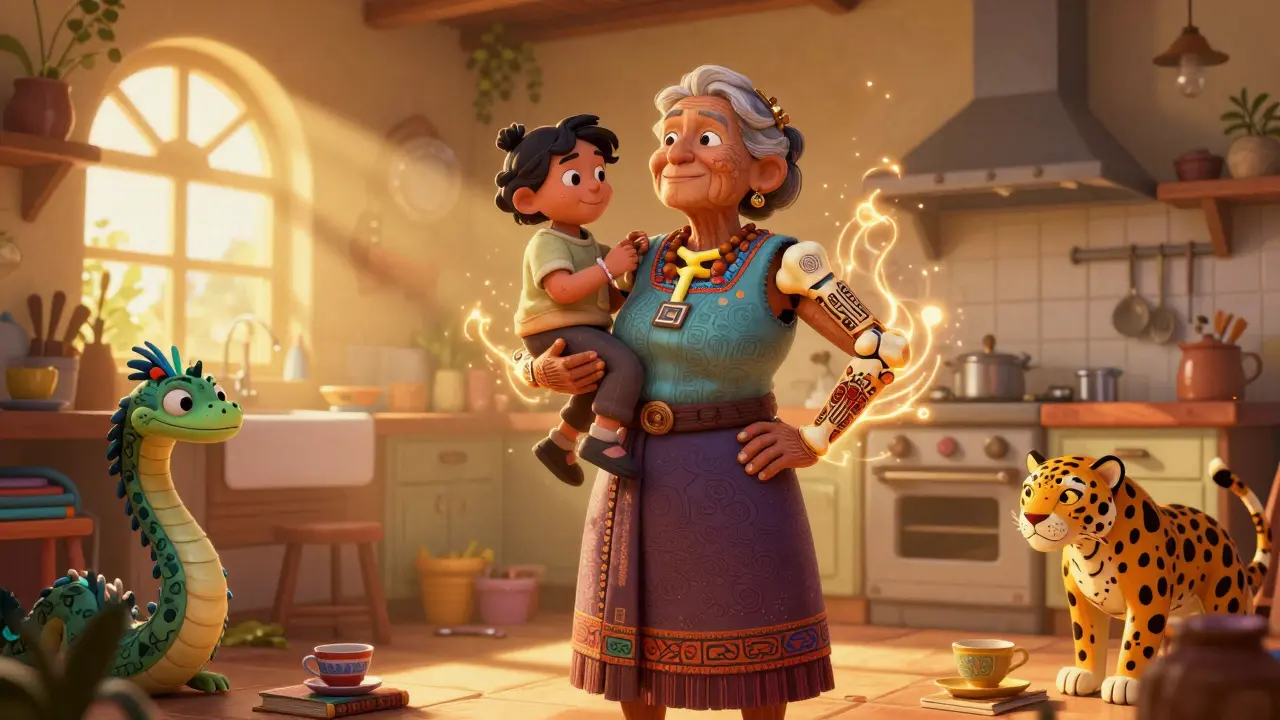
At 65, Mary from Concord started noticing her back hurt more after bending over to pick up her grandkids. She thought it was just aging-until she fell in the kitchen and broke her wrist. A DXA scan showed her bone density had dropped to -3.1. She had osteoporosis. And she wasn’t alone. In the U.S., 1 in 3 women over 50 will break a bone because of it. The scary part? Most people don’t know they’re at risk until it’s too late.
Why Your Bones Are Losing Density
Your bones aren’t static. They’re alive, constantly breaking down old tissue and building new stuff. Up until your mid-20s, your body builds bone faster than it loses it. That’s when you hit peak bone mass. After that, it’s a slow decline-about 0.3% to 0.5% per year. But for women after menopause, that rate jumps to 2% to 3% a year for the first five to seven years. That’s because estrogen, which helps protect bone, drops sharply. Men aren’t immune. About 1 in 5 men over 50 will suffer an osteoporosis-related fracture. And while men don’t have the same hormonal crash as women, they still lose bone as they age-especially if they’re inactive, smoke, or don’t get enough calcium and vitamin D. The real danger isn’t just low bone density. It’s how fragile your bones become. A simple stumble, a sneeze, or even bending over can lead to a fracture. Hip fractures are the worst: 20% to 24% of people who break a hip die within a year. Many never walk the same way again.What You Can’t Change (But Need to Know)
Some risks you can’t fix. But knowing them helps you act smarter.- Age: After 65, your fracture risk is over four times higher than if you’re under 50.
- Gender: Women are four times more likely to get osteoporosis than men.
- Race: White and Asian women have higher risk than Black or Hispanic women.
- Family history: If a parent broke a hip, your risk goes up by 60% to 80%.
- Early menopause: Going through menopause before 45 doubles your risk.
What You Can Change (And Should)
The good news? Most of your risk is in your hands. Calcium isn’t optional. Adults need 1,000 mg a day. Seniors need 1,200 mg. That’s not a suggestion-it’s a medical baseline. Most people get less than half that from food. Dairy is the easiest source: one cup of milk = 300 mg. But you don’t have to rely on it. Canned salmon with bones, kale, bok choy, fortified tofu, and almonds all add up. If you can’t get enough from food, take a supplement. But don’t take it all at once. Your body absorbs 500-600 mg best at a time. Split your dose: one with breakfast, one with dinner. Vitamin D is the key that unlocks calcium. Without it, your body can’t use the calcium you eat or take as a pill. The CDC says 42% of U.S. adults are deficient. If your levels are below 20 ng/mL, you’re at higher risk for fractures. Most people need 800-1,000 IU a day. If you’re deficient, you might need 2,000 IU until your levels climb above 30 ng/mL. Get tested if you’re over 50, especially if you live in a northern state or spend most of your time indoors. Stop smoking. Smoking cuts calcium absorption and messes with estrogen. One pack a day increases your fracture risk by 55%. Quitting doesn’t reverse all the damage-but it stops the bleeding. Every year you stay smoke-free, your bone health improves. Limit alcohol. More than two drinks a day increases hip fracture risk by 41%. One glass of wine? Fine. Two bottles of beer every night? That’s a problem. Move your body. If you’re sedentary, your fracture risk is 25% to 30% higher. Weight-bearing exercise-walking, hiking, dancing, stair climbing-tells your bones to get stronger. Resistance training with bands or weights twice a week adds even more protection. Studies show people who stick with this routine for a year reduce their fracture risk by 30% to 40%. Balance training matters too. Tai chi, yoga, or simple heel-to-toe walks reduce falls by nearly half.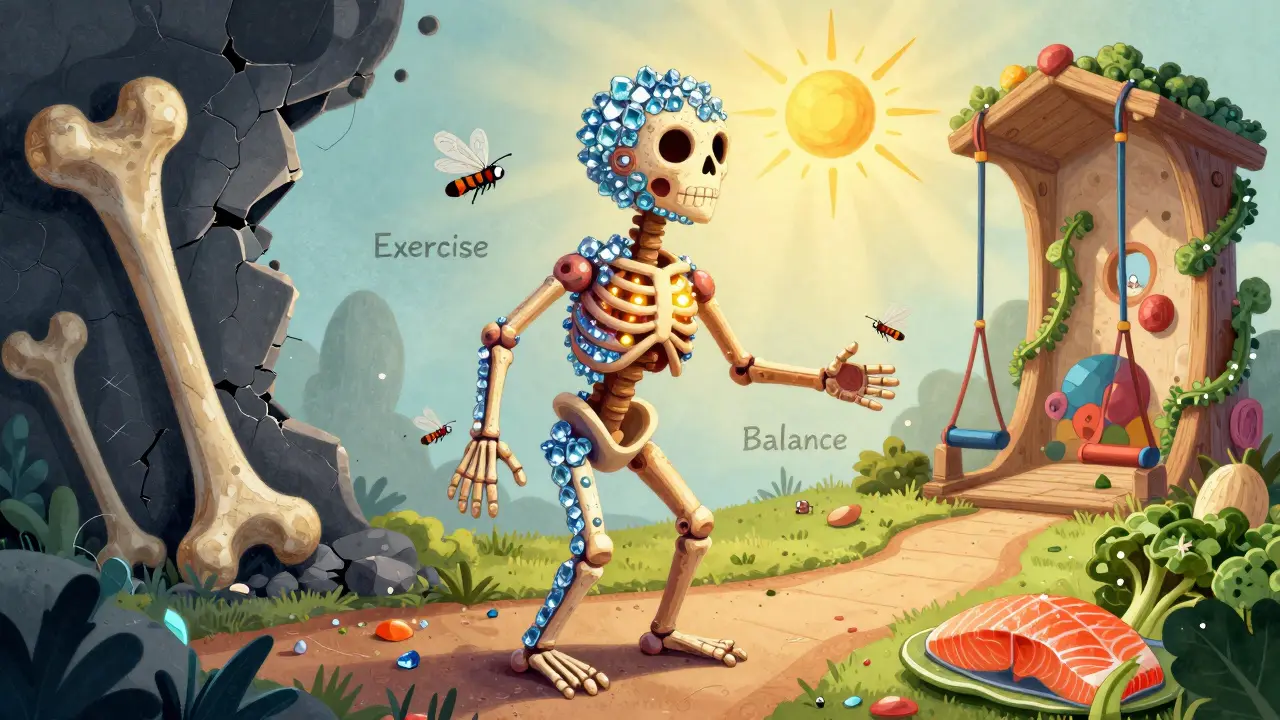
Fractures Are a Warning Sign-Not a Final Outcome
Here’s something most people don’t know: if you’ve already had one fragility fracture, your chance of another skyrockets. A broken spine? Your risk of another vertebral fracture goes up by 86%. A broken hip? That risk jumps 200%. Dr. Ethel Siris from Columbia says, “A single fracture is the strongest predictor of the next one-even more than low bone density.” That means if you broke a wrist after a minor fall, you’re not just unlucky. You’re in the danger zone. You need a bone density test, even if you’re under 65. And you need a plan-not just medication, but lifestyle changes.Testing and Treatment: What Actually Works
The gold standard test is a DXA scan. It’s quick-15 to 20 minutes. The radiation? Less than you get from a three-hour flight. It gives you a T-score:- Normal: -1.0 or higher
- Osteopenia: -1.0 to -2.5
- Osteoporosis: -2.5 or lower
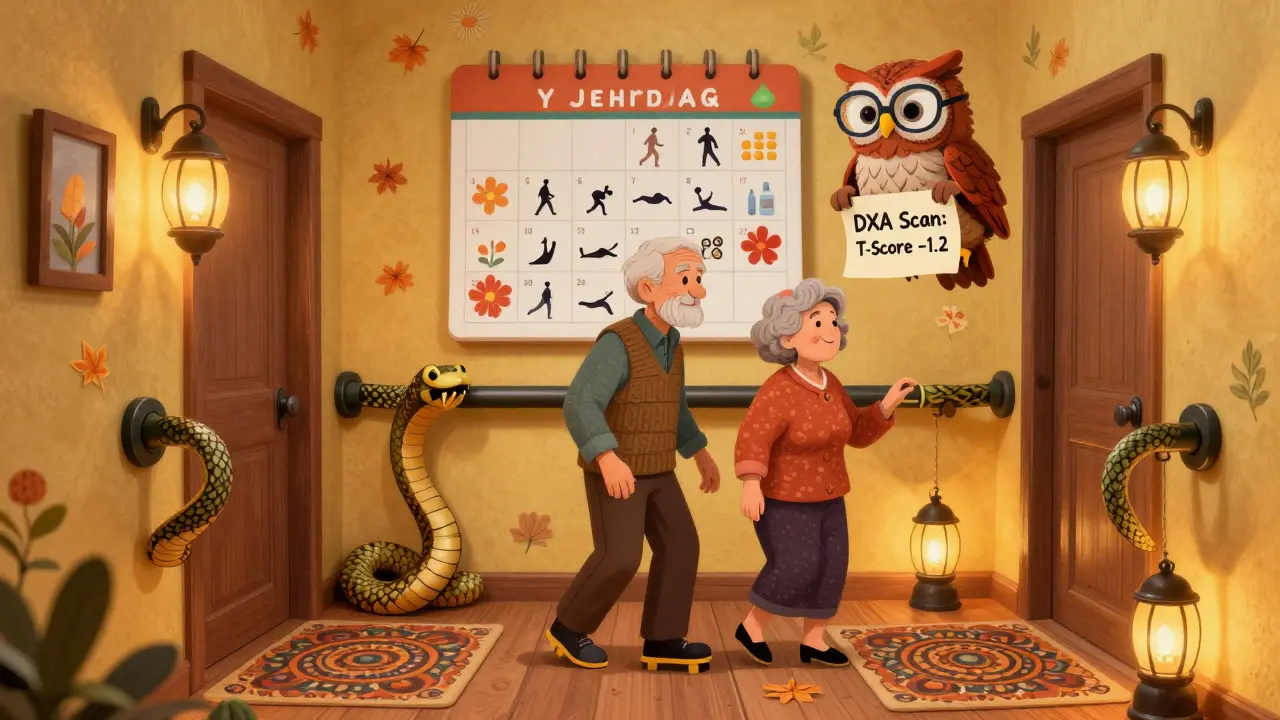
Preventing Falls Is Just as Important as Strengthening Bones
You can have perfect bone density-but if you fall, you still break a bone. That’s why fall prevention is part of every real osteoporosis plan.- Remove rugs and clutter from floors.
- Install grab bars in the bathroom.
- Use non-slip mats in the shower.
- Improve lighting-especially stairs and hallways.
- Get your vision checked yearly.
- Review your meds with your doctor. Some drugs (like sleep pills or blood pressure meds) make you dizzy.
It’s Not Too Late-But You Need to Start Now
The idea that osteoporosis is just an old person’s disease is wrong. Peak bone mass by age 30 sets the stage for the rest of your life. That’s why childhood nutrition and activity matter. But even if you’re 60, 70, or 80, it’s not too late to build strength, reduce fall risk, and protect your bones. Mary, from Concord, started walking 30 minutes a day, took calcium and vitamin D, and joined a fall-prevention class at her community center. A year later, her repeat DXA scan showed her bone density had stabilized. She hasn’t fallen since. She still picks up her grandkids. Your bones don’t need perfection. They just need consistent care. Calcium. Vitamin D. Movement. No smoking. Less alcohol. Fall-proof your home. Get tested if you’re at risk. Don’t wait for a fracture to wake you up.Can you reverse osteoporosis naturally?
You can’t fully reverse osteoporosis, but you can stop it from getting worse-and sometimes improve bone density. Weight-bearing exercise, adequate calcium and vitamin D, quitting smoking, and avoiding excessive alcohol can help. In some cases, medications like romosozumab can actually build new bone. But without these steps, bone loss continues. Natural methods alone won’t fix severe osteoporosis, but they’re essential for any treatment plan.
Do I need a bone density test if I’m under 65?
Yes-if you have risk factors. The U.S. Preventive Services Task Force recommends testing for women over 65 and men over 70. But if you’re under 65 and have a history of fractures, early menopause, long-term steroid use, rheumatoid arthritis, or a family history of hip fractures, you should get tested. Don’t wait until you break something.
Is dairy the only good source of calcium?
No. While dairy is the easiest source, you can get calcium from canned salmon or sardines with bones, fortified plant milks, tofu made with calcium sulfate, kale, bok choy, broccoli, almonds, and blackstrap molasses. One cup of cooked kale has about 180 mg. You just need to plan your meals. If you avoid dairy, track your intake for a week-you’ll likely find you’re falling short.
Can vitamin D supplements cause harm?
At recommended doses (800-2,000 IU daily), vitamin D is very safe. Toxicity is rare and usually only happens with doses over 10,000 IU daily for months. If you’re taking more than 2,000 IU, ask your doctor to check your blood levels. Too much can raise calcium levels, leading to kidney stones or heart issues. But for most people, supplementing to reach 30 ng/mL or higher is necessary and safe.
How long does it take to see results from exercise?
Bone responds slowly. You won’t see changes on a scan for 6 to 12 months. But you’ll feel improvements sooner-better balance, stronger legs, less back pain. The goal isn’t just bone density. It’s reducing falls and staying independent. That happens faster than bone tests show.
Are bone density tests covered by insurance?
Yes, Medicare covers a DXA scan every 24 months for women over 65 and men over 70, or more often if you’re at high risk. Most private insurers cover it too if your doctor says it’s medically necessary. Check with your plan, but don’t let cost stop you. The cost of one hip fracture is over $50,000. The scan costs less than $150.
What to Do Next
Start with three simple steps:- Take a calcium and vitamin D supplement if you’re not getting enough from food.
- Walk 30 minutes five days a week. Add light weights twice a week.
- Ask your doctor if you should get a bone density test-especially if you’re over 50 and have any risk factors.
Coy Huffman
February 4, 2026 AT 12:23Nathan King
February 6, 2026 AT 09:38rahulkumar maurya
February 6, 2026 AT 17:36Geri Rogers
February 7, 2026 AT 05:43Samuel Bradway
February 8, 2026 AT 01:14pradnya paramita
February 9, 2026 AT 04:01Lorena Druetta
February 9, 2026 AT 08:00Mandy Vodak-Marotta
February 9, 2026 AT 09:51Harriot Rockey
February 11, 2026 AT 05:59Jamillah Rodriguez
February 11, 2026 AT 06:39Prajwal Manjunath Shanthappa
February 11, 2026 AT 11:47