When you pick up a prescription, you might assume the generic version is made by a different company - cheaper, simpler, maybe even lower quality. But what if the brand-name drug you’ve been taking for years is actually the same pill, just in a different box? That’s the reality of authorized generics. These aren’t knockoffs. They’re made by the same company that created the brand-name drug, using the same factory, the same ingredients, and the same process. The only difference? The label.
Why Would a Brand Make Its Own Generic?
Patents don’t last forever. When a drug’s patent expires, competitors rush in with cheaper versions. Prices can drop 80% in the first year. For the original manufacturer, that’s a disaster. Revenue crashes. Employees get laid off. Factories sit idle. So instead of watching their market vanish, many big drug companies choose to jump into the generic game themselves. They don’t just copy the drug. They make the exact same thing. The pill you get from Pfizer today? It’s identical to the one they made under the brand name last year - same shape, same color, same inactive ingredients. The only change? The name on the bottle. No clinical trials. No new testing. The FDA already approved it. All they do is repackage it under a different name and sell it at a lower price. This isn’t new. AstraZeneca did it first in 1997 with Prilosec, the heartburn drug. When the patent expired, they launched their own generic version. Within six months, they captured 30% of the entire omeprazole market. Other companies noticed. Soon, it became standard practice.How It’s Done - The Exact Process
Making an authorized generic sounds simple, but it’s a complex operation. It starts years before the patent runs out. Companies begin planning 24 to 36 months ahead. They need to set up a separate sales team, design new packaging, and file paperwork with the FDA - all without mixing up marketing messages for the brand version. The production line stays exactly the same. The same machines. The same workers. The same quality checks. The only thing that changes is the label. The FDA requires that the generic version can’t look identical to the brand. So the pill might be a slightly different shade of blue, or the imprint on it might change. But inside? Nothing’s different. This gives brand manufacturers a huge advantage. Traditional generic companies have to build new factories, get FDA approval, and wait up to 17 months just to start selling. The brand manufacturer? They’re already approved. They can switch over in 6 to 9 months. And they don’t have to wait for the 180-day exclusivity period that the first generic company gets. They launch on day one.Who Wins? Who Loses?
On paper, this sounds like a win for consumers. More options. Lower prices. But the reality is more complicated. When a brand introduces its own generic, it often takes 15% to 35% of the generic market share. That means fewer competitors get a real shot. Instead of 10 companies fighting over the market, you get one big player and a few smaller ones. The result? Prices don’t drop as much. A 2022 study in JAMA found that in markets with authorized generics, prices fell only 32% on average. In markets without them - where only independent generics competed - prices dropped 68%. That’s a huge difference. The brand manufacturer keeps a slice of the pie, and the consumer pays more than they would if the market were fully open. The Federal Trade Commission has taken notice. Between 2015 and 2020, they sued several drug companies for using authorized generics to block competition. In one case against Actavis over the drug Namenda, the FTC won a $448 million settlement. The message was clear: You can’t use your own generic to squash real competition.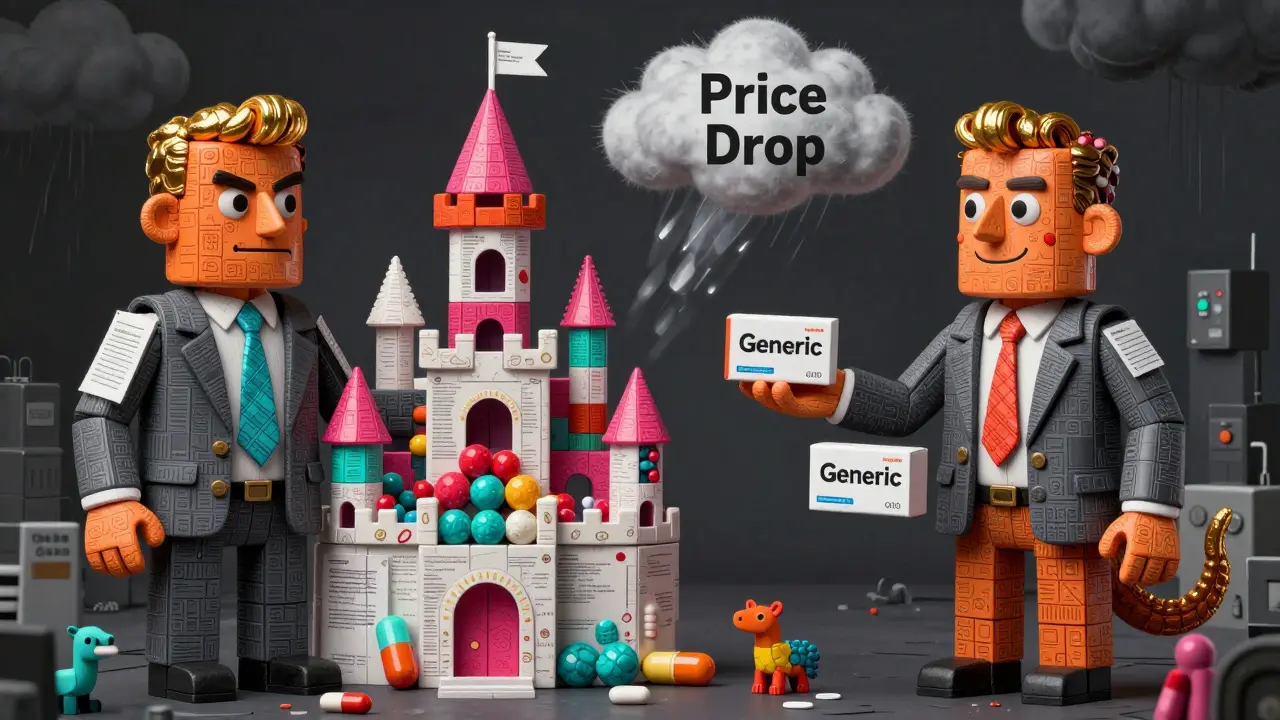
What Patients Actually Experience
Patients often don’t know they’re taking an authorized generic. The pharmacist gives them a pill that looks familiar. They assume it’s just a cheaper version. Many are happy. On Drugs.com, authorized generics have a 4.2 out of 5-star rating. People write things like: “Same pill I’ve been taking for 10 years. No side effects changed.” But confusion is common. A 2022 survey of independent pharmacists found that 63% said patients got mixed up. They’d ask: “Why is my insurance paying $85 for this generic when the brand is $90? Isn’t this supposed to be cheaper?” The answer? It’s not. It’s only $5 cheaper. Meanwhile, a true generic from a different company might cost $30. A Kaiser Family Foundation survey in 2023 showed that 71% of patients preferred authorized generics - but 64% had no idea they were made by the same company as the brand. That’s a problem. If people think they’re getting a bargain, but the price difference is tiny, they’re being misled.The Bigger Picture
This strategy isn’t going away. In fact, it’s growing. Between 2020 and 2023, the top five drug companies - Pfizer, Johnson & Johnson, Roche, Merck, and AbbVie - launched 47 authorized generics. That’s a 28% increase year over year. Why? Because the patent cliff is coming. Between 2023 and 2027, $250 billion worth of brand-name drugs will lose patent protection. Many of these are complex drugs - biologics, injectables, long-acting formulations - that are hard for small generic companies to copy. That’s where authorized generics shine. The original maker already knows how to make it. They’ve got the equipment. The expertise. The FDA relationships. In 2023, Johnson & Johnson launched the first authorized generic of a long-acting injectable drug - Invega Sustenna. It required special handling, sterile environments, and precise dosing. No small generic company could have done it quickly. But Janssen, their own subsidiary, already had the setup. They flipped the switch and kept selling.
Is This Fair?
There’s no simple answer. On one hand, authorized generics give patients a consistent product. No surprises. No switching between different manufacturers. No changes in how the drug works. That’s valuable. On the other hand, they slow down true competition. They keep prices higher than they should be. They let big companies hold onto market power long after their patents expire. And they confuse consumers into thinking they’re getting a deal when they’re not. The FDA still allows it. The law still permits it. But regulators are watching. The CREATES Act of 2019 was meant to stop companies from blocking generic competitors by hoarding samples. It didn’t ban authorized generics - but it did make it harder to abuse them.What This Means for You
If you’re on a brand-name drug and it just went generic, ask your pharmacist: Is this an authorized generic? You might be surprised. If it is, compare the price to the independent generic. If the authorized version is only a few dollars cheaper, you might be better off with the real generic - especially if your insurance covers it. If you’re switching from brand to generic and notice the pill looks exactly the same, that’s a clue. It’s probably an authorized generic. You’re not getting a different drug. You’re just paying less - maybe. And if you’re a patient who values consistency - who doesn’t want to switch pills every time your insurance changes - then an authorized generic might be the best choice. Just know what you’re getting. And ask questions.The Future of Authorized Generics
This strategy is expanding into new areas. The first authorized biosimilar - a copy of a complex biologic drug - was approved in 2023. It was Amgen’s version of its own Enbrel. That’s a big deal. Biosimilars are expensive to make. Only the original company has the know-how. So now, they’re using authorized generics to protect their market even in the most advanced drug categories. Analysts predict that by 2025, 40% of small-molecule drugs losing patent protection will have an authorized generic version. That’s up from 18% in 2022. It’s becoming the new normal. The question isn’t whether this will continue. It’s whether we’ll ever demand more from the system. Should patients get the lowest possible price? Or is it okay for the original maker to keep a piece of the action? There’s no right answer - but there’s a growing conversation.Are authorized generics the same as the brand-name drug?
Yes. Authorized generics are identical to the brand-name drug in active ingredients, dosage, strength, and how they work in the body. The only differences are in packaging, labeling, and sometimes the color or shape of the pill - just enough to comply with trademark laws. They’re made in the same factory, on the same lines, by the same company.
Why are authorized generics sometimes more expensive than regular generics?
Because they’re not meant to be the cheapest option. Brand manufacturers price authorized generics 10-15% below the brand name but 5-10% above true generics. This lets them keep some revenue while appearing to offer savings. The real bargain is often the independent generic made by another company - which can be 50-80% cheaper.
How do I know if my generic is an authorized generic?
Ask your pharmacist. You can also check the drug’s label - authorized generics often list the brand manufacturer’s name under the manufacturer line. If the company name matches your original brand (like Pfizer for Viagra), it’s likely an authorized generic. Online databases like Drugs.com also sometimes note this.
Do authorized generics delay cheaper generics from entering the market?
Yes, indirectly. By launching their own generic on day one, brand manufacturers take market share that would otherwise go to independent generics. This reduces the financial incentive for other companies to enter. Studies show markets with authorized generics have slower price drops than those without them.
Are authorized generics safe?
Yes. They’re held to the same FDA standards as the brand-name drug. In fact, they’re often more consistent than independent generics because they come from the same production line. The FDA reports 99.7% bioequivalence between authorized generics and their brand counterparts - meaning they work the same way in your body.
Lisa Davies
December 16, 2025 AT 19:47OMG I had no idea my generic pills were literally the same as the brand! 😱 I’ve been saving money for years thinking I was getting the cheap version, but turns out I was just getting a different label. My pharmacist never mentioned this. Time to ask them next time I refill!
Melissa Taylor
December 17, 2025 AT 03:06This is such an important insight. Many people assume generics are inferior, but when it’s the same pill from the same factory, it’s not just safe-it’s smart. We need more transparency in pharma so patients aren’t left guessing. Knowledge is power, and this info helps people make better choices without fear.
Jake Sinatra
December 18, 2025 AT 06:28While the practice of authorized generics is legally permissible, it raises significant ethical concerns regarding market manipulation. The strategic timing of entry, coupled with the suppression of independent competitors, undermines the intended purpose of patent expiration. Regulatory oversight must evolve to prevent anti-competitive behavior disguised as consumer benefit.
John Brown
December 19, 2025 AT 14:40Honestly, I’m kinda glad they do this. I hate switching pills every time my insurance changes. One time I went from brand to generic and my stomach went nuts for two weeks. Turns out it was just the filler. With authorized generics, I know I’m getting the same thing. No surprises. That’s worth a few extra bucks.
Christina Bischof
December 20, 2025 AT 17:34so i’ve been taking this generic for years and just assumed it was cheaper… turns out it’s literally the same pill just repackaged? wow. i never even thought about who made it. guess i’m just glad it works
Jocelyn Lachapelle
December 20, 2025 AT 22:07It’s wild how much we trust pills without knowing where they come from. I used to think generics were the poor cousin of medicine. Now I see they’re just the quiet sibling who never gets the spotlight. Same recipe. Same factory. Same results. Maybe we need to stop judging by the label and start trusting the science.
Mike Nordby
December 21, 2025 AT 06:22The data presented in the JAMA study is compelling. The 32% price reduction versus 68% in non-authorized generic markets demonstrates a clear economic distortion. This is not consumer empowerment; it is strategic market capture under the guise of accessibility. The FTC’s legal actions are not only justified but overdue.
Michelle M
December 22, 2025 AT 22:43It’s like buying a car with the same engine but a different badge. You’re told it’s cheaper, but the company that made your original car is still selling it to you-just with a new sticker. We’re being sold convenience as savings. But true savings come from competition, not corporate reshuffling. Maybe the real question isn’t whether it’s legal-but whether it’s fair.
Nupur Vimal
December 24, 2025 AT 14:28why do you think big pharma care about you they make billions from this trick its all about profit not your health they dont want real competition they want you to think you saving money while they still take the biggest slice
RONALD Randolph
December 25, 2025 AT 02:58THIS IS A SCAM. AMERICA IS BEING ROBBED. THESE COMPANIES ARE USING OUR SYSTEM TO KEEP PRICES HIGH WHILE LAUGHING ALL THE WAY TO THE BANK. THE FDA SHOULD BAN THIS. WE DON’T NEED CORPORATE GREED DISGUISED AS CONSUMER BENEFIT. IT’S A TRAP. ASK YOUR PHARMACIST-AND THEN DEMAND REAL GENERIC PRICES.
Raj Kumar
December 26, 2025 AT 09:25in india we call this ‘same medicine different box’ and it’s super common. pharma companies here do it too. but here, the real generics are way cheaper. i think in usa people don’t know how to compare prices. if you ask for the cheapest one, you get the real generic. authorized one is just a middle ground. not bad, but not the best deal