
For millions of Americans struggling with seasonal allergies, the idea of getting rid of sneezing, itchy eyes, and runny noses without needles sounds almost too good to be true. That’s where sublingual immunotherapy (SLIT) tablets come in. These small, dissolvable pills are placed under the tongue to help your body get used to allergens like grass pollen, ragweed, and dust mites-without a single shot. But who actually benefits? And do they really work as well as allergy shots? Let’s cut through the noise.
How SLIT Tablets Actually Work
Unlike allergy shots that inject allergens into your skin, SLIT tablets let you absorb tiny amounts of allergens through the tissue under your tongue. Within 15 to 30 minutes, immune cells called Langerhans’ cells grab the allergen and carry it to nearby lymph nodes. There, they start retraining your immune system to stop overreacting. This isn’t just masking symptoms-it’s changing how your body responds long-term.
The process is simple: place the tablet under your tongue, hold it there for 1 to 2 minutes, then swallow. You can’t eat or drink for 5 minutes after. It’s not complicated, but getting it right matters. Studies show if you don’t hold it long enough or swallow too fast, you lose up to 40% of the allergen dose. That’s why the first dose is always given in a doctor’s office-you get supervised training, and they watch for rare but serious reactions like anaphylaxis.
Who Is a Good Candidate?
Not everyone with allergies is a match for SLIT tablets. You need to be allergic to one of the three FDA-approved allergens: grass pollen (timothy grass), ragweed, or dust mites. If your allergies are caused by cats, mold, or multiple pollen types, SLIT tablets won’t help. You’ll still need allergy shots or symptom meds.
The best candidates are adults and kids over 10 with moderate allergic rhinitis confirmed by skin or blood tests. You should have symptoms for at least two seasons a year, and you’re willing to take the tablet every day for 3 to 5 years. People with severe, uncontrolled asthma, eosinophilic esophagitis, or mouth anatomy issues that make holding the tablet difficult should avoid it.
SLIT is ideal for those who hate needles, have busy schedules, or find weekly doctor visits for shots too hard to keep up with. If you’ve tried antihistamines and nasal sprays but still feel miserable during allergy season, SLIT could be the next step.
Efficacy: How Much Better Do You Feel?
Real-world results vary, but most people see a 30% to 50% reduction in allergy symptoms compared to placebo. That means fewer sneezes, less nasal congestion, and less need for daily antihistamines. Some studies show symptom relief kicks in after 8 to 12 weeks, but full benefits usually take a year.
Compared to allergy shots, SLIT is slightly less effective-shots typically reduce symptoms by 40% to 60%. But SLIT wins on convenience. You don’t need to drive to the clinic every week. After the first dose, you take it at home, on your schedule. That’s why adherence is higher: 68% of SLIT users stick with it after a year, compared to just 52% for shots.
For grass pollen allergies, the evidence is strong. The European Academy of Allergy and Clinical Immunology gives SLIT a top-grade recommendation based on over 30 clinical trials. For dust mites, results are more mixed, so it’s a second-tier option. Ragweed tablets work well, especially in regions where ragweed is common-like the Midwest and Northeast.
Side Effects and Safety
Most side effects are mild and localized: itching or swelling under the tongue, tingling in the mouth, or a sore throat. These usually fade after a few weeks as your body adjusts. Serious reactions like anaphylaxis are rare-about 1 in 700 doses-and always happen within 30 minutes of the first dose. That’s why the first tablet is given under medical supervision.
There’s been no reported death from SLIT tablets, unlike allergy shots, which have caused 20 to 40 deaths annually between 1990 and 2004. The FDA requires a black box warning for anaphylaxis risk, but in practice, SLIT is one of the safest allergy treatments available.
Cost and Insurance Coverage
Here’s the catch: SLIT tablets are expensive. Without insurance, you’re looking at $85 to $120 per month per allergen. Even with coverage, you might pay $1,200 to $1,800 a year. That’s more than allergy shots when you factor in office visit fees.
Medicare covers 80% of approved SLIT costs. Many private insurers require you to try and fail at least two types of allergy medications first before approving SLIT. Some won’t cover it at all unless you have a confirmed allergy to one of the three tablet-approved allergens. Always check with your plan before starting.
Out-of-pocket costs are the #1 reason people quit SLIT. A 2022 survey found 27% of patients stopped treatment because insurance wouldn’t cover it. If cost is a barrier, ask your allergist about patient assistance programs-some manufacturers offer discounts or free samples for the first few months.

What’s New and What’s Coming
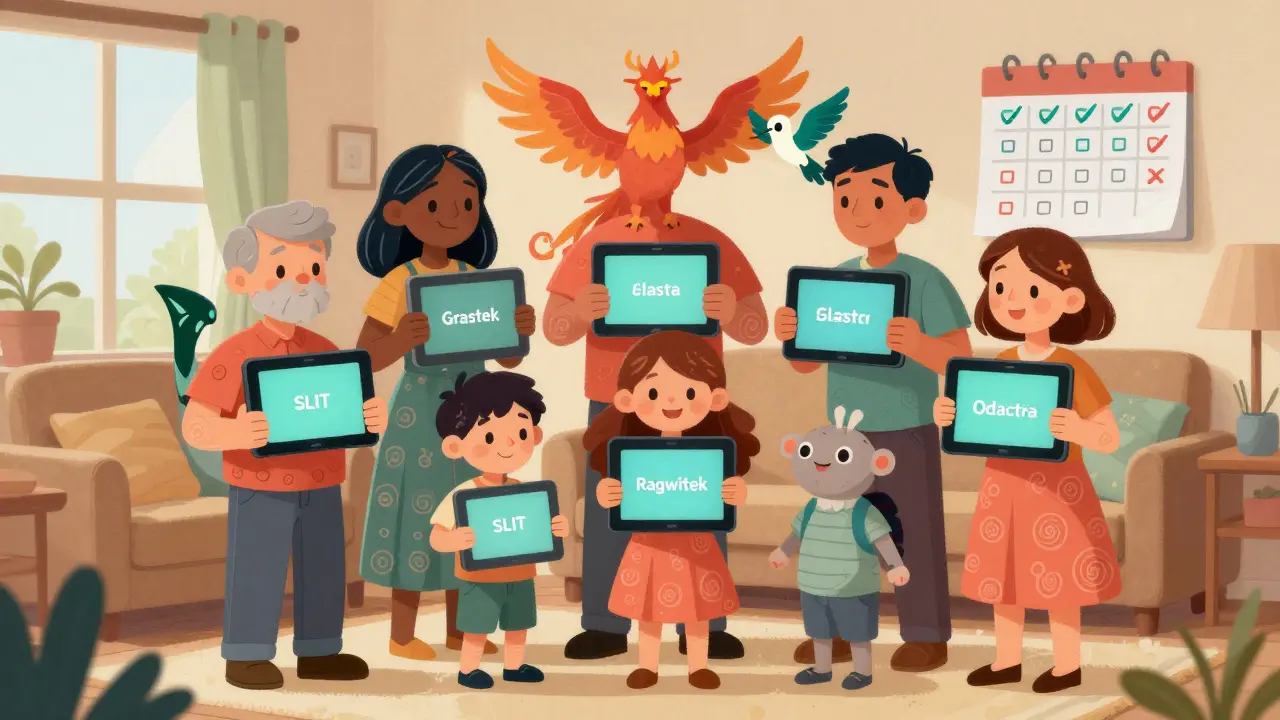
The SLIT market is growing fast. In 2023, the FDA approved Pollenguard, a new grass pollen tablet, joining Grastek, Ragwitek, and Odactra. That’s four options now for pollen and dust mite allergies. In Europe, a multi-allergen tablet combining grass, birch, and olive pollen is already in use. U.S. approval is expected by 2026.
Big news is coming for food allergies. A 2022 study in the New England Journal of Medicine showed peanut SLIT tablets helped 67% of kids tolerate up to 600mg of peanut protein-enough to avoid a reaction from accidental exposure. That’s a game-changer. If approved, this could be the first SLIT treatment for food allergies in the U.S.
Researchers are also testing biomarkers to predict who will respond best. Early data shows that if your IL-10 levels rise after 8 weeks of treatment, you’re likely to have long-term success. This could mean personalized dosing in the future-no more guessing.
What to Do Next
If you think SLIT might work for you, start with an allergist. Get tested to confirm you’re allergic to grass, ragweed, or dust mites. Ask about your insurance coverage and out-of-pocket costs. Ask if they offer free samples or patient support programs.
Once you start, use the apps that come with the tablets-Grastek’s tracker helps remind you to take your dose. Watch the instructional videos on YouTube. Stick with it for at least a year before judging results. And if you miss a dose, don’t panic-just skip it and go back to your regular schedule. Don’t double up.
SLIT tablets aren’t magic. They don’t cure allergies. But for the right person, they offer real, lasting relief without shots, without daily pills, and without the hassle of clinic visits. If your life is ruled by allergy season, it might be time to ask your doctor: Is SLIT right for me?
Are SLIT tablets safe for children?
Yes, SLIT tablets are FDA-approved for children aged 10 and older for grass and ragweed allergies, and 18 and older for dust mites. Studies show they’re well-tolerated in kids, with side effects similar to adults-mostly mild mouth itching. Many parents prefer SLIT over shots because kids find it easier to take daily at home than to sit through weekly injections.
Can I take SLIT tablets with other allergy meds?
Yes. SLIT tablets are designed to be used alongside antihistamines, nasal sprays, or eye drops, especially in the first few months while your body adjusts. Many people reduce their reliance on these meds over time as SLIT takes effect. Never stop your other medications without talking to your allergist.
How long do I need to take SLIT tablets?
Most patients take SLIT tablets for 3 to 5 years. Benefits start building after 8 to 12 weeks, but the full effect takes a year or more. Stopping early means you won’t get long-term protection. After 3 years, some patients can stop without symptoms returning, but others need to continue longer. Your allergist will monitor your progress and help decide when it’s safe to stop.
What if I forget to take my tablet one day?
If you miss a day, just skip it and take your next dose as scheduled. Don’t double up the next day-that won’t make up for the missed dose and could increase side effects. Consistency matters more than perfection. Missing one or two days won’t ruin your progress, but skipping several weeks in a row may delay results.
Do SLIT tablets work for pet allergies?
No. Currently, no SLIT tablets are approved for pet allergies like cat or dog dander. The only FDA-approved options are for grass pollen, ragweed, and dust mites. If you’re allergic to pets, your best options are allergy shots (SCIT), which can be customized for pet allergens, or strict environmental controls combined with medication.
Is SLIT better than allergy shots?
It depends. Allergy shots are slightly more effective and can target more allergens, but they require weekly visits and carry a higher risk of serious reactions. SLIT is safer, more convenient, and better for people with needle phobia or busy schedules. If you’re allergic to one of the three approved allergens and can commit to daily dosing, SLIT is often the better choice. If you have multiple allergies or need faster results, shots may be more suitable.
Thomas Anderson
December 15, 2025 AT 22:07I started Grastek last year for my grass allergy and honestly? Life changed. No more antihistamines every day, no more sneezing fits during soccer games with my kid. First month was weird-tongue itches like crazy-but by month three, I forgot I was even taking it. Just pop it under my tongue before coffee. Done. Worth every penny if your insurance covers it.
Alexis Wright
December 15, 2025 AT 22:22Let’s be real-this is just Big Pharma’s way of monetizing your suffering. You think your immune system is ‘retraining’? Nah. You’re just slowly poisoning yourself with pollen extracts and calling it science. The FDA approved this because they’re bought off. And don’t get me started on the cost. You’re paying $1,200 a year to avoid a $10 bottle of Claritin. Wake up, sheeple.
Daniel Wevik
December 16, 2025 AT 18:15From a clinical immunology standpoint, SLIT represents a paradigm shift in allergen-specific tolerance induction. The sublingual mucosa is rich in dendritic cell populations that facilitate antigen presentation via a Th1/Th2 regulatory pathway, effectively downregulating IgE-mediated hypersensitivity. Adherence metrics are superior to SCIT due to reduced systemic exposure and elimination of injection-related anxiety. However, cost-benefit analysis remains a barrier to population-wide adoption, particularly in underinsured demographics. Long-term data beyond five years is still limited.
Tim Bartik
December 17, 2025 AT 00:39Y’all act like this is some miracle cure but let me tell ya-this ain’t no magic bullet. I took that ragweed tab for 18 months and still had to keep my windows shut in June. And don’t even get me started on the price. I’d rather just drive to Canada and buy the Canadian version-cheaper, same damn thing. And why’s it only work for three allergens? What about my cat allergy? Is my cat evil now? This whole system’s rigged.
Rich Robertson
December 18, 2025 AT 15:49In India, we’ve been using sublingual drops for decades-no tablets, just drops under the tongue. Same principle. People here call it ‘allergy training.’ It’s not new, just repackaged. The science is solid, but the marketing? Overhyped. I’ve seen kids in Delhi take it daily and go from coughing every spring to playing cricket without a tissue. But cost? Still a problem. If this were available as a generic, millions could benefit. Not just Americans with good insurance.
Natalie Koeber
December 19, 2025 AT 10:11Did you know the FDA approved these tablets right after the pandemic? Coincidence? I think not. They’re testing immune modulation on the public to prepare us for future bio-weapon exposure. That’s why they only work on pollen and dust mites-those are the only things they want you to be ‘immune’ to. Meanwhile, your real enemy-5G, fluoridated water, and the shadow government-remains unaddressed. Read the fine print: ‘May cause immune system reprogramming.’ That’s not a side effect. That’s a feature.
Wade Mercer
December 19, 2025 AT 13:29If you’re taking this because you’re too lazy to clean your house or wash your sheets, then you deserve to keep sneezing. This isn’t a cure-it’s a crutch. Real relief comes from reducing exposure. Vacuum with a HEPA filter. Wash bedding weekly. Keep windows closed. Stop blaming your allergies on your immune system and start blaming your own laziness. This tablet is just a Band-Aid on a bullet wound.
Dwayne hiers
December 19, 2025 AT 21:54Important clarification: SLIT efficacy is allergen-specific and dose-dependent. The 30–50% symptom reduction is consistent across phase III trials for grass and ragweed, with a number needed to treat (NNT) of 3–4 for clinically significant improvement. Adherence is the primary confounder-missed doses reduce bioavailability due to rapid salivary clearance. Biomarkers like IL-10 and FoxP3+ Treg upregulation correlate with long-term tolerance. Insurance denials are unjustified given the long-term reduction in ER visits and steroid use. This is evidence-based medicine, not placebo.
Sarthak Jain
December 20, 2025 AT 09:11Hey, I’m from India and my cousin’s kid took SLIT for dust mites-worked like a charm. But yeah, cost is crazy. Here, we get it for like $10/month in generic form. I wish more people knew this isn’t some fancy new thing-it’s just science, plain and simple. If you’re allergic to one of the three, try it. Don’t listen to the noise. Just take it daily. And if you miss one day? No biggie. Just keep going. Your nose will thank you.