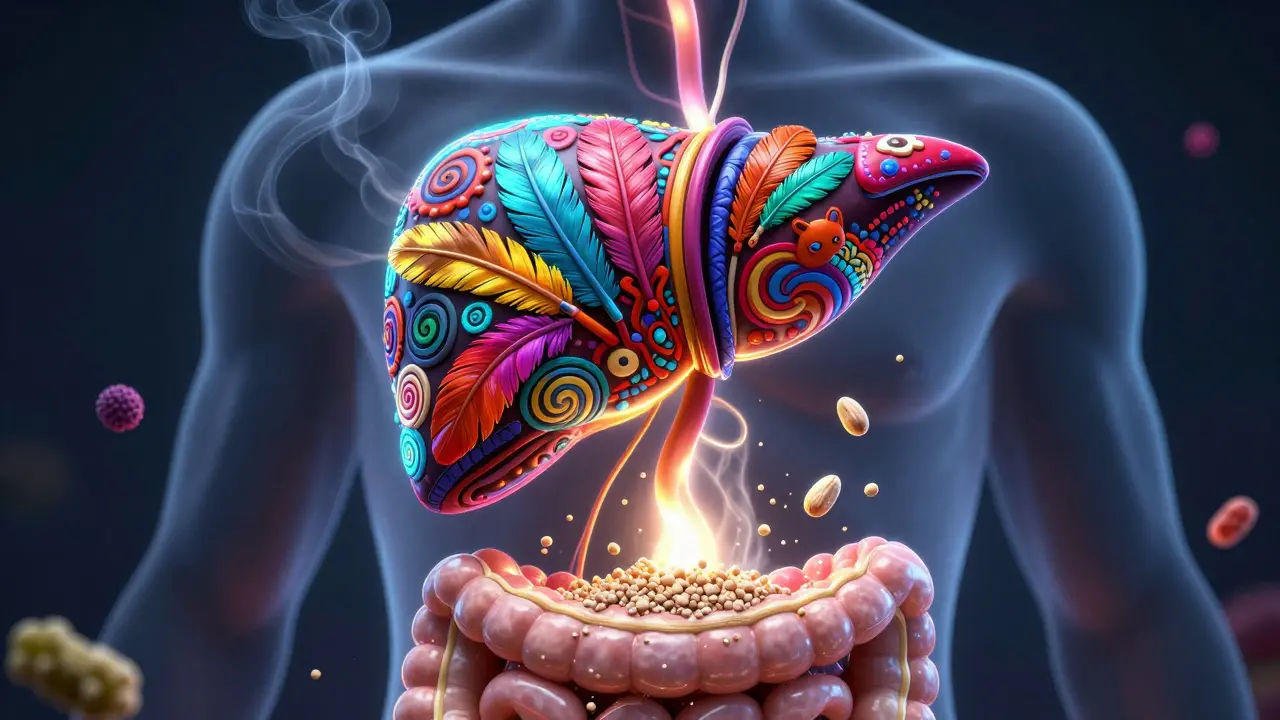
Why Your Liver Might Be Struggling If You Have Celiac Disease
Most people know celiac disease as a gut problem-bloating, diarrhea, stomach pain. But here’s something many don’t realize: celiac disease doesn’t just mess with your intestines. It can also quietly damage your liver. In fact, up to 40% of people with untreated celiac disease show abnormal liver tests long before they ever feel sick. And here’s the twist: once you go gluten-free, those liver numbers often bounce back-fast.
It’s not just a coincidence. There’s a real, biological link between the two. When your immune system attacks gluten in the gut, it doesn’t always stop there. It can turn on your liver, too. And if you’re eating processed gluten-free foods loaded with sugar and fat, you might be accidentally feeding fatty liver disease instead of fixing it.
How Celiac Disease Hits the Liver
The liver doesn’t digest gluten. But it’s the first organ to see what leaks out of your gut when celiac disease damages the intestinal lining. Normally, your gut acts like a wall-keeping bad stuff in and good stuff out. In celiac disease, that wall gets leaky. Gluten fragments, bacteria, and toxins slip through and head straight to the liver via the portal vein.
The liver tries to clean up the mess. But over time, this constant flood of irritants causes inflammation. That’s why liver enzymes like ALT and AST rise. These aren’t just random numbers-they’re warning signs. Studies show 36.7% of people with celiac disease have elevated liver enzymes, compared to just 19.3% of people without it. And in 70% of those cases, both ALT and AST are up together, which points to liver cell damage, not just bile duct issues.
It’s not just about leaks, though. Your immune system gets confused. Antibodies made to fight gluten sometimes mistake liver cells for gluten. That’s called molecular mimicry. It’s why celiac disease often shows up with autoimmune hepatitis-where your body attacks your own liver. About 4 to 6.4% of people with autoimmune hepatitis also have celiac disease. That’s way higher than in the general population.
What Liver Problems Show Up With Celiac Disease?
It’s not one problem-it’s a few. The most common is mild to moderate elevation in liver enzymes. That’s usually the first clue. But beyond that, you might see:
- Steatosis-fatty liver. Seen in 25-50% of celiac patients. It’s not always from being overweight. It’s from poor nutrient absorption and inflammation.
- Autoimmune hepatitis-your immune system attacks liver cells. Often diagnosed after celiac disease is already known.
- Primary biliary cholangitis and primary sclerosing cholangitis-rare, but they show up more often in celiac patients than in others.
- MASLD (metabolic dysfunction-associated steatotic liver disease)-the new name for what used to be called fatty liver. This one’s tricky. It’s not caused by alcohol or viruses, but by metabolic stress. And guess what? A gluten-free diet can make it worse if you’re eating too many processed gluten-free snacks.
Here’s the scary part: 10-15% of celiac patients show fibrosis on liver biopsies. That’s early scarring. Left unchecked, it can lead to cirrhosis. And here’s what’s surprising: 4.7% of people diagnosed with cryptogenic cirrhosis (liver failure with no clear cause) turn out to have undiagnosed celiac disease.

Why Going Gluten-Free Usually Fixes It-But Not Always
The good news? For most people, the liver heals once gluten is gone. A 2015 study by Dr. Daniel Leffler found that 79% of celiac patients with abnormal liver enzymes saw them return to normal within 12 to 18 months of sticking to a strict gluten-free diet. Another study showed 85% normalized within a year.
That’s rare in liver disease. Viral hepatitis needs antivirals. Alcohol damage needs abstinence. But celiac-related liver issues? Just remove gluten, and the body often heals itself.
But here’s the catch: it doesn’t work if you’re still eating gluten-accidentally or on purpose. Cross-contamination in restaurants, hidden gluten in sauces, or even gluten in medications can keep the damage going. And if your liver enzymes don’t improve after a year on a gluten-free diet, something else is going on. That’s when doctors check for autoimmune hepatitis, primary biliary cholangitis, or MASLD.
The Hidden Danger: Gluten-Free Diet Can Cause Fatty Liver
This is where things get ironic. A gluten-free diet is supposed to heal you. But many gluten-free products are loaded with refined starches, sugar, and unhealthy fats to make them taste good. Rice flour, potato starch, corn syrup-these spike blood sugar and insulin, which drives fat storage in the liver.
Studies show celiac patients on gluten-free diets gain weight faster than the general population. And with that weight gain comes higher risk for MASLD. One 2024 study found that celiac patients had double the rate of fatty liver compared to their non-celiac siblings-even when they were the same weight.
So what’s the fix? Stop eating gluten-free cookies, crackers, and pasta made with white rice flour. Focus on whole foods: vegetables, fruits, lean meats, eggs, nuts, seeds, quinoa, buckwheat, and gluten-free oats. Work with a dietitian who knows celiac disease. Patients who do this normalize their liver enzymes 30% faster than those who just go gluten-free without guidance.

When to Get Your Liver Checked
If you’ve just been diagnosed with celiac disease, your doctor should already have ordered liver enzyme tests. But if they didn’t, ask for them. ALT and AST are simple blood tests. If they’re high, don’t assume it’s just fatty liver from being overweight. Test for celiac antibodies first-tTG-IgA, DGP, and EMA. If they’re positive, the liver issue is likely tied to celiac.
Even if you’ve had celiac for years and feel fine, get your liver checked every year. Many people have no symptoms. Fatigue, nausea, or right-side abdominal discomfort can be signs-but often, there are none.
And if you have unexplained liver enzyme elevations-no alcohol use, no hepatitis, no obesity-get tested for celiac disease. The European Association for the Study of the Liver now recommends celiac screening for anyone with cryptogenic cirrhosis. That’s because finding it early can stop liver damage before it’s permanent.
What Happens If You Ignore It?
Ignoring celiac disease and elevated liver enzymes is like ignoring a leaky roof. At first, it’s just a stain. Then the wood rots. Then the ceiling collapses.
People with untreated celiac disease and persistent liver abnormalities have a 37% higher annual healthcare cost than those without liver issues. That’s not just about meds-it’s about doctor visits, scans, biopsies, and hospital stays.
And the risk doesn’t stop at the liver. Celiac disease increases your chance of osteoporosis, infertility, neurological problems, and certain cancers. The liver is just one piece of a bigger puzzle.
But here’s the hope: if you act early, you can reverse it. Most people who stick to a clean gluten-free diet see their liver enzymes drop within months. Their energy returns. Their digestion improves. Their long-term risk plummets.
What You Should Do Right Now
- If you have celiac disease: Get your ALT and AST tested if you haven’t in the last year. If they’re high, don’t panic-just get on a whole-food gluten-free diet and retest in 6 months.
- If you have unexplained elevated liver enzymes: Ask your doctor for a tTG-IgA test. It’s cheap, simple, and could change your life.
- If you’re newly diagnosed: Work with a dietitian who specializes in celiac disease. Avoid processed gluten-free junk. Eat real food.
- If your liver enzymes don’t improve after 12 months: Ask for a referral to a hepatologist. You might need testing for autoimmune hepatitis or other liver conditions.
The link between celiac disease and liver problems isn’t just a medical curiosity. It’s a warning-and an opportunity. Your liver can heal. But only if you act.
Can celiac disease cause permanent liver damage?
Usually not-if you catch it early and stick to a strict gluten-free diet. Most liver enzyme abnormalities and even early scarring reverse within a year. But if celiac disease goes undiagnosed for years, or if you continue eating gluten, fibrosis can progress to cirrhosis. That’s why early testing matters.
Do all people with celiac disease get liver problems?
No. Only about 15-40% have elevated liver enzymes at diagnosis. But that’s still a large portion-and many have no symptoms. That’s why doctors now screen liver enzymes routinely when diagnosing celiac disease.
Can a gluten-free diet make fatty liver worse?
Yes, if you replace gluten with processed gluten-free junk food. Many gluten-free products are high in sugar, refined carbs, and unhealthy fats-ingredients that directly cause fat buildup in the liver. A gluten-free diet based on whole foods helps. One based on snacks and pastries can hurt.
How long does it take for liver enzymes to normalize after going gluten-free?
Most people see improvement within 3-6 months. Normalization typically happens within 12 months for 85% of patients. But if enzymes don’t drop after a year, you need further testing for other liver conditions like autoimmune hepatitis.
Should I get a liver biopsy if I have celiac disease and high enzymes?
Not usually. First, try a strict gluten-free diet and retest in 6-12 months. A biopsy is only recommended if enzymes stay high after a year, or if there are signs of advanced liver disease like low platelets, enlarged spleen, or jaundice. Most cases don’t need it.
Is there a blood test that can tell if liver damage is from celiac disease?
Not yet. But doctors use a combination of clues: positive celiac antibodies, elevated liver enzymes, no other cause for liver disease, and improvement on a gluten-free diet. If all those fit, it’s likely celiac-related. Research is ongoing to find specific biomarkers.
Ed Mackey
February 3, 2026 AT 22:49man i had no idea celiac could mess with your liver like that. i thought it was just stomach stuff. my cousin got diagnosed last year and she was always tired but no one linked it to her gut. this makes so much sense now.
Justin Fauth
February 5, 2026 AT 03:01gluten-free junk food is the real enemy here. they sell you 'healthy' gluten-free cookies that are basically sugar bombs wrapped in rice flour. it's a scam. big food knows people will pay extra for 'special' diets and they milk it dry. wake up people.
Meenal Khurana
February 5, 2026 AT 03:50My liver enzymes were high. Tested for celiac. Positive. Went gluten-free. Normal in 5 months. No biopsy needed.
Joy Johnston
February 5, 2026 AT 23:28It's critically important to emphasize that a gluten-free diet must be both strictly adhered to and nutritionally balanced. Many patients inadvertently replace nutrient-dense whole grains with highly processed, low-fiber, high-glycemic-index substitutes, which exacerbates metabolic dysfunction. Collaborating with a registered dietitian specializing in celiac disease is not merely advisable-it is medically essential to prevent secondary complications like MASLD.
Sherman Lee
February 6, 2026 AT 04:33they don't want you to know this... the government and pharma are letting this slide because if everyone went gluten-free and ate real food, they'd lose billions. fatty liver? it's not your fault. it's the gluten in your meds, your lipstick, your toothpaste. they're poisoning us slowly. 🤫👁️
Zachary French
February 7, 2026 AT 08:55let me just say this: i was diagnosed with celiac at 28, liver enzymes through the roof. went full keto-gluten-free, ditched every processed thing, started eating wild salmon, kale, and eggs from backyard chickens. 11 months later? my doctor said my liver looks like a 19-year-old’s. i’m basically a biohacker now. if you’re not doing this, you’re doing it wrong. 🤓🔥
Daz Leonheart
February 7, 2026 AT 10:08you’re not alone. i was scared when my enzymes were high, but sticking to real food made all the difference. take it slow. celebrate small wins. your liver is tougher than you think.
Coy Huffman
February 9, 2026 AT 03:47it’s wild how the body tries to heal itself if you just stop stabbing it with processed crap. gluten isn’t the villain-it’s the *constant* assault on the system that turns a manageable condition into a silent crisis. the liver doesn’t hate you. it’s just doing its job, overwhelmed. give it a chance to breathe. 🌱