Imagine finding out that the expensive medication you've been taking for years is available in a version that is identical in every way-same ingredients, same factory, same effect-but costs a fraction of the price. That's the reality of authorized generics is an approved brand-name drug that is sold by the original manufacturer or its licensees without the brand name on the label . While it sounds like a win-win, the transition can feel confusing. You might wonder if you're sacrificing quality for cost or why your pill suddenly looks different despite being "the same."
What actually makes an authorized generic different?
To understand the switch, you first have to clear up a common misconception: not all generics are created equal. Most people think of "traditional" generics. These are made by different companies that prove to the FDA that their version works the same way as the brand name. They use the Abbreviated New Drug Application (ANDA) process to show bioequivalence.
An authorized generic is different because it is literally the brand-name drug, just stripped of its fancy branding. It is produced under the original New Drug Application (NDA). This means it doesn't need a separate approval process because the FDA already approved the formula. Because they are made in the same facilities using the same processes, the active and inactive ingredients are 100% identical.
| Feature | Brand Name | Authorized Generic | Traditional Generic |
|---|---|---|---|
| Ingredients | Original Formula | Identical to Brand | Bioequivalent (May vary) |
| Manufacturer | Brand Company | Brand Company/Licensee | Third-party Manufacturer |
| FDA Pathway | NDA | Original NDA | ANDA |
| Cost | Highest | Lower | Lowest |
The financial impact of making the switch
The biggest motivator for switching is almost always the wallet. Data from the Federal Trade Commission (FTC) shows that these drugs significantly drive down both retail and wholesale prices. In many cases, the introduction of an authorized generic can lead to price drops between 8.4% and 18.2%.
For a regular patient, this often translates to an immediate out-of-pocket saving. Recent Medicare Part D data suggests that switching can save a patient anywhere from $15 to $30 per prescription. If you're managing a chronic condition with multiple medications, those savings add up fast. However, keep an eye on your insurance provider. Many health plans automatically substitute authorized generics for brand names, which is why you might notice a price change at the pharmacy counter without having requested it.

Practical steps for a smooth transition
If you're thinking about switching or your pharmacist has suggested it, don't just take a leap of faith. Follow these practical steps to ensure you're getting exactly what you need.
Verify the drug's status
Not every generic is an "authorized" one. To be sure, you can check the
FDA's Orange Book (Approved Drug Products With Therapeutic Equivalence Evaluations). The FDA also maintains a quarterly updated list of all reported authorized generics. Checking this ensures you aren't just switching to a traditional generic if your goal was specifically an authorized version.
Talk to your doctor about sensitivities
While authorized generics are identical to the brand, traditional generics can have different inactive ingredients (fillers or dyes). If you have severe allergies or sensitivities to specific dyes or binders, an authorized generic is the safest bet because it mirrors the brand exactly. Mention this to your provider so they can specify "dispense authorized generic only" if necessary.
Manage your expectations on appearance
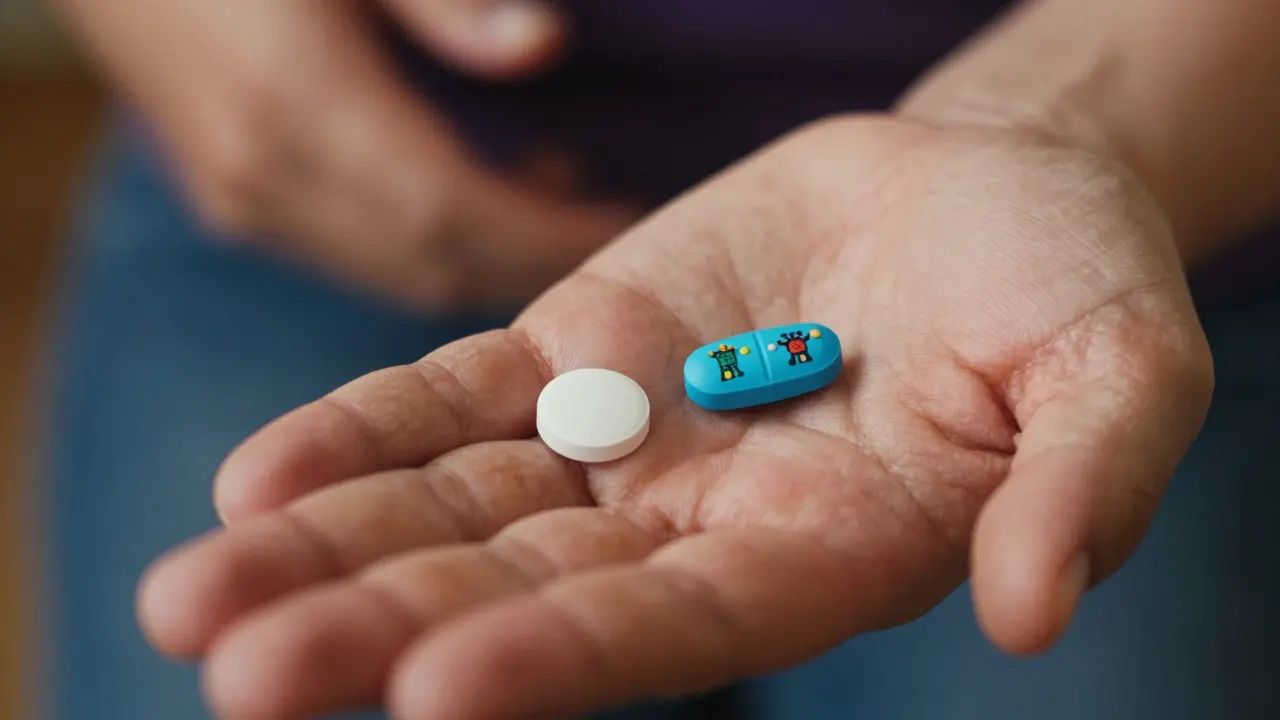
Here is where most people get tripped up: the pill might look different. Even though the chemical makeup is the same, the shape, color, or imprint on the tablet might change. Pharmacists report that about 65% of patient concerns during a switch are related to these cosmetic differences. Remind yourself that a change in color doesn't mean a change in chemistry.
Navigating insurance and pharmacy hurdles
Switching isn't always as simple as asking for a different bottle. Depending on your insurance tier, you might encounter a few bumps in the road.
- Prior Authorization: If you are on a specialty medication, your insurance might require a "prior authorization" before they agree to cover the authorized generic. This means your doctor has to submit a form explaining why the switch is appropriate.
- Pharmacy Inventory: Sometimes pharmacies stock both the brand and the authorized generic. This can cause temporary confusion. Always double-check the label and the pill's appearance against the description provided by the pharmacist to ensure the correct version was dispensed.
- Medical Records: Ensure your pharmacy updates your records. If you are seeing multiple doctors, it's important they all know which version of the drug you are taking to avoid dosing errors or confusion during a medical emergency.
Common concerns and expert reality checks
It's natural to feel a bit of anxiety when changing a medication that works. You might hear that generic drugs are "lower quality." In the case of authorized generics, this is mathematically impossible because the product is the brand-name drug itself.
A retrospective study published via the National Center for Biotechnology Information (NCBI) found that patients switching to authorized generics had outcomes similar to those staying on brand-name drugs. This includes similar rates of medication discontinuation and hospitalization risks. In other words, the therapeutic effect remains constant while the cost drops.
Some critics, like analysts at Drug Patent Watch, suggest that brand companies launch these generics strategically to keep other competitors out of the market. While that might be true from a corporate strategy perspective, for the patient, the result is still a cheaper version of a drug they already trust.
Is an authorized generic the same as a regular generic?
No. While both are intended to be bioequivalent, a regular generic is made by a different company and must prove it works like the brand. An authorized generic is actually the brand-name drug, manufactured by the original company, but sold without the brand label.
Will my insurance cover the switch?
In most cases, yes. In fact, many insurance plans require the use of authorized generics if they are available. However, for specialty medications, you may need your doctor to provide a prior authorization to switch.
Why does my authorized generic look different from the brand name?
The physical appearance (color, shape, or imprint) can be changed for branding or regulatory reasons, but the active and inactive ingredients remain identical to the brand-name version.
How do I know if my medication is an authorized generic?
You can ask your pharmacist for the manufacturer's name or check the FDA's quarterly list of authorized generics and the FDA Orange Book for therapeutic equivalence.
Are there any risks to switching?
For the vast majority of people, there are no clinical risks because the formulation is identical. The primary risks are psychological (anxiety over the change) or administrative (insurance coverage issues).
What to do next
If you want to save money on your prescriptions, start by auditing your current medications. Look for the brand names and check if an authorized generic exists. Schedule a quick 15-minute call with your pharmacist to see which versions they stock and how your specific insurance plan handles the substitution.
If you experience any unusual symptoms after a switch, keep a log of the exact date and the lot number of the medication. While rare for authorized generics, documenting everything helps your doctor determine if a specific batch was an issue or if your body is reacting to the transition.
Billy Wood
April 14, 2026 AT 08:30Great tips!!! Save that money!!!
Mary Johnson
April 14, 2026 AT 22:35Same factory doesn't mean same quality if the oversight is lax
Big Pharma just uses this as a loophole to keep their monopolies while pretending to help the poor. They probably switch the ingredients just to see how we react and keep the data for some weird experiment. I don't trust any pill that comes in a plain white bottle with no brand name on it.
Clint Humphreys
April 16, 2026 AT 21:20It is quite fascinating how the industry operates because if you actually look at the regulatory capture of the FDA you realize that the whole NDA process is basically a handshake deal between lobbyists and regulators and while I am sure the drug itself is fine in a chemical sense you have to wonder why the pricing isn't just flat across the board unless there is some hidden incentive to keep people on the high-cost tier for as long as possible to maximize quarterly earnings for the shareholders who probably own the pharmacy chains too.
Haley Moore
April 17, 2026 AT 12:29Imagine actually thinking the FDA Orange Book is a reliable source of truth lol 🙄 Honestly the amount of effort it takes to verify this is just... ugh. Too much work for a few bucks. 💅
Princess Busaco
April 17, 2026 AT 18:13I find it absolutely quaint that people believe a simple color change is just 'cosmetic' when we all know that the psychological impact of taking a blue pill versus a white pill can fundamentally alter the placebo effect, and honestly, if the pharmaceutical companies really cared about the patient experience they would maintain visual consistency instead of forcing us to deal with this visual dissonance just to save a couple of dollars which is frankly insulting to anyone with a basic understanding of patient-centric care.
Tabatha Pugh
April 18, 2026 AT 17:03The ANDA process specifically allows for variations in excipients which is why checking for authorized generics is the only way to ensure zero deviation from the original formula.
Catherine Mailum
April 19, 2026 AT 07:05oh wow i just love how the insurance companies 'help' us by deciding which version of a drug we get while they keep the difference in profit and pretend they are doing us a favor by saving us twenty bucks a month... truly heartwarming stuff
Brooke Mowat
April 20, 2026 AT 00:13this is such a vibe for the wallet!! just gotta keep the mind open and not let the scary look of a new pill ruin the flow of your wellness journey. its all about that energy and saving those coins for something more fun while still gettin the good stuff in ya!!
Shaylia Helland
April 21, 2026 AT 16:53it's really interesting how people get so anxious about the look of the pill when the chemistry is the same and i think we just need to be more patient with ourselves and the process because the healthcare system is so overwhelming these days and anyone feeling a bit of panic over a different shaped tablet is totally valid and deserves some grace
john chiong
April 21, 2026 AT 22:06total scam if you think the brand companies do this for charity they are just protecting their turf and milking the system dry with fancy labels and corporate greed
Anurag Moitra
April 23, 2026 AT 11:57The distinction between ANDA and NDA is a critical point for those managing complex medications. Ensuring the pharmacy updates records prevents adverse events during emergencies.
Olivia Lo
April 25, 2026 AT 10:10The ontological status of the 'brand' is merely a semiotic construct designed to create a perceived value gap where none exists in the molecular reality of the compound. By stripping the nomenclature, we engage in a pragmatic redistribution of cost that aligns the economic value with the actual therapeutic utility of the substance, though one must remain mindful of the systemic asymmetries inherent in the pharmaceutical industrial complex.
melissa mac
April 26, 2026 AT 02:00I really appreciate the breakdown of the steps to take. It's helpful to know that we can advocate for 'authorized generic only' when dealing with allergies to fillers.
Mary Johnson
April 26, 2026 AT 11:28Who cares if the 'chemistry' is the same? The factories are often in countries with zero regulations. You're basically gambling with your life for thirty bucks. I've seen the forums, people get different effects because the purity varies between batches even if the formula is the same on paper. It's all a shell game played by people in suits who don't care if you end up in the ER as long as the stock price goes up one point. I'm sticking to the original brand and paying the premium for the peace of mind that I'm not taking some diluted mystery slurry that was approved by a bribed official. Trusting the system is the fastest way to get sick. Always read the fine print and never trust a pharmacist who tells you it's exactly the same because they're just reading a script given to them by the corporate office to move inventory that isn't selling. Keep your eyes open and your guard up because once you switch and start feeling the side effects they'll just tell you it's psychosomatic until you're too sick to complain.