
High blood pressure is often called the silent killer because it rarely shows symptoms until damage is done. To stop this damage, doctors rely on three main classes of drugs: Beta-blockers, medications that slow heart rate and reduce cardiac workload by blocking adrenaline effects, ACE inhibitors, drugs that prevent the formation of angiotensin II, a substance that narrows blood vessels, and ARBs, Angiotensin Receptor Blockers that directly block the action of angiotensin II on receptors. While all three lower blood pressure, they work differently and carry distinct risks. Choosing the right one isn't just about numbers on a cuff; it's about your specific health history, side effect tolerance, and long-term goals.
Understanding How These Drugs Work
To understand why you might be prescribed one over another, you need to look at how they interact with your body’s renin-angiotensin system. This system controls blood vessel tightness and fluid balance. ACE inhibitors, such as lisinopril or enalapril, block the enzyme that converts angiotensin I into angiotensin II. By stopping this conversion, they keep blood vessels relaxed. They were first approved in the early 1980s, with captopril leading the way. Today, lisinopril remains the most prescribed antihypertensive globally, with over 129 million prescriptions annually in the US alone.
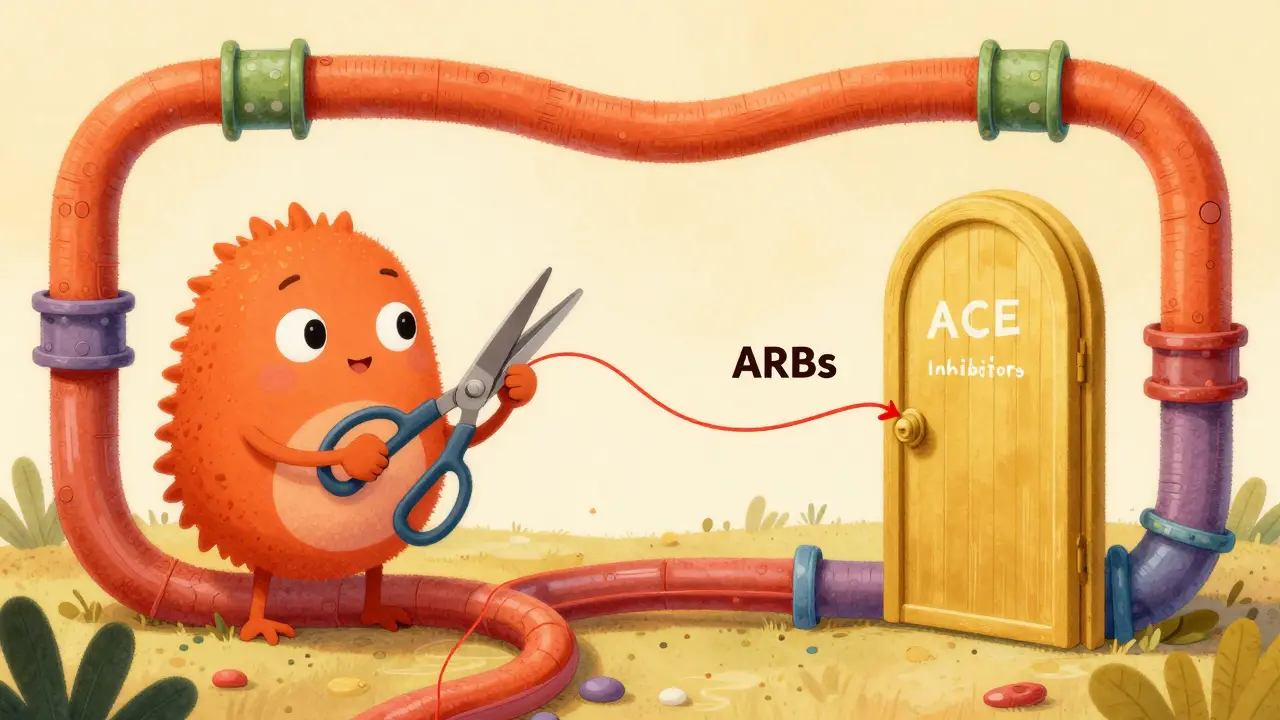
ARBs, like losartan or valsartan, take a different approach. Instead of blocking the creation of angiotensin II, they block the receptor where angiotensin II would normally attach. Think of ACE inhibitors as cutting off the supply of keys, while ARBs lock the doors so the keys can’t open them. ARBs entered the market in 1995 with losartan. Because they don’t interfere with bradykinin metabolism (unlike ACE inhibitors), they avoid some of the more annoying side effects associated with the older class.
Beta-blockers, including metoprolol and carvedilol, operate on a completely different pathway. They block adrenaline from binding to beta-adrenergic receptors in the heart. This slows your heart rate by 10-15 beats per minute and reduces the force of each contraction. Propranolol was the first beta-blocker, available since 1964. While they are less commonly used for simple high blood pressure today, they remain critical for patients who have had a heart attack or suffer from heart failure.
Risks and Side Effects: What You Need to Know
No medication is free of risks, and understanding these is crucial for adherence. The most common complaint with ACE inhibitors is a persistent, dry cough. This affects 10-20% of users because these drugs cause bradykinin to accumulate in the lungs. More seriously, there is a small risk (0.1-0.7%) of angioedema, a swelling of the face or throat that requires immediate medical attention. If you develop a cough after starting an ACE inhibitor, switching to an ARB usually resolves it within days.
ARBs are generally better tolerated. Studies show they cause cough in only about 6.4% of patients compared to 11.7% for ACE inhibitors. The risk of angioedema is also roughly half that of ACE inhibitors. However, ARBs are not without issues. They can still cause elevated potassium levels (hyperkalemia) and kidney function changes, especially if you are dehydrated or taking other medications that affect the kidneys.
Beta-blockers come with a different set of challenges. Fatigue is reported by nearly 28% of patients, which can make daily activities feel harder. They can also worsen metabolic parameters, increasing triglycerides by 10-15% and lowering HDL cholesterol by 5-10%. For people with asthma, non-selective beta-blockers can trigger bronchospasm, though selective beta-1 blockers like metoprolol are safer. Additionally, beta-blockers should never be stopped abruptly, as this can cause a dangerous rebound increase in heart rate and blood pressure.
| Feature | ACE Inhibitors | ARBs | Beta-Blockers |
|---|---|---|---|
| Mechanism | Blocks Angiotensin II formation | Blocks Angiotensin II receptors | Blocks adrenaline receptors |
| Common Side Effect | Dry cough (10-20%) | Fatigue (less common) | Fatigue (28%), sexual dysfunction |
| Serious Risk | Angioedema (0.1-0.7%) | Hyperkalemia | Bradycardia, asthma exacerbation |
| Best For | Post-MI, Diabetic Kidney Disease | ACE Intolerant, Hypertension | Heart Failure, Post-MI |
Choosing the Right Drug for Your Condition
The best drug depends heavily on your comorbidities. If you have had a heart attack, guidelines strongly favor ACE inhibitors or certain beta-blockers. Data from the SAVE trial showed a 19% mortality reduction with ACE inhibitors in post-heart attack patients. Similarly, beta-blockers like carvedilol reduce all-cause mortality by 35% in patients with heart failure with reduced ejection fraction (HFrEF).
For diabetic kidney disease, ACE inhibitors are preferred because they provide a 21% greater reduction in proteinuria than ARBs, according to the RENAAL trial. This helps protect the kidneys from further damage. However, if you cannot tolerate the cough, switching to an ARB is a standard and effective alternative.
In uncomplicated hypertension, the choice is more flexible. Recent real-world studies involving over 300,000 patients suggest that ARBs may lead to slower cognitive decline in older adults compared to ACE inhibitors. With a hazard ratio of 0.82 for cognitive decline, ARBs are gaining popularity among cardiologists for new prescriptions, especially when tolerability is a concern.

Combination Therapies and What to Avoid
Many patients require more than one medication to reach their blood pressure targets. Combining an ACE inhibitor or ARB with a thiazide diuretic can produce an additional 20-25 mmHg systolic reduction. Beta-blockers are also often combined with these agents, particularly in younger patients with high sympathetic drive.
However, there is a major red flag: never combine an ACE inhibitor and an ARB unless specifically directed by a specialist for complex heart failure cases. The ONTARGET trial found that dual blockade increases the risk of renal dysfunction by 38% without providing significant additional benefit for most patients. This practice has largely been discontinued in general hypertension management.
Starting doses matter too. Typical starting points are lisinopril 10 mg daily, losartan 50 mg daily, or metoprolol succinate 25-50 mg daily. Doctors will titrate these up slowly. For heart failure, beta-blockers must be increased very gradually-often doubling every two weeks-to avoid shocking the heart. Reaching target doses can take 12-16 weeks.
Real-World Adherence and Patient Experience
Medication adherence drops significantly when side effects become unbearable. Data from CVS Health shows that 12-month persistence rates are 63.2% for ARBs versus 56.7% for ACE inhibitors. The primary reason for stopping ACE inhibitors is cough, accounting for 78% of discontinuations due to side effects. Patients often report feeling much better after switching to an ARB like valsartan, with symptoms resolving quickly.
Beta-blockers face similar adherence hurdles. Fatigue and reduced exercise tolerance lead many patients to switch to calcium channel blockers like amlodipine if their doctor agrees. It’s important to communicate these issues to your healthcare provider. There are alternatives within each class. For instance, nebivolol, a newer beta-blocker, causes fewer fatigue symptoms (14% vs 28%) than older agents.
Can I switch from an ACE inhibitor to an ARB?
Yes, switching from an ACE inhibitor to an ARB is a common and safe strategy, especially if you experience a persistent dry cough. ARBs work similarly but do not affect bradykinin levels, which eliminates the cough in most patients. Always consult your doctor before making this change to ensure proper dosing and monitoring.
Are beta-blockers safe for people with asthma?
Non-selective beta-blockers can trigger severe bronchospasm in asthmatics and should be avoided. However, cardioselective beta-blockers (beta-1 selective) like metoprolol or bisoprolol are generally safer and may be used with caution under medical supervision. They primarily target the heart rather than the lungs.
Why are ACE inhibitors preferred for diabetes?
ACE inhibitors are preferred for patients with diabetic kidney disease because they significantly reduce proteinuria (protein in the urine), which is a marker of kidney damage. Clinical trials like RENAAL have shown they provide superior protection against kidney progression compared to other antihypertensives.
What are the signs of angioedema?
Angioedema is a serious allergic reaction characterized by swelling of the deep layers of skin, often around the eyes, lips, tongue, or throat. If you experience difficulty breathing, swallowing, or noticeable facial swelling after taking an ACE inhibitor or ARB, seek emergency medical help immediately.
Can I stop my beta-blocker suddenly?
No, you should never stop a beta-blocker abruptly. Doing so can cause a rebound effect, leading to a rapid increase in heart rate, blood pressure, and even heart attacks. Tapering off must be done gradually under the guidance of a healthcare provider.