Geriatric Medication Safety Checker
Check Medication Safety for Elderly Patients
This tool helps identify medications that may be unsafe for adults 65+ based on the Beers Criteria (2023) and provides evidence-based alternatives.
Every year, more than 1 in 3 hospital admissions among adults 65 and older are linked to medication problems. It’s not just about taking too many pills - it’s about taking the wrong ones. For older adults, even common drugs can trigger falls, confusion, kidney damage, or life-threatening bleeding. The truth is, what’s safe for a 40-year-old might be dangerous for a 75-year-old. And yet, many doctors still prescribe these medications without realizing the risks.
Why Older Bodies Handle Medications Differently
As we age, our bodies change in ways that affect how drugs work. The liver and kidneys slow down, meaning medications stay in the system longer. Fat increases and muscle mass decreases, altering how drugs are absorbed and distributed. Blood flow to the brain drops, making older adults more sensitive to sedatives and painkillers. These aren’t minor adjustments - they’re fundamental shifts that can turn a standard dose into an overdose.Take benzodiazepines, for example. A doctor might prescribe them for anxiety or insomnia, thinking it’s harmless. But in older adults, these drugs increase the risk of falls by up to 50%. A single fall can lead to a hip fracture, hospitalization, and permanent loss of independence. The same goes for NSAIDs like ibuprofen or naproxen. They’re common for arthritis pain, but they raise the risk of stomach bleeding and kidney failure in seniors - especially those on blood pressure meds or diuretics.
The Beers Criteria: The Gold Standard for Safe Prescribing
In 1991, the American Geriatrics Society (AGS) created the Beers Criteria - a list of medications that should be avoided or used with extreme caution in adults 65 and older. It’s not a suggestion. It’s a clinical lifeline. The latest version, updated in 2023, identifies 139 medications or drug classes that pose serious risks. Some are outright banned for most older adults. Others require strict limits on dosage, duration, or monitoring.For instance, tramadol - once thought to be a safer opioid - is now flagged because it can cause dangerous drops in sodium levels, especially when taken with antidepressants or diuretics. Aspirin for heart protection? It’s no longer recommended for primary prevention in anyone over 70. Why? Because the bleeding risk now outweighs the benefit for most seniors. Even common OTC drugs like antihistamines (diphenhydramine) are on the list - they’re strong anticholinergics that can cause memory loss, urinary retention, and constipation.
What makes the Beers Criteria powerful is that it’s not static. Every three years, a panel of geriatric experts reviews the latest evidence. And in July 2025, they added something revolutionary: the AGS Beers Criteria® Alternatives List. This isn’t just about what to avoid - it’s about what to use instead.
Alternatives Matter More Than Avoidance
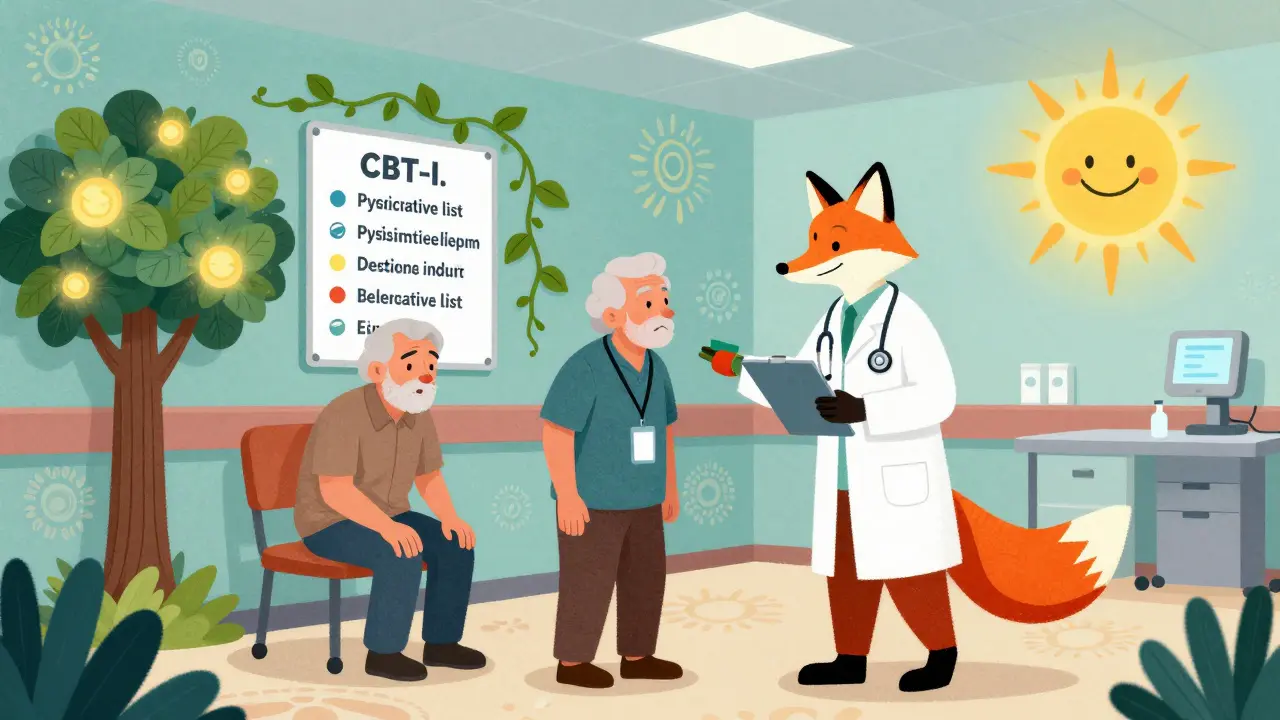
Doctors often say they know a drug is risky - but they don’t know what to give instead. That’s where the Alternatives List changes everything. It doesn’t just say, “Don’t use this.” It says, “Try this instead.”For chronic insomnia, instead of benzodiazepines, the list recommends cognitive behavioral therapy for insomnia (CBT-I) - a proven, non-drug approach that works better long-term. For agitation in dementia, antipsychotics are high-risk; the alternative? Environmental changes, scheduled activities, and non-pharmacological calming techniques. For osteoarthritis pain, acetaminophen (at safe doses) and physical therapy come before NSAIDs. Out of 47 recommended alternatives, nearly 38% are non-drug options.
This shift is critical. A 2025 survey of 1,200 primary care doctors found that 68% struggled to find safe alternatives when trying to stop harmful medications. Without clear guidance, they just kept prescribing - and older patients kept getting hurt.
How Emergency Departments Are Leading the Change
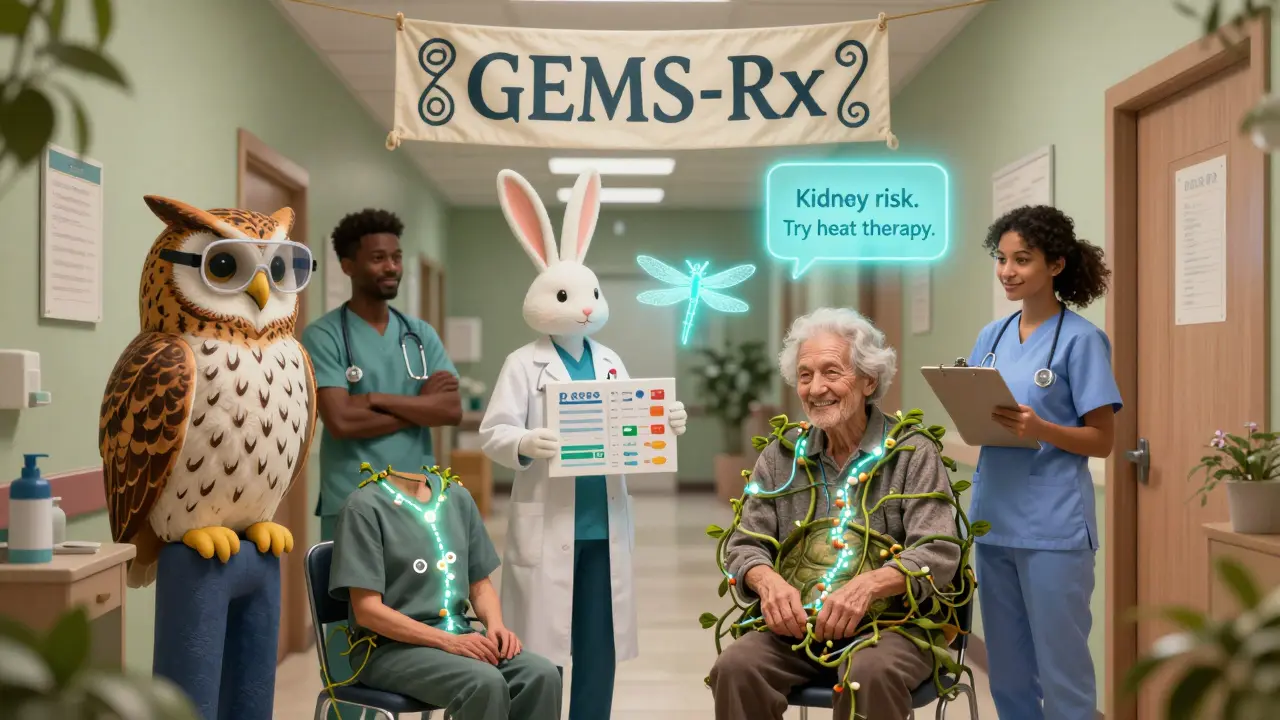
Emergency rooms see the worst of geriatric medication errors. A senior falls after taking a sedative. A man is admitted with a GI bleed from an NSAID. A woman is confused because of an anticholinergic drug she’s been on for years.In response, the Geriatric Emergency Medication Safety Recommendations (GEMS-Rx) were created in March 2024. This toolkit focuses on what happens when older patients are discharged from the ER - a time when medication errors spike. It identifies 8 high-risk drug classes that should be avoided at discharge: antipsychotics, benzodiazepines, anticholinergics, opioids, NSAIDs, certain diabetes drugs, proton pump inhibitors, and gabapentinoids.
Programs using GEMS-Rx have cut high-risk prescribing by nearly 30% in emergency departments. At the Mayo Clinic Rochester ED, a team of pharmacists, geriatricians, and ER doctors reduced inappropriate prescriptions by 38% in just six months. But it didn’t happen overnight. They spent 12 weeks training staff, redesigning workflows, and building alerts into their electronic health record system.
The Role of Technology - and Its Pitfalls
Electronic health records (EHRs) like Epic now include Beers Criteria alerts. When a doctor tries to prescribe a flagged drug to a patient over 65, a warning pops up. Sounds perfect - right?Not always. A July 2025 survey of 850 emergency physicians found that 41% suffer from “alert fatigue.” The system flags every single patient over 65 - even when the drug is clearly appropriate. Warfarin for atrial fibrillation? Flagged. Low-dose aspirin for someone with a history of heart attack? Flagged. So doctors start ignoring the alerts. In some cases, override rates hit 65%.
The problem isn’t the science - it’s the design. Smart systems are coming. In early 2026, the AGS will release “Beers Criteria Digital Integration Standards” - AI-driven alerts that consider the full clinical picture. Instead of saying, “Don’t prescribe this,” the new system might say, “This patient has kidney disease and is on diuretics. Tramadol could cause hyponatremia. Consider physical therapy or a safer pain option.”
Who’s Doing It Right? Real-World Success Stories
The University of Alabama at Birmingham’s emergency department cut 30-day readmissions for medication-related problems by 22% in under a year. How? They assigned a clinical pharmacist to every older patient at discharge. The pharmacist reviewed every medication, talked to the patient’s primary care doctor, and created a simple, written plan.At the Mayo Clinic, they didn’t just add a pharmacist - they changed their whole workflow. Nurses now screen for high-risk drugs during triage. Pharmacists meet with patients before discharge. Doctors get real-time feedback. It’s not expensive - just intentional.
Even small clinics are seeing results. A rural hospital in Iowa reduced benzodiazepine prescriptions by 52% after training staff with the GEMS-Rx decision trees. They didn’t need fancy tech - just clear guidelines and a willingness to listen to patients.
What’s Holding Back Progress?
Despite the evidence, adoption is uneven. Only 31% of rural emergency departments have full geriatric medication safety programs. Why? Staff shortages. Lack of training. Outdated EHRs. And a culture that still sees prescribing as the default solution.There’s also a dangerous myth: that stopping meds is always better. Dr. Joanne Schnur warned in JAMA Internal Medicine that rigidly applying the Beers Criteria can backfire. A frail 80-year-old with advanced cancer and severe pain might need an opioid - even if it’s on the list. The goal isn’t to avoid all drugs. It’s to use the right drug, at the right dose, for the right reason - and only if it improves quality of life.
That’s why deprescribing - the careful, patient-centered process of stopping unnecessary meds - is so vital. A 2025 JAMA meta-analysis found that programs with pharmacists and geriatricians achieved 42% deprescribing rates. Programs without them? Only 22%.
What Needs to Change
The system isn’t broken - it just needs better tools and better teamwork. Here’s what works:- Use the Beers Criteria + Alternatives List together. Don’t just stop drugs - replace them with safer options.
- Involve pharmacists. Every hospital treating older adults should have a geriatric pharmacist on staff.
- Train staff. Eight hours of focused training on geriatric pharmacology makes a measurable difference.
- Use EHR alerts wisely. Customize them. Don’t flood clinicians with noise - deliver context.
- Listen to the patient. What matters most? Pain relief? Sleep? Mobility? Treatment should match their goals - not just guidelines.
By 2030, nearly 1 in 5 Americans will be over 65. If we don’t fix this, medication-related harm will become the leading cause of preventable illness in older adults. The tools exist. The evidence is clear. What’s missing is the will to change.
What is the Beers Criteria and why does it matter for elderly patients?
The Beers Criteria is a list of medications that are potentially inappropriate for adults 65 and older due to high risks of side effects like falls, confusion, kidney damage, or bleeding. Developed by the American Geriatrics Society and updated every three years (most recently in 2023), it helps doctors avoid prescribing drugs that can do more harm than good. Over 1,200 studies have cited it, making it the most trusted guide in geriatric prescribing.
Can older adults still take medications like aspirin or ibuprofen?
It depends. Aspirin is no longer recommended for primary heart disease prevention in anyone over 70 because bleeding risks outweigh benefits. Ibuprofen and other NSAIDs can cause stomach bleeding and kidney damage, especially in seniors on blood pressure meds or diuretics. They’re not banned - but they should be used only if safer alternatives (like acetaminophen or physical therapy) don’t work, and at the lowest possible dose for the shortest time.
What are non-drug alternatives to common geriatric medications?
For insomnia, cognitive behavioral therapy (CBT-I) is more effective long-term than sleeping pills. For arthritis pain, physical therapy, weight management, and heat/cold therapy work better than NSAIDs. For anxiety or agitation, structured routines, social engagement, and calming environments reduce symptoms without drugs. The AGS Alternatives List (2025) includes 47 evidence-backed options - nearly 38% are non-pharmacological.
Why do some doctors still prescribe risky drugs to older patients?
Many doctors don’t have access to updated guidelines or lack training in geriatric pharmacology. Others face time pressures and don’t know safe alternatives. Some rely on habit - if it worked 20 years ago, they assume it still does. And in emergency settings, quick fixes are tempting. But with tools like the Beers Criteria and GEMS-Rx, better choices are now possible.
How can families help protect elderly loved ones from dangerous medications?
Ask the doctor: “Is this medication still necessary?” “Are there safer alternatives?” “Could we try stopping it?” Bring a complete list of all medications - including OTC drugs and supplements - to every appointment. If a medication was prescribed for a different condition (like anxiety or sleep), ask if it’s still needed. Many seniors are on drugs they no longer need. A pharmacist review can uncover these hidden risks.