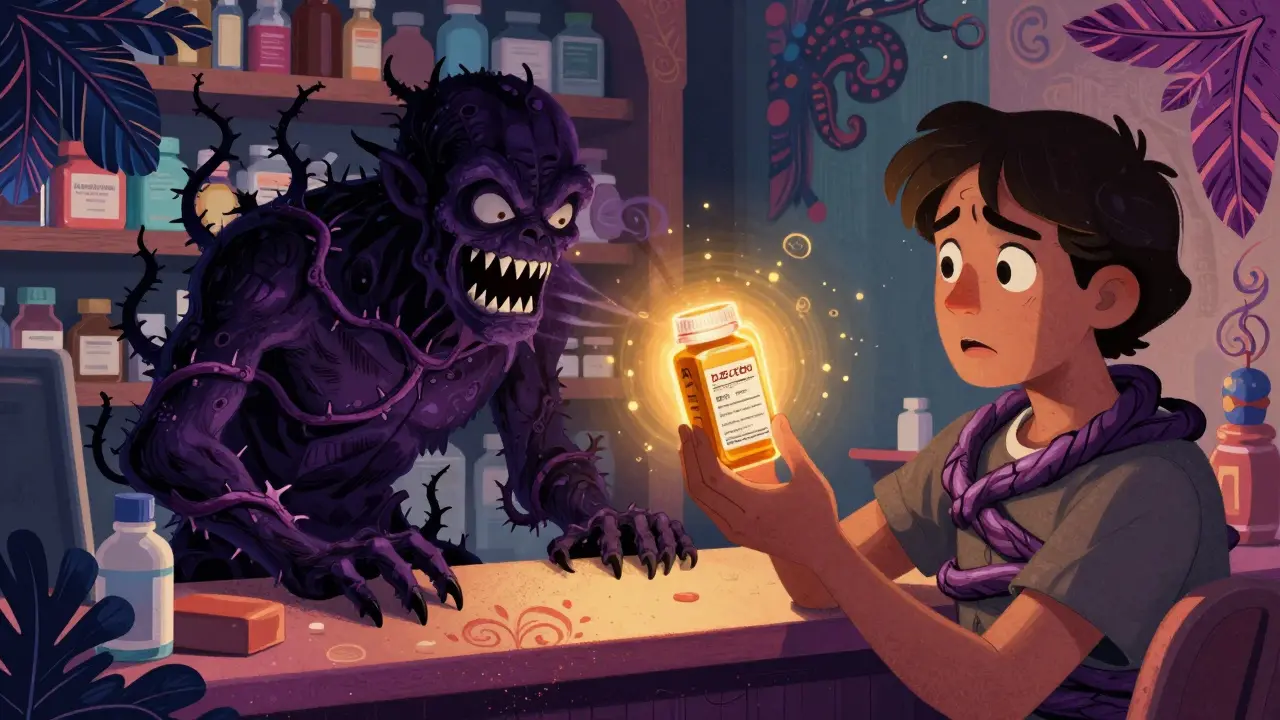
Most of us have been there. You walk into a pharmacy, hand over your prescription for a name-brand medication, and the pharmacist hands you a box with a different logo, often at a lower price. This is generic substitution. It’s standard practice, cost-effective, and usually works just fine. But sometimes, it doesn’t feel right. Sometimes, despite the chemical equivalence, patients report feeling worse, experiencing side effects, or simply losing trust in their treatment plan when switched from a brand-name drug to a generic alternative.
We tend to dismiss these reports as imagination. After all, active ingredients are identical by law. Yet, emerging data in pharmacology and behavioral psychology suggests that for a specific subset of individuals, staying on the original brand isn't just about loyalty-it's about physiological and psychological stability. There are rare, yet significant, cases where the 'placebo' power of brand consistency actually drives better health outcomes than the theoretical perfection of a generic switch.
The Nocebo Effect: When Expectation Becomes Reality
To understand why some patients struggle with generics, we first need to talk about the nocebo effect. You likely know the placebo effect-where believing a treatment works makes it work. The nocebo effect is its darker twin. If you believe a treatment will fail, or cause harm, your brain can actually trigger physical symptoms that mimic those failures.
Research published in the New England Journal of Medicine has shown that when patients were told they were receiving a generic version of an asthma inhaler (even though it was the same brand), their lung function improved less than those who thought they had the brand. Why? Anxiety. The fear that the 'cheaper' option is inferior created stress responses that physically tightened airways. For highly anxious patients, or those with conditions heavily influenced by the nervous system like migraines or irritable bowel syndrome (IBS), this mental shift can be tangible. Staying on the brand eliminates the variable of doubt, allowing the body to respond to the medicine rather than the anxiety of the change.
Bioequivalence Isn't Always Bio-Identical
Regulatory bodies like the FDA require generics to be 'bioequivalent,' meaning they deliver the same amount of active ingredient into the bloodstream within a narrow range (usually 80% to 125%). For most drugs, this margin is harmless. However, for medications with a 'narrow therapeutic index' (NTI), this window is too wide.
Drugs like warfarin (blood thinner), levothyroxine (thyroid hormone), and certain anti-seizure medications operate on a razor-thin edge. A slight variation in absorption due to different inactive ingredients (fillers, binders, dyes) in a generic can push a patient out of their optimal range. While a generic might be statistically equivalent to the population average, it may not be equivalent to you. In these rare but critical cases, sticking with a consistent brand ensures that the filler profile remains unchanged, providing predictable absorption rates that keep life-threatening fluctuations at bay.

Sensory Triggers and Condition Management
Medication isn't just chemistry; it's sensory. The smell of a pill, the texture of a cream, or the taste of a liquid can trigger conditioned responses. Consider Parkinson’s disease or severe depression. These conditions often involve complex neural pathways where routine acts as a stabilizing anchor.
If a patient takes a specific blue, oval-shaped pill every morning for five years, that visual cue helps signal the brain that 'treatment time' has arrived. Switching to a white, round generic disrupts this ritual. For some, this disruption causes mild cognitive dissonance or even nausea. I’ve spoken with patients who reported feeling 'off' after a switch, only to find relief when returning to the brand. It wasn't magic; it was the removal of a sensory mismatch that their sensitive systems couldn't ignore. In chronic pain management, where perception plays a huge role, maintaining the exact sensory profile of the medication can enhance perceived efficacy.
Allergies to Inactive Ingredients
This is the most concrete medical reason to stay on brand. While the active drug molecule is the same, the 'excipients'-the stuff holding the pill together-are not. Different manufacturers use different fillers. One generic might contain lactose; another might use magnesium stearate or specific dyes like tartrazine.
If you have a known sensitivity to a specific dye or binder used in a particular generic manufacturer's formulation, switching brands (or going back to the original brand) becomes a medical necessity, not a preference. Many patients don't realize that 'generic' isn't a single product; it's a category. Manufacturer A’s generic is chemically distinct from Manufacturer B’s generic in terms of non-active components. If a patient experiences rashes, bloating, or headaches after a switch, it’s often an allergic reaction to the new filler, not the drug itself. Returning to the familiar brand removes the unknown allergen.

The Psychology of Trust in Chronic Care
Chronic illness requires long-term commitment. Adherence-the act of actually taking the medication-is the biggest hurdle in healthcare. Studies show that up to 50% of patients stop taking prescribed meds within a year. Trust is the glue that holds adherence together.
For many, the brand name represents a promise of quality control and rigorous testing history. When insurance forces a switch to a generic, some patients interpret this as 'my doctor/insurer thinks my health is worth less.' This erosion of trust can lead to subtle non-adherence: skipping doses, splitting pills incorrectly, or stopping early. In rare cases where the psychological burden of the switch outweighs the financial savings, keeping the brand preserves the therapeutic alliance between patient and provider. If the cost difference is manageable, preserving the patient’s confidence in their regimen can prevent costly hospitalizations down the line caused by unmanaged conditions.
| Factor | Staying on Brand | Switching to Generic |
|---|---|---|
| Cost | Higher out-of-pocket expense | Significant savings (often 80-85% cheaper) |
| Active Ingredient | Identical molecular structure | Identical molecular structure |
| Inactive Fillers | Consistent, known profile | Varies by manufacturer; potential allergens |
| Narrow Therapeutic Index Drugs | Predictable absorption | Risk of variability outside safe range |
| Psychological Impact | Reduces nocebo/anxiety effects | May trigger doubt or sensory discomfort |
How to Advocate for Your Health
If you suspect you fall into one of these rare categories, you have options. First, communicate clearly with your prescriber. Use phrases like 'I experience adverse effects when switching formulations' rather than 'I prefer the brand.' Doctors respond to clinical evidence, not preferences.
Second, check if your condition involves a Narrow Therapeutic Index drug. If so, ask for a 'Dispense As Written' (DAW) notation on your prescription. This instructs the pharmacist not to substitute unless medically necessary. Third, consider the total cost of care. If staying on brand prevents a migraine crisis or a thyroid imbalance that leads to ER visits, the higher monthly copay might actually save money in the long run.
Finally, document your reactions. Keep a simple log of how you feel before and after any switch. This data turns subjective feelings into objective facts that insurers and doctors cannot easily dismiss. Your body knows what works for it, even if the chemistry sheet says everything is the same.
Are generics really the same as brand-name drugs?
Legally, yes. They must contain the same active ingredient in the same dose and strength. However, they can differ in inactive ingredients (colors, flavors, preservatives) and may vary slightly in how quickly they dissolve and absorb in the body. For most people, this makes no difference. For others, especially those with sensitivities or narrow-therapeutic-index conditions, the differences can matter.
What is the nocebo effect in medication?
The nocebo effect occurs when negative expectations about a treatment cause actual negative physical symptoms. If you believe a generic drug is 'weaker' or 'inferior,' your brain may amplify side effects or reduce the perceived effectiveness of the medication, even if the chemical composition is identical.
Which medications should never be switched to generics?
There is no absolute rule, but caution is advised for Narrow Therapeutic Index (NTI) drugs. These include blood thinners like warfarin, thyroid hormones like levothyroxine, anti-seizure medications like phenytoin, and immunosuppressants like cyclosporine. Small variations in absorption can lead to serious health risks with these drugs.
Can I request my pharmacist not to substitute a generic?
Yes. You can ask your doctor to write 'Dispense As Written' (DAW) or 'Brand Medically Necessary' on the prescription. However, your insurance company may still require prior authorization or charge you a higher copay for the brand-name version.
Why do I feel sick after switching to a generic?
It could be due to an allergy or sensitivity to a different filler or dye used in the generic formulation. It could also be the nocebo effect, where anxiety about the switch triggers physical symptoms. If symptoms persist, consult your doctor to determine if it's a physiological reaction or a psychological response.