Energy Drink & Stimulant Medication Risk Calculator
Each energy drink contains approximately 160-300mg caffeine
The FDA recommends 400mg caffeine daily for healthy adults
When you down a can of energy drink before a workout, or pop a pill of Adderall to get through a long day, you might not think twice about your heart. But what happens when you combine the two? The truth is, energy drinks and stimulant medications don’t just add up-they multiply risks, especially for your blood pressure and heart.
What’s Actually in Energy Drinks?
Energy drinks aren’t just sugary coffee. They’re packed with stimulants designed to jolt you awake. A typical can of Monster Energy has 160 mg of caffeine. Bang Energy? 300 mg. That’s more than three cups of coffee in one drink. But caffeine isn’t the only player. Guarana, a plant extract, adds even more caffeine-sometimes hidden on the label. Taurine and bitter orange (synephrine) are also common. These aren’t harmless additives. They all stimulate your nervous system, making your heart beat faster and your blood vessels tighten.How Stimulant Medications Work
If you’re taking Adderall, Ritalin, or another stimulant for ADHD, you’re already putting stress on your cardiovascular system. These medications increase dopamine and norepinephrine in your brain to improve focus. But they also act on your heart and blood vessels. Studies show they can raise systolic blood pressure by 2-7 mmHg and increase heart rate by 3-13 beats per minute. That’s not a small change. For someone with a healthy heart, it’s manageable. For someone with existing heart issues? It’s dangerous.The Perfect Storm: Mixing Them Together
Imagine taking a prescription stimulant and then drinking a Monster Energy to stay awake longer. That’s not a smart combo. The effects don’t just add up-they compound. Research shows that when caffeine and prescription stimulants are combined, the rise in blood pressure and heart rate can be 3 to 5 times higher than with either alone. A 2024 NIH-funded study tracking 5,000 people found that those who mixed energy drinks with stimulant meds had a sharp spike in abnormal heart rhythms and sudden spikes in blood pressure. Some ended up in the ER with chest pain, palpitations, or even heart attacks.Real People, Real Consequences
It’s not just theory. In 2011, nearly 1,500 teens in the U.S. ended up in emergency rooms after consuming energy drinks. Symptoms? Heart palpitations, anxiety, dehydration. Fast forward to 2023, and emergency visits for caffeine overdose in middle schoolers more than doubled since 2017. One Reddit user, u/BloodPressureWatcher, logged his numbers: 120/80 before a 300 mg energy drink. Forty-five minutes later? 145/95. Another reported heart palpitations lasting three hours after two Monster cans. These aren’t rare cases. Doctors on forums like Student Doctor Network are seeing young patients with new-onset high blood pressure-directly tied to daily energy drink use.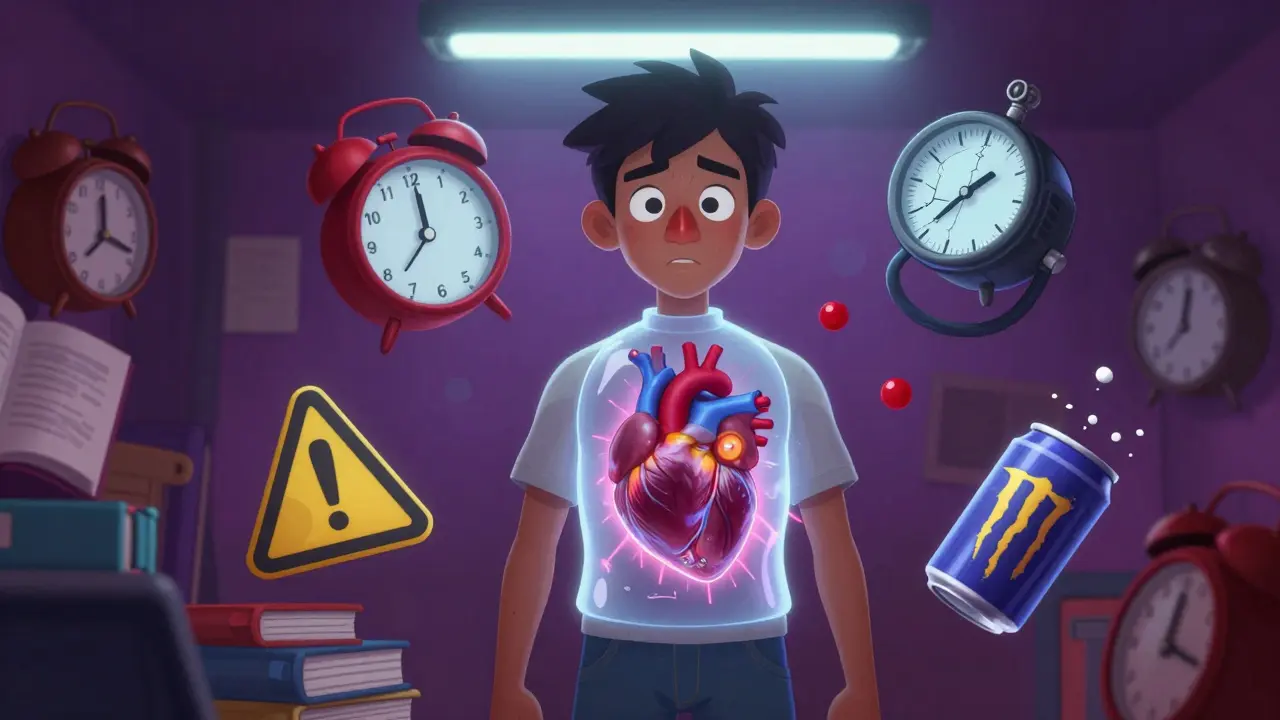
Who’s at the Highest Risk?
It’s not just people with diagnosed heart disease. Teens, older adults, and those with undiagnosed conditions are especially vulnerable. The American Academy of Pediatrics says adolescents should avoid energy drinks entirely. Why? Their bodies are still developing, and their hearts are more sensitive to stimulants. Older adults? Their arteries are stiffer, and their blood pressure control is less efficient. Even a 15-point systolic spike can trigger a stroke or heart rhythm problem in someone over 60. The CDC reports that 30% to 50% of teens still consume energy drinks regularly, despite warnings.How Much Is Too Much?
The FDA says 400 mg of caffeine per day is safe for most healthy adults. But that’s a general guideline. It doesn’t account for medications, body weight, or existing health conditions. For teens, the limit should be under 100 mg. And if you’re on stimulant meds? You’re already getting a dose of stimulation. Adding more caffeine pushes you into risky territory. One 2015 Mayo Clinic study found that a single 240 mg caffeine drink raised adrenaline levels by 75% in healthy young adults. That’s a massive stress response. Now imagine adding Adderall on top of that.Warning Signs You Can’t Ignore
If you’ve had an energy drink or taken your stimulant medication and feel any of these, stop. Don’t wait. Call for help:- Chest pain or pressure
- Heart palpitations lasting more than a few minutes
- Sudden, severe headache
- Difficulty breathing
- Dizziness or vision changes
What About Sugar-Free or “Healthy” Versions?
Just because a drink says “sugar-free” or “vitamin-enhanced” doesn’t make it safe. Many of these still pack 200-300 mg of caffeine. Some even add more stimulants like yohimbine or hordenine. These are unregulated compounds that can spike blood pressure even more than caffeine alone. Labels aren’t always accurate. A 2023 GoodRx review found some energy drinks contained up to 20% more caffeine than listed. You can’t trust the can. You have to trust your body-and your doctor.What Should You Do?
If you’re on stimulant medication:- Avoid energy drinks entirely.
- Limit coffee and tea to one or two cups a day.
- Never mix stimulants with alcohol or pre-workout supplements.
- Talk to your doctor about your caffeine intake-even if you think it’s “just a drink.”
- Don’t quit cold turkey. Withdrawal can cause headaches, fatigue, and irritability for up to 9 days.
- Reduce by one can per week.
- Switch to sparkling water with a splash of juice or herbal tea.
- Get more sleep. Most energy drink use is a band-aid for poor sleep habits.
The Bigger Picture
Energy drink sales hit $77.6 billion globally in 2023. The industry markets them as performance boosters, fitness aids, and party starters. But behind the flashy cans and bold claims are real health risks. The American Heart Association now recommends that people with known heart disease avoid energy drinks completely. And with new research showing that regular use may lead to endothelial dysfunction-a precursor to artery-clogging plaque-the long-term damage could be worse than we thought.It’s not about fear. It’s about awareness. Your heart doesn’t need a jolt. It needs rest, balance, and respect. If you’re taking medication to help your brain focus, don’t sabotage your heart trying to stay awake.
Can energy drinks cause a heart attack?
Yes, in rare but documented cases. Energy drinks have been linked to heart attacks, especially in young people with undiagnosed heart conditions or when combined with stimulant medications. Cases include acute coronary thrombosis, coronary vasospasm, and ST-elevation myocardial infarction. The risk increases significantly when multiple cans are consumed in a short time or mixed with alcohol or prescription stimulants.
Is it safe to drink energy drinks while taking Adderall or Ritalin?
No. Combining energy drinks with stimulant medications like Adderall or Ritalin can dangerously amplify their effects on your heart and blood pressure. Studies show this combination can increase heart rate and blood pressure by 3 to 5 times more than either substance alone. This raises the risk of arrhythmias, heart attack, and stroke. Medical experts strongly advise against mixing them.
How much caffeine is too much if I’m on stimulant meds?
There’s no safe amount when you’re on stimulant medication. The FDA’s 400 mg daily limit for adults doesn’t apply if you’re already taking amphetamines or methylphenidate. Even 100 mg of caffeine (about one cup of coffee) can push your system into dangerous territory. The safest approach is to avoid all additional caffeine sources while on these medications.
Do energy drinks raise blood pressure permanently?
Typically, the spike in blood pressure from energy drinks is temporary-lasting a few hours. But frequent use can lead to chronic high blood pressure, especially in teens and young adults who consume them daily. Emerging research suggests regular consumption may damage blood vessel function (endothelial dysfunction), which is an early sign of long-term heart disease. The damage may not be reversible if habits continue.
Are there any energy drinks that are safe for people with high blood pressure?
No. Even low-caffeine or sugar-free energy drinks contain other stimulants like synephrine, guarana, or taurine, which can still raise blood pressure. The American Heart Association and CDC recommend complete avoidance of energy drinks for anyone with high blood pressure, heart disease, or arrhythmias. There is no safe energy drink for these individuals.
What should I do if I feel my heart racing after an energy drink?
Stop all physical activity immediately. Sit down and take slow, deep breaths. Drink water. If your heart keeps racing for more than 10 minutes, or if you feel chest pain, dizziness, or trouble breathing, call emergency services. Don’t wait. These could be signs of a serious cardiac event. If you regularly consume energy drinks and stimulants, talk to your doctor about getting a heart checkup.
Alicia Hasö
January 8, 2026 AT 19:10My brother took Adderall and downed a Monster before a marathon. He ended up in the ER with atrial fibrillation. No one told him it was dangerous. He’s 22, healthy, thought he was invincible. Now he doesn’t touch either. Don’t wait for a heart attack to learn this lesson.
It’s not about being paranoid-it’s about being smart. Your heart doesn’t get a do-over.
Ashley Kronenwetter
January 10, 2026 AT 12:59As a nurse who works in cardiology, I see this far too often. The combination of stimulant medications and energy drinks is a silent epidemic among college students and young professionals. The data is clear. The risks are real. And the normalization of this behavior is terrifying.
Aron Veldhuizen
January 12, 2026 AT 04:13Let’s be honest-this entire post is fearmongering dressed up as science. You cite a 2024 NIH study but provide no link. You mention ‘3 to 5 times higher’ increases without clarifying baseline metrics. Is 145/95 really that alarming? My blood pressure spikes to 150/90 every time I run up stairs. Are we now pathologizing normal physiological responses to adrenaline?
People have been drinking coffee with amphetamines since the 1950s. The fact that you’re treating this like a novel crisis suggests either ignorance or an agenda. The real danger is the overmedicalization of everyday life.
Heather Wilson
January 12, 2026 AT 15:42Actually, your ‘real people’ anecdotes are statistically meaningless. You mention u/BloodPressureWatcher’s numbers-but you don’t say if he was on medication, his BMI, his sleep schedule, or his stress levels. Correlation isn’t causation. Also, you say ‘doctors on forums’ saw cases-great, but where’s the peer-reviewed data? You’re cherry-picking horror stories to sell a narrative.
And don’t get me started on the ‘sugar-free’ myth. Of course they’re not safe. They’re still neurotoxins wrapped in marketing. But let’s not pretend this is a new problem. We’ve known this since the 90s. Why are we acting surprised now?
Micheal Murdoch
January 13, 2026 AT 01:03I used to take Adderall for focus and drink 2 energy drinks a day to power through grad school. I thought I was being productive. Turns out, I was just running on fumes and fear.
One day, I felt my chest tighten during a lecture. Not pain-just… pressure. Like someone was squeezing my heart. I didn’t go to the doctor for a month. When I finally did, my BP was 152/98. No prior history. No family risk. Just caffeine + Adderall + zero sleep.
I switched to green tea, started sleeping 7 hours, and cut out the energy drinks. My BP normalized in six weeks. I’m not saying you need to quit cold turkey. I’m saying: listen to your body before it screams.
You don’t need a jolt. You need rest. You need balance. And you deserve to feel good without chemical crutches.
Jeffrey Hu
January 14, 2026 AT 00:54Everyone’s acting like this is new. It’s not. Caffeine and amphetamines have been mixed since the 1940s by truck drivers and pilots. The FDA’s 400mg limit was never meant to be a ceiling for people on stimulants-it was just a general guideline for healthy adults with no meds.
Also, ‘no safe amount’? That’s nonsense. If you weigh 200 lbs and take 20mg Adderall twice a day, 100mg caffeine is negligible. But if you’re 120 lbs, take 5mg, and drink a 300mg Monster? Yeah, that’s dumb.
It’s not black and white. It’s dosage, weight, tolerance, and timing. Stop treating everyone like a 16-year-old with a caffeine addiction.
Meghan Hammack
January 15, 2026 AT 22:45I used to think energy drinks were just ‘bad coffee.’ Then I saw my cousin pass out after mixing Adderall and Bang. He was 19. He woke up in the hospital with a heart rate of 180. No one told him it was risky. Just… don’t do it. Please. Your heart is worth more than one more all-nighter.
RAJAT KD
January 16, 2026 AT 15:50Indian athletes use caffeine + stimulants for endurance training. No heart attacks. No ER visits. Your fear-based narrative ignores cultural context. Maybe the problem isn’t the drink-it’s the lack of regulation, education, and medical oversight in the West. Stop blaming the substance. Fix the system.
Matthew Maxwell
January 18, 2026 AT 02:30This is what happens when you let corporations sell poison as performance. Energy drinks are not beverages-they’re pharmaceutical-grade stimulant bombs marketed to children. The fact that teens are consuming them daily while on ADHD meds is a moral failure of parents, schools, and the FDA.
There is no ‘moderate’ use here. There is only denial. And denial kills.
If you’re taking stimulant medication, you have a responsibility to your body. And if you’re not willing to make that choice? Then you’re not just risking your health-you’re risking your life. And that’s not just irresponsible. It’s selfish.