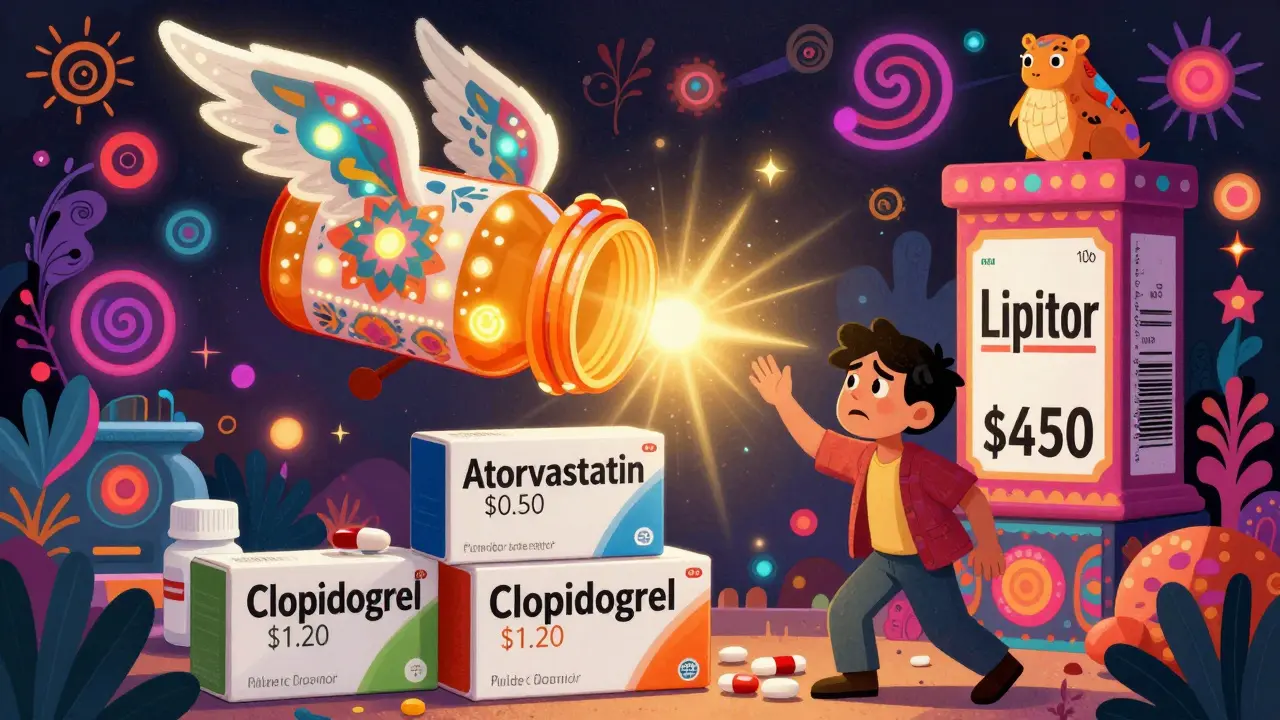
Every year, Americans spend over $400 billion on prescription drugs. And for many, that cost is the reason they skip doses, split pills, or go without medication altogether. But what if you could cut your prescription costs by 90%-without putting your health at risk? The answer isn’t a miracle coupon or a secret discount club. It’s generic medications.
What Exactly Are Generic Drugs?
Generic drugs aren’t cheap knockoffs. They’re exact copies of brand-name medicines in every way that matters: same active ingredient, same strength, same way you take it-whether it’s a pill, injection, or liquid. The FDA requires them to work the same way in your body. That means if your brand-name drug lowers your blood pressure or treats your thyroid, the generic does too.
The only differences? The color, shape, or flavor. Those come from inactive ingredients-things like dyes or fillers-that don’t affect how the drug works. You might notice your new pill looks different, but that’s because a different company made it. It’s still the same medicine.
Over 90% of all prescriptions filled in the U.S. are for generics. That’s not because people are desperate. It’s because they work.
How Much Can You Really Save?
Let’s say you take atorvastatin (Lipitor) for cholesterol. The brand-name version costs around $450 for a 30-day supply. The generic? At most pharmacies, it’s $0.50. That’s not a typo. $0.50.
Same with clopidogrel (Plavix), used to prevent blood clots. Brand: $380 a month. Generic: $1.20.
According to the FDA, generics cost, on average, 80-85% less than brand-name drugs. In 2023, that saved Americans $370 billion in total healthcare spending. That’s more than the annual budget of most U.S. states.
For someone on multiple medications, switching to generics can mean saving $500 to $2,000 a year. That’s a rent payment. A car repair. A trip to the dentist. It’s real money.
Are Generics Really as Safe as Brand-Name Drugs?
This is the question everyone asks. And the answer, backed by decades of research, is yes-for most people, most of the time.
The FDA doesn’t approve generics unless they’re bioequivalent. That means they’re absorbed into your bloodstream at the same rate and to the same extent as the brand-name version. The acceptable range? Between 80% and 125%. For most drugs, that’s plenty close.
A 2020 study in Nature Communications looked at 17 heart medications. Researchers found that patients taking generics had fewer heart attacks and deaths in 11 out of the 17 drugs. Another large 2024 study tracking 2.3 million patients found no difference in heart risks between brand-name and generic statins-when patients stayed with the same generic manufacturer.
So why do some people worry?
When You Need to Be Extra Careful
There are exceptions. Not because generics are unsafe, but because some drugs leave no room for error.
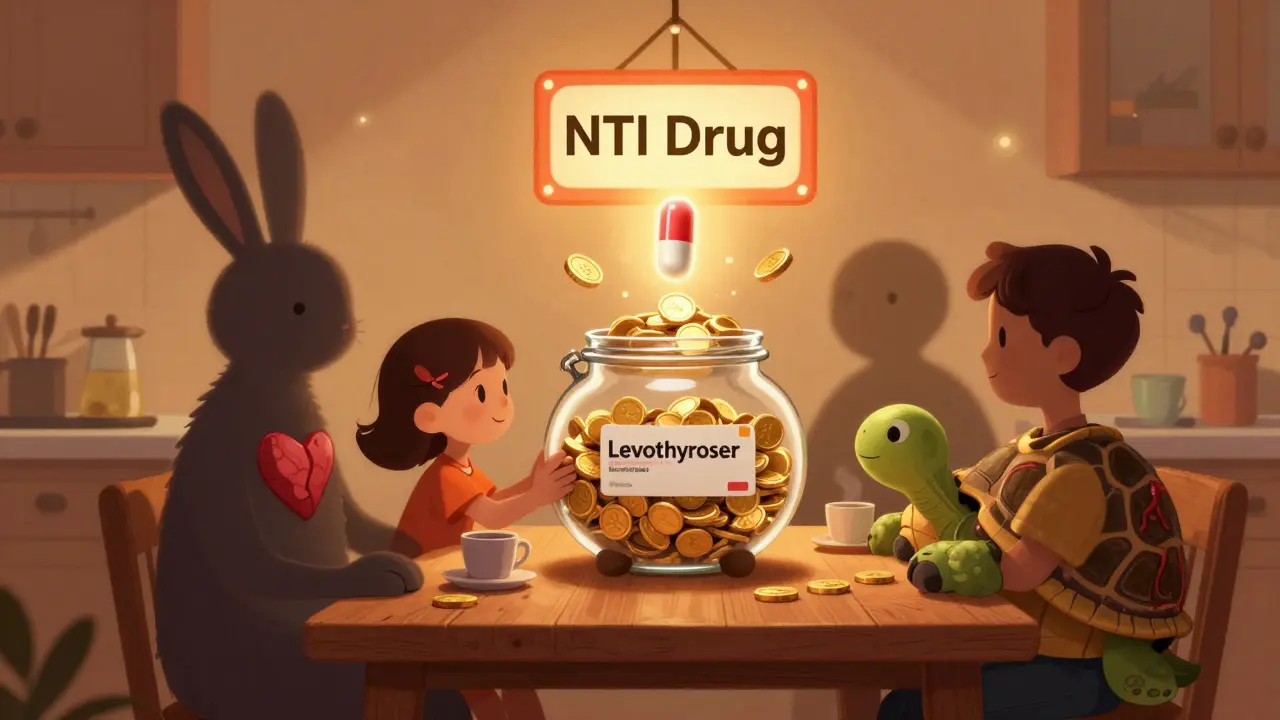
These are called narrow therapeutic index (NTI) drugs. A tiny change in how much gets into your blood can cause serious problems. Examples:
- Warfarin (blood thinner)
- Levothyroxine (thyroid hormone)
- Phenytoin (seizure control)
- Lithium (bipolar disorder)
For these, even small differences in absorption can matter. A 2022 study found that switching between different generic versions of levothyroxine led to 23% of patients reporting inconsistent symptoms-like fatigue or weight gain-compared to only 8% with the brand-name Synthroid.
That doesn’t mean generics are bad. It means consistency matters. If you’re stable on one generic brand, stick with it. Don’t switch manufacturers unless your doctor says so.
Also, if you’ve had a seizure disorder or are on warfarin, don’t let your pharmacy switch your generic without telling you. Ask for the same manufacturer each time.
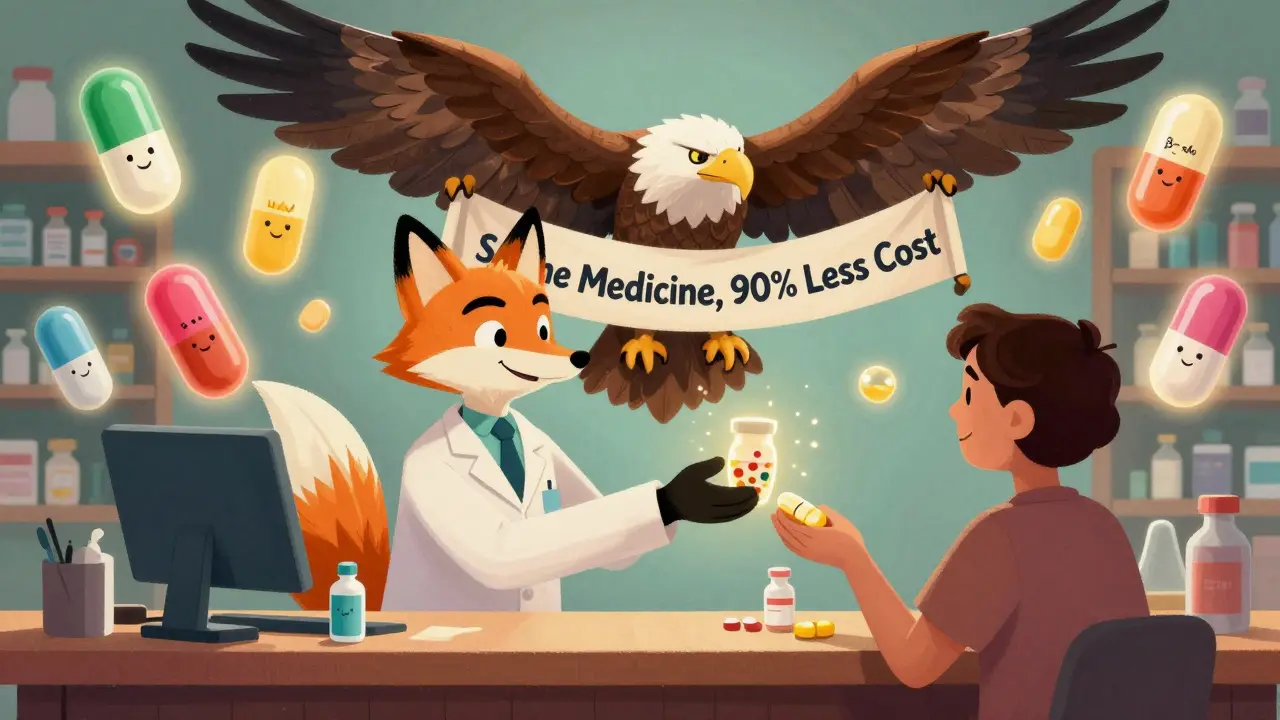
How to Make Sure You’re Getting a Good Generic
Not all generics are created equal-because different companies make them. But here’s the good news: every single one has to meet the same FDA standards. So how do you know you’re getting a quality product?
Ask your pharmacist three simple questions:
- Is this generic made in an FDA-inspected facility? All U.S. and foreign manufacturers are inspected. You can check this yourself using the FDA’s Drugs@FDA database.
- Are there multiple generic makers for this drug? If yes, that means competition is keeping prices low. More choices = better deals.
- Is this a narrow therapeutic index drug? If it is, ask if you can stick with the same manufacturer. Write it down. Bring it up at every refill.
Also, pay attention to how your pill looks. If the shape, color, or imprint changes suddenly, that means a different company made it. That’s normal-but if you feel different afterward, tell your doctor. It might not be the drug. It might be your body adjusting.
Why Do Some People Say Generics Don’t Work for Them?
Some patients report side effects or reduced effectiveness after switching. A 2012 study found that 30% of patients felt better on their brand-name drug, 30% noticed no change, 10% had worse side effects, and 30% stopped taking the drug entirely.
But here’s what’s often missed: the placebo effect works both ways. If you believe the brand-name drug is better, your body might respond better to it-even if the chemistry is identical.
Also, switching between multiple generic manufacturers can confuse your body. One study showed that patients who switched generic brands for warfarin had an 18% higher chance of unstable blood levels.
So if you’re stable on a generic, don’t switch. If you’re having issues, talk to your doctor. Don’t assume it’s the drug. It might be the manufacturer change-or something else entirely.
What About Biosimilars? Are They the Same?
Biosimilars are the next wave of generics. They’re not exact copies like traditional generics because they’re made from living cells-not chemicals. Think drugs for cancer, rheumatoid arthritis, or diabetes.
But they’re still held to the same strict standards. The FDA requires them to show no meaningful difference in safety or effectiveness compared to the original biologic. As of March 2024, 32 biosimilars have been approved in the U.S., with savings expected to hit $300 billion by 2030.
They’re not cheaper than traditional generics-but they’re still 15-35% less than the brand-name biologics. And they’re here to stay.
What Should You Do Right Now?
You don’t need to overhaul your entire medication list. Start small.
- Check your last prescription. Is it brand-name or generic?
- If it’s brand-name, ask your pharmacist: “Is there a generic version?”
- If there is, ask: “How much will it cost?”
- Compare that price to your current co-pay. Often, the generic is cheaper-even with insurance.
- If you’re on a high-cost drug like insulin, statins, or blood pressure meds, the savings can be life-changing.
Don’t switch on your own. Talk to your doctor first. Especially if you’re on a narrow therapeutic index drug. But don’t let fear stop you from asking the question.
Final Thought: Generics Are the Norm, Not the Exception
Here’s something most people don’t realize: the brand-name drugs you know were once generics themselves. Before Lipitor, there was atorvastatin. Before Plavix, there was clopidogrel. Before Viagra, there was sildenafil.
Generics aren’t second-rate. They’re the standard. The FDA approves them after reviewing over 12,000 applications in the last two years alone. They’re made in the same factories, under the same rules, with the same inspections.
And they save lives-not just money.
More people stick to their meds when they can afford them. And that’s the real win. A GoodRx survey found that 89% of people who switched to generics kept taking their medication-compared to just 67% who stayed on expensive brand names because they couldn’t afford to skip doses.
There’s no magic trick. No hidden loophole. Just science, regulation, and common sense. You can save hundreds, even thousands, every year. And still sleep soundly knowing you’re getting the exact medicine your doctor prescribed.
Are generic drugs as effective as brand-name drugs?
Yes, for the vast majority of medications. The FDA requires generics to have the same active ingredients, strength, dosage, and bioequivalence as brand-name drugs. Studies show they work just as well in treating conditions like high blood pressure, cholesterol, depression, and infections. The only exceptions are narrow therapeutic index drugs like warfarin or levothyroxine, where consistency in manufacturer matters.
Why do some generics look different from the brand-name version?
By law, generics can’t look exactly like the brand-name drug because of trademark rules. So they may have a different color, shape, or imprint. But the active ingredient is identical. If you notice a sudden change in appearance, it likely means your pharmacy switched to a different generic manufacturer-something you should discuss with your pharmacist if you feel any change in how you respond to the medication.
Can I switch between different generic brands?
For most drugs, yes. But for narrow therapeutic index drugs-like warfarin, levothyroxine, or phenytoin-it’s best to stick with the same manufacturer. Switching between different generic versions can cause small changes in how your body absorbs the drug, which can be risky for these sensitive medications. Always ask your pharmacist if you’re on one of these drugs.
Are generic drugs made in the same facilities as brand-name drugs?
Many are. The FDA inspects all manufacturing facilities-whether they make brand-name or generic drugs-and requires them to meet the same strict standards (cGMP). In fact, many brand-name companies also produce generic versions of their own drugs. You can check where your generic is made using the FDA’s Drugs@FDA database.
Why are generics so much cheaper if they’re the same?
Brand-name drugs carry the cost of research, development, and marketing-often hundreds of millions of dollars. Generics don’t have to repeat those costs. Once a patent expires, other companies can make the same drug without repeating clinical trials. That competition drives prices down. The savings are passed directly to consumers.
What if my insurance won’t cover the generic?
That’s rare, but it can happen. If your insurance only covers the brand-name version, ask your pharmacist to check if the generic is still cheaper out-of-pocket. Sometimes, the generic costs less than your insurance co-pay. You can also ask your doctor to write a letter of medical necessity if you’ve had issues switching. Many pharmacies offer discount programs-like GoodRx or SingleCare-that can make generics even cheaper.
Do generics have more side effects?
No, not on average. The active ingredient is identical, so the side effect profile is the same. But some people report new or different side effects after switching-often because of changes in inactive ingredients (like dyes or fillers) or because they’re sensitive to a new manufacturer’s formulation. If you notice a change, don’t assume it’s the drug. Talk to your doctor. It might be temporary, or you might need to switch back to the same manufacturer.
Can I trust generics from other countries?
Only if they’re sold in the U.S. and approved by the FDA. Many generics sold online from overseas are counterfeit or unapproved. Even if they look right, they may contain too little or too much of the active ingredient-or none at all. Always get your generics from a licensed U.S. pharmacy. If the price seems too good to be true, it probably is.
Next Steps: Start Saving Today
Don’t wait for your next refill. Look at your current prescriptions. Check GoodRx or your pharmacy’s price list. See what the generic costs. Compare it to your co-pay. You might be surprised.
If you’re on a chronic condition-diabetes, high blood pressure, cholesterol, thyroid-switching to a generic could mean hundreds of dollars saved every month. And you won’t lose anything in safety or effectiveness.
Ask your doctor. Ask your pharmacist. Ask your insurance. And if they say no, ask why. You deserve to be healthy-and you deserve to afford it.
Michael Dillon
December 24, 2025 AT 22:15Carlos Narvaez
December 26, 2025 AT 02:03Harbans Singh
December 27, 2025 AT 21:18Katherine Blumhardt
December 28, 2025 AT 23:31sagar patel
December 30, 2025 AT 10:19Bailey Adkison
December 31, 2025 AT 09:16Mussin Machhour
January 2, 2026 AT 01:47Zabihullah Saleh
January 2, 2026 AT 12:50Rick Kimberly
January 3, 2026 AT 05:48Sophie Stallkind
January 5, 2026 AT 00:09