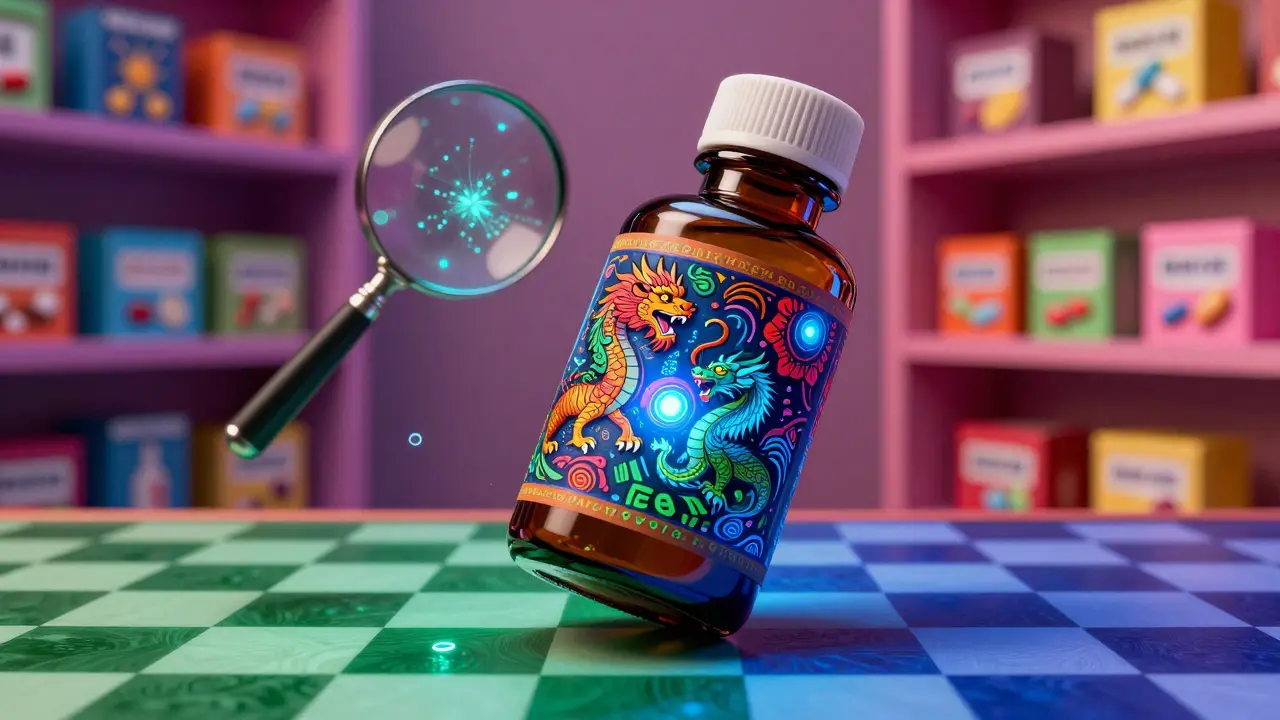
Every year, millions of people take generic medicines because they’re affordable and just as effective as brand-name drugs. But what if the pill in your bottle isn’t what it claims to be? Counterfeit generics are a growing problem - and they don’t always look fake. Some look identical to the real thing. That’s why packaging and labeling are your first and most important line of defense.
What to Look for in Genuine Packaging
The outer box and blister pack of a real generic medicine aren’t just for show. They contain hidden clues. Start with the basics: check the font. A counterfeit might use a slightly different typeface, or the spacing between letters could be off. One pharmacist in Ohio noticed the expiration date on fake Nexium® generics was printed in a font that was 0.5mm wider than the real version. It took her three bottles to catch it. Look for color-shift ink. Many legitimate manufacturers use special inks that change color when tilted - like green turning to blue. Pfizer’s Viagra packaging does this, and many generic makers now copy the same feature. If the color doesn’t shift, or shifts too easily, that’s a red flag. Holograms are another common feature. Real ones have tiny text or images that only appear at certain angles. Counterfeiters can replicate them, but they often miss the fine details. Use a magnifying glass. If the hologram looks blurry or the microtext is missing, it’s likely fake.Covert Features: Tools You Didn’t Know You Needed
Not everything you need to check is visible to the naked eye. That’s where covert features come in. UV lights - the kind used to check currency - can reveal hidden markings. Johnson & Johnson has used UV-sensitive ink on Tylenol packaging since 2015. If you shine a 365nm UV light on a generic version and nothing shows up, that’s suspicious. Some packages have RFID tags or QR codes that link to a manufacturer’s verification system. But here’s the catch: not all generics include them. According to the 2023 Generic Pharmaceutical Association report, 35-45% of generic medicines still lack consistent serialization. That means scanning a barcode might not work. If the app says "invalid code," don’t assume it’s a bad phone - it might be a bad product. Chemical taggants are even harder to detect. These are invisible markers added to the ink or packaging material. They require a handheld reader that costs $200-$500. Most pharmacies don’t have them. But if you’re a pharmacist or work in a clinic, investing in one could save lives. One study found these tools caught 92% of counterfeits that passed visual inspection.Spectroscopy: The Science Behind the Fake
Here’s where things get serious. Even if the packaging looks perfect, the pill inside could be wrong. A fake metformin tablet might look identical, but contain no active ingredient - or worse, toxic chemicals like boric acid or rat poison. That’s where spectroscopy comes in. Devices like the Thermo Fisher TruScan® RM and B&W Tek NanoRam® use infrared or Raman light to scan the chemical makeup of a pill. They don’t need to open the bottle. Just point and click. In 10-30 seconds, they tell you if the active ingredient matches the real drug. A correlation coefficient below 0.85 means it’s counterfeit. That’s not a guess - it’s science. A 2023 Drug Topics survey found pharmacists using these devices reported 94% satisfaction. One said, "I caught a fake metformin that looked exactly like the real one. The patient was about to take it. We stopped it." That’s the power of this tech.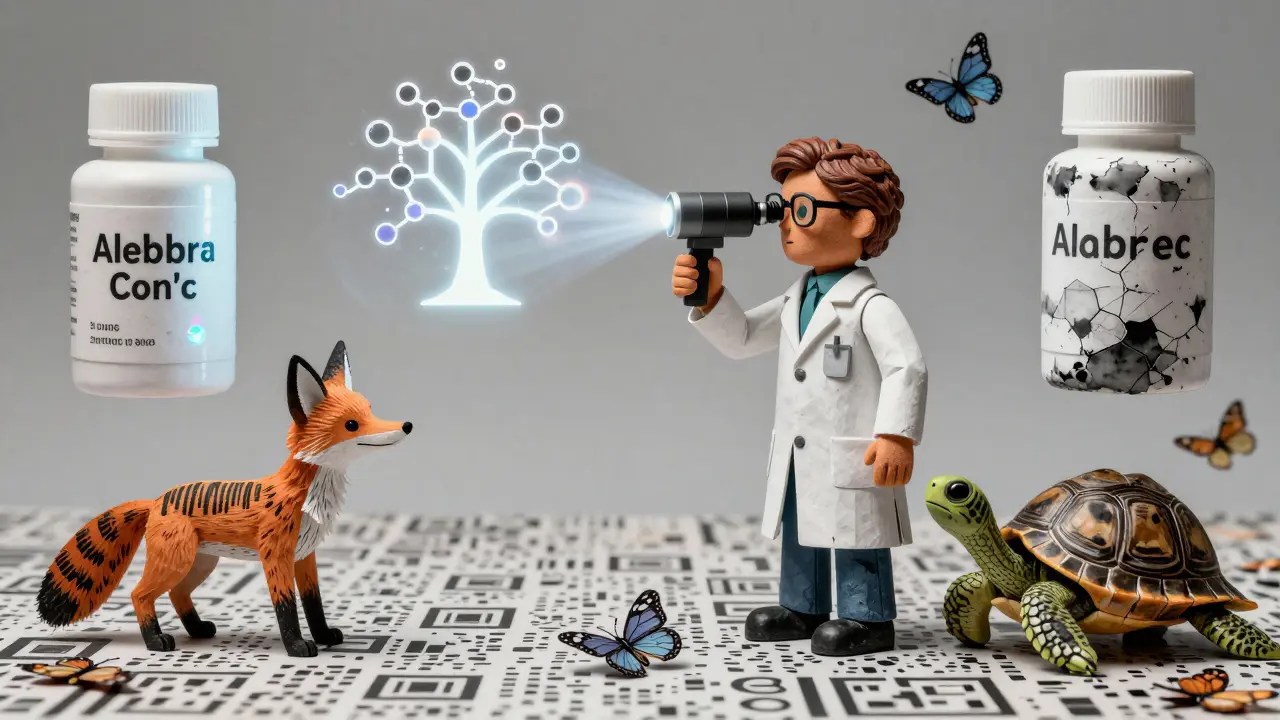
Why Generic Medicines Are More at Risk
You might wonder why generics are targeted more than brand-name drugs. It’s simple: money. Generics make up 90% of prescriptions in the U.S., but only 22% of drug spending. That means manufacturers spend less on security features. A branded drug might have five layers of protection. A generic might have one - or none. The supply chain is longer too. Branded drugs usually go through 3-4 distribution points. Generics? Often 5-7. Each stop is a chance for someone to swap out the real product. A 2023 IQVIA report showed that 68% of pharmacists found it harder to verify generics than branded drugs. And let’s not forget regulation. The EU’s Falsified Medicines Directive (FMD) requires every prescription drug to have a 2D barcode and tamper-proof seal. It’s working. Compliance is at 98%. But in Southeast Asia? Only 45% of manufacturers follow similar rules. If your generic was made overseas, it’s more likely to be unverified.What You Can Do - Even If You’re Not a Pharmacist
You don’t need a lab to protect yourself. Start with these steps:- Buy from licensed pharmacies - not online sellers with no physical address.
- Compare the packaging to a previous bottle. If the color, font, or logo looks different, ask your pharmacist.
- Use a UV light ($10 online) to check for hidden marks. Shine it on the label or blister pack.
- Check the expiration date. Fake ones often have smudged, uneven, or faded printing.
- If the pill looks different - different shape, color, or imprint - don’t take it. Call your pharmacy.
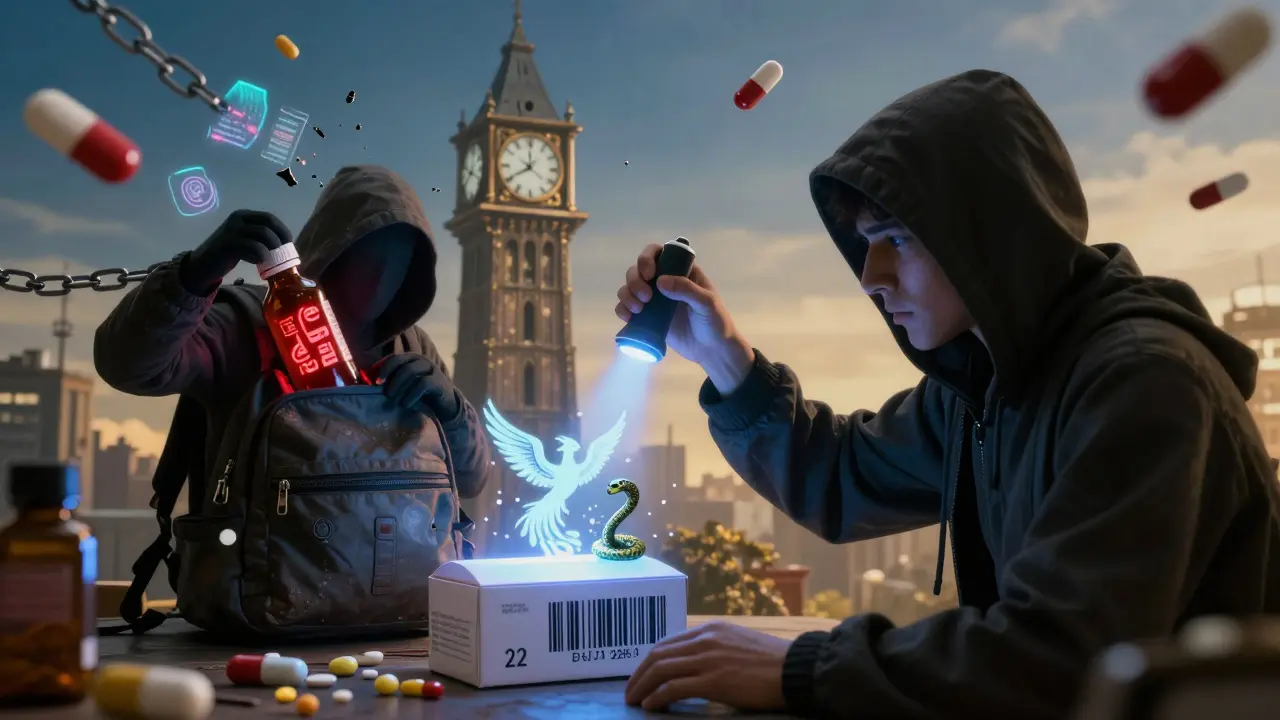
The Bigger Picture: Why This Matters
Counterfeit drugs aren’t just a scam. They’re deadly. The WHO estimates up to 10% of medicines worldwide are fake. In some countries, it’s 30%. These pills can cause organ failure, antibiotic resistance, or death. In 2012, a fake steroid linked to a meningitis outbreak killed 64 people in the U.S. The good news? Systems are getting better. The EU’s verification network handles 2.5 billion checks a year with 99.998% uptime. The FDA’s 2023 blockchain pilot caught 99.2% of fake drugs in testing. And by 2025, all generics in the EU will need cryptographic 2D codes. But progress isn’t equal. In rural Nigeria, mobile apps fail 35% of the time because of poor internet. In sub-Saharan Africa, 80% of clinics can’t afford spectroscopy tools. That’s why verification can’t rely on technology alone. It needs trained people - and informed patients.What’s Next?
By 2026, the U.S. aims to serialize 100% of generic drugs. That means every pill will have a unique code you can trace. AI will soon help predict fake drugs by analyzing packaging patterns - even before they hit shelves. But until then, the best defense is your eyes, your questions, and your willingness to speak up. If something feels off, it probably is. Ask your pharmacist. Demand answers. Your life depends on it.How can I tell if my generic medicine is fake just by looking at it?
Check for inconsistencies in font, color, or logo placement. Look for color-shifting ink - tilt the package and see if the color changes. Examine holograms under magnification - real ones have tiny, sharp text. Compare the expiration date to a previous bottle. If the printing is smudged, uneven, or looks digitally altered, it could be counterfeit. Even small differences, like a slightly wider font or misplaced barcode, can signal a fake.
Do all generic medicines have security features like barcodes or holograms?
No. While the EU requires all prescription generics to have 2D barcodes and tamper-proof seals, many countries - including the U.S. - don’t enforce this equally. According to the Generic Pharmaceutical Association, 35-45% of generics in the U.S. still lack consistent serialization. Some manufacturers skip security features to cut costs. Always verify with your pharmacist if you’re unsure.
Can I use my phone to scan a generic medicine’s barcode and confirm it’s real?
Sometimes, but not always. Many generic medicines don’t have reliable or unique serial numbers. Apps like MediMark work well for branded drugs but fail 40-50% of the time with generics. If the scan says "invalid" or "not found," don’t assume it’s your phone. It could mean the product isn’t properly registered. Always cross-check with your pharmacist or the manufacturer’s website.
Are counterfeit generics more dangerous than fake brand-name drugs?
They can be, because they’re harder to detect. People assume generics are cheaper but still safe, so they’re less likely to question them. Fake brand-name drugs often have obvious flaws - misspelled names, poor printing. Generic counterfeits are designed to look identical. Some contain no active ingredient. Others have toxic substitutes like boric acid or rat poison. The FDA reports that counterfeit generics are responsible for over 60% of drug-related deaths linked to falsified medicines.
What should I do if I suspect my medicine is fake?
Stop taking it immediately. Contact your pharmacist or healthcare provider. Report it to the FDA through their MedWatch program. Save the packaging and pills - they may be needed for testing. If you bought it online, report the seller to the National Association of Boards of Pharmacy (NABP). Never flush or throw away suspected fake medicine - it could be evidence.
Can I buy a device to test my medicine at home?
Handheld spectrometers like the NanoRam or TruScan® RM can detect fake pills with over 90% accuracy, but they cost $15,000-$50,000 and require training. They’re not practical for home use. For now, the best tools for consumers are a UV light ($10-$20) and a magnifying glass. If you’re concerned about a specific medication, ask your pharmacy if they use spectroscopy - many do, and they’ll test it for free.
florence matthews
March 25, 2026 AT 14:22Kenneth Jones
March 27, 2026 AT 02:32Mihir Patel
March 28, 2026 AT 04:01Amber Gray
March 30, 2026 AT 02:56Danielle Arnold
March 30, 2026 AT 22:39Donna Fogelsong
April 1, 2026 AT 07:13Sean Bechtelheimer
April 2, 2026 AT 19:12rebecca klady
April 4, 2026 AT 08:14Namrata Goyal
April 5, 2026 AT 08:08