Most people who take benzodiazepines for anxiety or insomnia never think they’ll get hooked. They’re told it’s safe, short-term, and just for emergencies. But for many, what starts as a quick fix turns into a months-long struggle to quit. Benzodiazepines work fast-too fast. They calm the brain in minutes, making them feel like a miracle for panic attacks or sleepless nights. But that same speed comes with a cost: dependence, memory gaps, and a withdrawal that can feel worse than the original problem.
How Benzodiazepines Actually Work
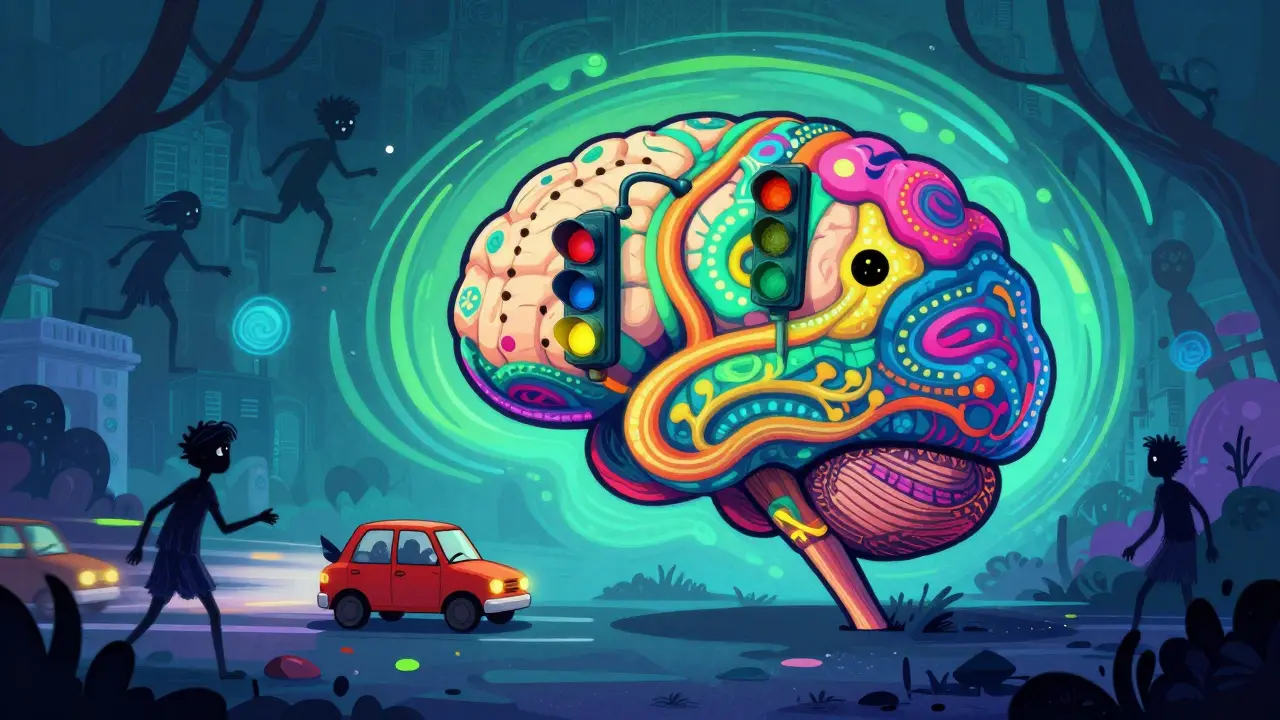
Benzodiazepines don’t just make you feel relaxed-they change how your brain works at a chemical level. They boost the effect of GABA, a natural neurotransmitter that slows down overactive nerve signals. Think of your brain as a busy highway. When you’re anxious or having a panic attack, it’s like every car is speeding at once, honking, crashing. Benzodiazepines act like traffic lights, slowing everything down. That’s why they work so well for sudden panic, seizures, or muscle spasms.
Not all benzodiazepines are the same. Some wear off fast, like triazolam (used for sleep), while others stick around for days, like diazepam (Valium). Doctors pick one based on what you need. Short-acting ones are better for sleep because they don’t leave you groggy the next day. Long-acting ones help with chronic anxiety or alcohol withdrawal because they smooth out the ups and downs. But no matter the type, they all carry the same risk: your brain starts to rely on them to stay calm.
The Real Benefits: When They’re Life-Saving
Benzodiazepines aren’t just for stress. They’re critical in emergencies. In the ER, when someone is having a seizure that won’t stop, midazolam or diazepam can stop it in under five minutes. For people going through severe alcohol withdrawal-shaking, sweating, hallucinating-benzos are often the only thing that prevents seizures or delirium. In surgery, they help patients stay calm and forget the procedure.
For acute anxiety, they’re unmatched in speed. While antidepressants like SSRIs take four to six weeks to kick in, a single dose of alprazolam (Xanax) can bring panic symptoms down in 30 minutes. That’s why they’re still used, even though doctors know better than to prescribe them long-term. In fact, studies show 60-80% of people with sudden panic attacks see major improvement within days. That’s powerful.
The Hidden Risks: Dependence Builds Quietly
The problem isn’t the drug itself-it’s what happens when you take it for more than a few weeks. Your brain adapts. It starts making less GABA on its own because the drug is doing the job. After four weeks, about 30-50% of people become physically dependent, according to the World Health Organization. That doesn’t mean you’re addicted. It means your body needs the drug to feel normal. Stop too fast, and your brain goes into overdrive.
Withdrawal isn’t just feeling jittery. It can include:
- Severe rebound anxiety-worse than before you started
- Insomnia that won’t go away
- Shaking, sweating, heart palpitations
- Memory gaps, hallucinations, or even seizures
One study found that 23% of people taking prescribed doses had trouble remembering parts of their day-like forgetting conversations or driving to work. That’s anterograde amnesia, and it happens even at normal doses. It’s not rare. It’s common enough that doctors should warn patients before prescribing.
Who’s Most at Risk?
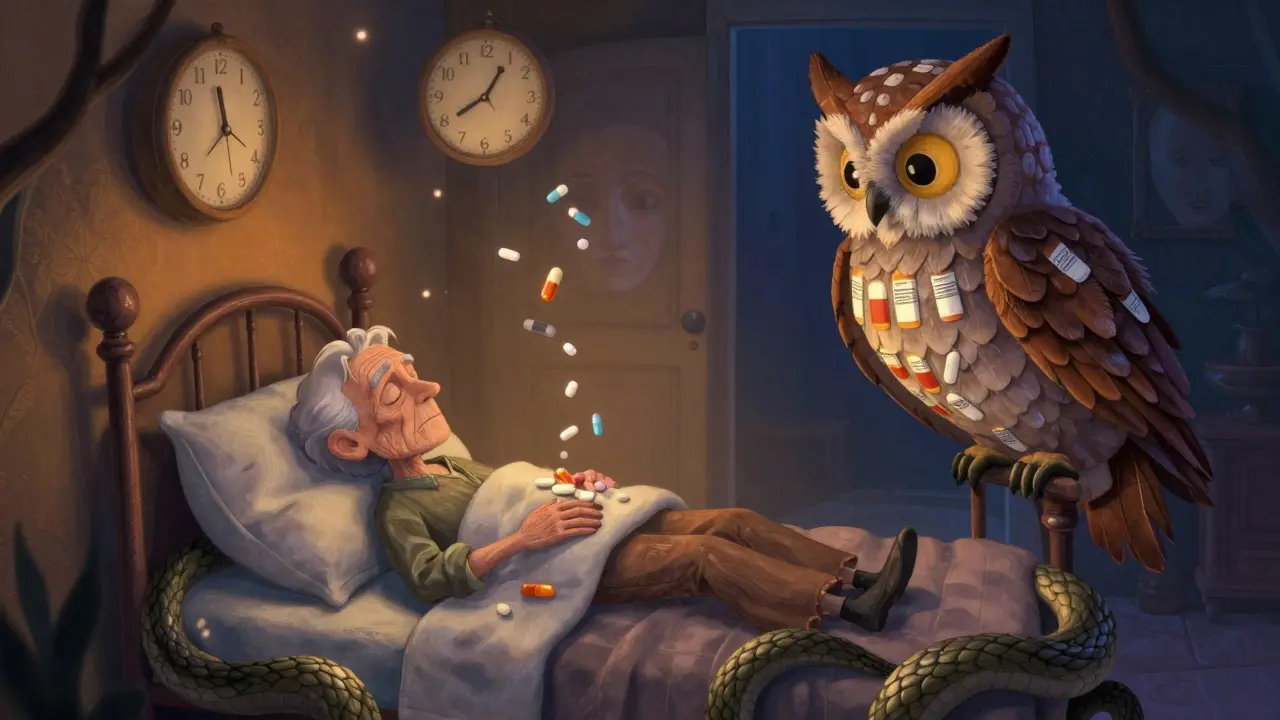
Women are more likely to be prescribed benzodiazepines-nearly twice as many prescriptions as men. Older adults are especially vulnerable. The American Geriatrics Society says people over 65 should avoid them entirely. Why? They’re more likely to fall, break a hip, or develop dementia. The risk of dementia goes up 32% with long-term use.
People with a history of substance use, even if it was years ago, are at higher risk of misusing these drugs. And those who take them for more than a month are far more likely to struggle to quit. A 2021 study found that 61% of problematic cases involved people taking the drug longer than their doctor recommended.
What Experts Say About Long-Term Use
Doctors know the risks. The American Psychiatric Association says benzodiazepines should only be used for 2-4 weeks for anxiety. The FDA added a boxed warning in 2020-its strongest alert-about addiction, abuse, and dangerous withdrawal. The UK’s NICE guidelines now say: don’t start them for anxiety at all. Use therapy instead.
But here’s the catch: therapy takes time. A person having a panic attack in the middle of the night doesn’t have time to wait for CBT. That’s why benzos still get prescribed. The trick is using them like a fire extinguisher-not a heater. One dose for a crisis. Not daily for months.
Alternatives That Actually Work Long-Term
There are better options for long-term anxiety and sleep issues. For anxiety, SSRIs like sertraline or escitalopram are safer, with no risk of dependence. They take weeks to work, but they last. For insomnia, CBT-I (Cognitive Behavioral Therapy for Insomnia) is more effective than any sleep pill-and the benefits stick after you stop.
A 2023 study in JAMA Internal Medicine found that people who combined low-dose benzos with CBT cut their risk of dependence by 58% compared to those who took the drug alone. That’s huge. It means you don’t have to choose between relief and safety. You can have both-if you do it right.
Other non-drug options include:
- Regular exercise (even 20 minutes a day reduces anxiety)
- Mindfulness and breathing techniques
- Limiting caffeine and alcohol
- Fixed sleep schedules
How to Stop Safely
If you’ve been on benzodiazepines for more than a few weeks, don’t quit cold turkey. Withdrawal can be dangerous. The Ashton Manual, the gold standard for tapering, recommends reducing your dose by 5-10% every 1-2 weeks. For someone on a high dose for years, that can take six months or longer.
Work with a doctor who understands this process. Many general practitioners don’t. They’ll say, “Just stop,” and leave you to suffer. But tapering slowly reduces the risk of seizures and extreme anxiety. Some people switch from a short-acting benzo like alprazolam to a longer-acting one like diazepam to make the taper smoother. That’s a common, safe strategy-if done under supervision.
Why This Isn’t Going Away
Benzodiazepines are still prescribed over 76 million times a year in the U.S. They’re cheap, fast, and effective. Pharmacies stock them. Insurance covers them. But the tide is turning. Hospitals like Kaiser Permanente have cut long-term use by 37% by putting alerts in electronic records when prescriptions go past 90 days.
Global sales are still rising-projected to hit $2.13 billion by 2027-but the trend is clear. New guidelines, better alternatives, and growing awareness are pushing doctors to use them only when absolutely necessary. For now, they remain essential in emergencies, for seizures, and for short-term relief. But for chronic anxiety or sleep problems? There are safer, longer-lasting ways.
Final Takeaway: Use Wisely, Not Often
Benzodiazepines aren’t evil. They’ve helped millions. But they’re not meant to be daily companions. If you’re taking them for more than a month, talk to your doctor about a plan to taper. If you’re just starting, ask: Is this really the best option? Could therapy, lifestyle changes, or an antidepressant work better in the long run?
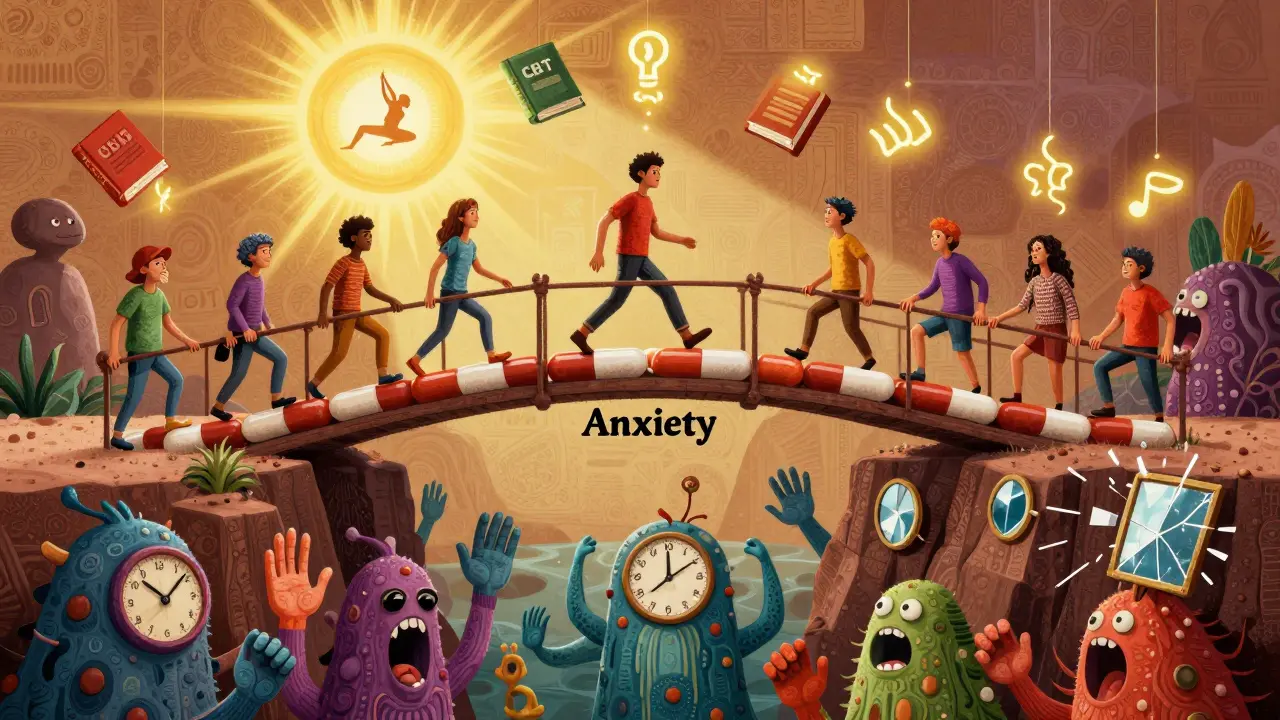
They’re not a cure. They’re a bridge. And bridges are meant to be crossed-not lived on.
Can you really get addicted to benzodiazepines if you take them as prescribed?
Yes. Physical dependence can develop in 30-50% of people who take therapeutic doses for more than four weeks-even if they follow their doctor’s instructions exactly. Dependence means your body needs the drug to function normally. Addiction involves compulsive use despite harm, which is less common but still possible. The key difference: dependence is physical; addiction is behavioral.
How long does benzo withdrawal last?
It varies. For short-term users, symptoms may last a few weeks. For those on high doses for over a year, withdrawal can stretch six months or longer. Acute symptoms (anxiety, insomnia, tremors) usually peak within the first two weeks. But some people experience prolonged symptoms like brain zaps, dizziness, or mood swings for months. This is why slow tapering under medical supervision is essential.
Are there any benzos that are safer than others?
No benzodiazepine is truly “safe” for long-term use. But longer-acting ones like diazepam or clonazepam are often preferred for tapering because they leave the body more slowly, reducing withdrawal severity. Short-acting ones like alprazolam or triazolam are riskier for dependence because they cause sharper highs and crashes, which can reinforce compulsive use. The drug itself isn’t the only factor-dose, duration, and individual biology matter more.
Can benzodiazepines cause memory loss even at low doses?
Yes. Anterograde amnesia-forgetting events that happen while you’re on the drug-is a known side effect. Studies show about 23% of users report memory gaps during normal daily activities, even at prescribed doses. This is more common with short-acting benzos and higher doses, but it can happen to anyone. It’s not just “being forgetful.” It’s the brain temporarily unable to form new memories.
What should I do if I think I’m dependent on benzodiazepines?
Don’t stop suddenly. Contact a doctor who specializes in addiction or psychopharmacology. Ask about tapering plans, preferably using the Ashton Manual guidelines. Many clinics now offer structured withdrawal programs. Support groups like Benzodiazepine Information Coalition or online forums can help, but always pair peer support with medical supervision. You’re not weak for needing help-this is a physiological reaction, not a character flaw.
sam abas
January 13, 2026 AT 22:47so like… i read this whole thing and honestly? the part about ‘benzos are fire extinguishers not heaters’ hit me like a truck. i’ve been on 0.5mg xanax daily for 14 months ‘as prescribed’ and now i’m stuck. my dr just said ‘just quit’ and vanished. now i’m sweating through my pillow at 3am wondering if my brain is permanently broken. no one talks about how the withdrawal feels like your nervous system is being rewired with a blowtorch.
Gregory Parschauer
January 13, 2026 AT 22:48Oh please. Another ‘poor me’ sob story about ‘being prescribed’ benzos. You knew the risks. You signed the damn consent form. This isn’t a tragedy-it’s a consequence of lazy self-management. Therapy costs money? Too bad. Exercise requires effort? Guess what? Life isn’t a Netflix binge where you hit pause when it gets hard. The fact that you think a pill should fix your emotional dysregulation is the real problem. Wake up.
Priyanka Kumari
January 15, 2026 AT 07:10Gregory, I hear your frustration-but please don’t shame people struggling with dependence. This isn’t weakness, it’s neurobiology. The WHO data is clear: 30-50% of therapeutic users become dependent. That’s not failure-it’s pharmacology. I’m a mental health nurse in Delhi, and I’ve seen so many elderly patients taper off clonazepam with gentle support. It’s possible. You don’t have to suffer alone. Find a prescriber who knows the Ashton Manual. You’re not broken. Your brain just adapted.
Clay .Haeber
January 15, 2026 AT 08:12Wow. So the medical establishment is finally admitting that their favorite ‘quick fix’ is just a chemical leash? Groundbreaking. Next you’ll tell me that sugar isn’t healthy or that capitalism is a psychological trap. Meanwhile, my cousin’s psychiatrist prescribed her 4mg of Xanax for ‘social anxiety’-and now she’s on disability, crying in CVS because she forgot her refill. The system doesn’t care if you’re functional-it just wants you to stop screaming long enough to file your taxes.
Nelly Oruko
January 15, 2026 AT 19:03One sentence: If you’ve been on benzos longer than 2 weeks, you’re already in withdrawal mode-your brain just hasn’t told you yet.
Avneet Singh
January 17, 2026 AT 12:45Let’s be real-this whole post is just a glorified PSA for CBT-I and SSRIs. The fact that you mention ‘low-dose benzos + CBT reduces dependence by 58%’ is the only useful part. The rest is just rehashing FDA warnings like a textbook. And don’t get me started on the ‘Ashton Manual’-most GPs haven’t even heard of it. This reads like a medical journal that forgot to include the citations.
Adam Vella
January 18, 2026 AT 23:10It is worth noting that the neuroadaptive changes induced by chronic benzodiazepine exposure are not unique to this class; similar mechanisms underlie dependence on alcohol, barbiturates, and even certain anticonvulsants. The GABA-A receptor subunit modulation, particularly α1 and γ2, leads to internalization and downregulation-a well-documented phenomenon in neuropharmacology since the 1980s. The real issue is not pharmacological per se, but the sociopolitical failure of primary care to integrate evidence-based behavioral interventions into routine practice. The overprescription epidemic is symptomatic of systemic underinvestment in mental health infrastructure.
vishnu priyanka
January 19, 2026 AT 03:43my uncle in mumbai took diazepam for 3 years after his wife passed. he didn’t even know he was dependent until he tried to stop and his hands shook like he’d been in a fight. now he does yoga at 5am, drinks turmeric milk, and says he feels ‘lighter than air’. no pills. just time. and patience. and a damn good chai.
John Pope
January 20, 2026 AT 15:03Here’s the uncomfortable truth no one wants to say: benzodiazepines are the opioid of anxiety. We treat mental pain like a plumbing issue-turn the knob, fix the leak. But your mind isn’t a faucet. It’s a forest. You can’t silence the storm by turning off the wind-you have to learn to stand in the rain. The reason benzos feel like salvation is because they don’t fix anything-they just mute the alarm. And when the alarm stops, you forget you were ever in danger. That’s not healing. That’s hypnosis with a prescription pad. I’ve seen people lose five years of their lives to this quiet, chemical surrender. And the worst part? They never even noticed they were gone until they tried to come back.