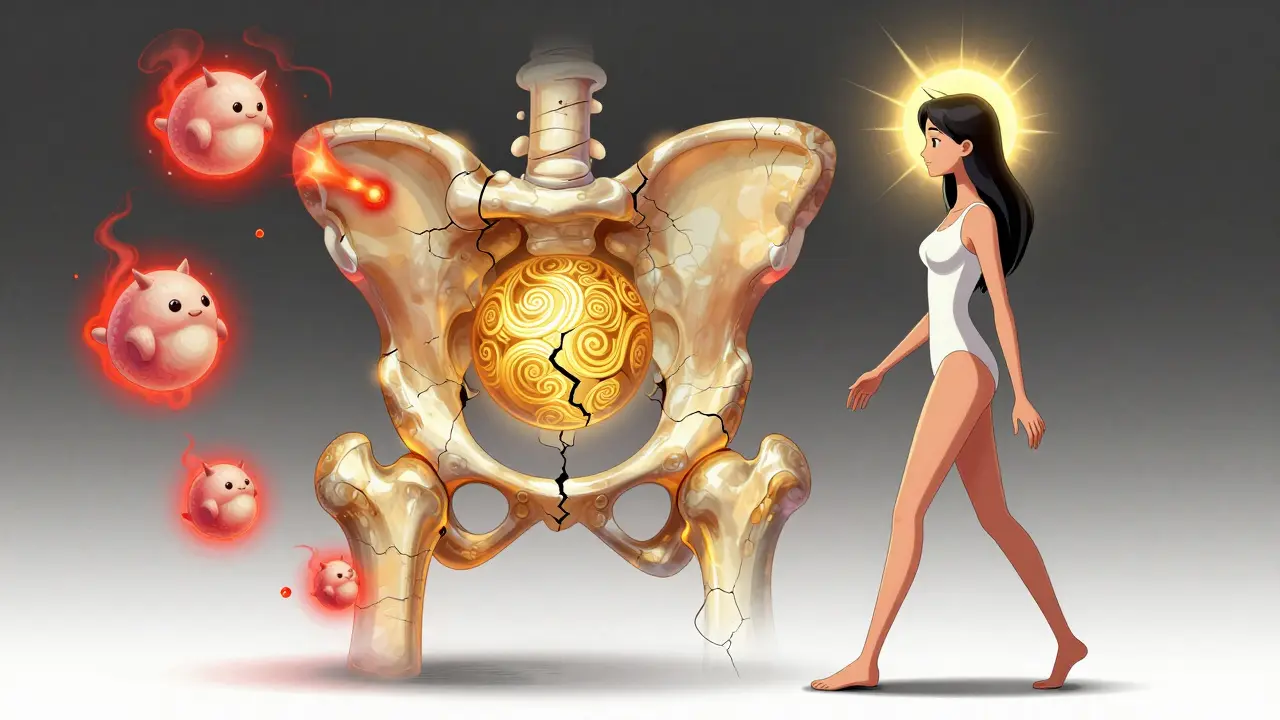
When your hip starts hurting with every step, it’s not just about aging. For millions of people, especially those carrying extra weight, the real culprit might be osteoarthritis of the hip. Unlike the sudden twinge of a pulled muscle, this pain creeps in slowly - stiffness in the morning, aching after walking, difficulty putting on shoes. And while surgery is often the last resort, there’s a powerful, often overlooked tool that can change the game: weight loss.
Let’s cut through the noise. You’ve probably heard that losing weight helps with knee arthritis. But what about your hip? Some doctors say yes. Others say it barely makes a difference. So which is it? The truth isn’t black and white. New research from 2024 shows that if you lose more than 10% of your body weight, your hip pain, stiffness, and ability to move can improve dramatically. Not a little. A lot. And it’s not just about feeling better today - it’s about keeping your hip joint healthy for years to come.
What Exactly Is Hip Osteoarthritis?
Think of your hip joint as a ball-and-socket. The ball is the top of your thigh bone. The socket is part of your pelvis. Both are covered in smooth cartilage that lets them glide without friction. In osteoarthritis, that cartilage wears down. Bone starts to rub on bone. Inflammation kicks in. Bone spurs form. The joint swells. And movement becomes painful.
This isn’t just a "wear and tear" condition. It’s a whole-body problem. Excess weight doesn’t just add pressure - it floods your system with inflammatory chemicals. Fat tissue isn’t harmless padding. It’s active tissue that releases cytokines, molecules that ramp up joint inflammation. That’s why two people with the same level of cartilage damage can have wildly different pain levels. One might be lean. The other might carry 50 extra pounds. The difference isn’t just mechanical - it’s biological.
Why Weight Loss Matters More Than You Think
A 2024 study in Nature tracked 65-year-old adults with hip osteoarthritis and obesity. Most were women. Most had a BMI over 30. They followed a structured 18-week program focused on diet and movement. The results? Those who lost over 10% of their body weight saw a 31% improvement in their quality of life scores. Pain dropped. Stiffness eased. Walking became easier. Even simple tasks like climbing stairs or getting out of a chair improved.
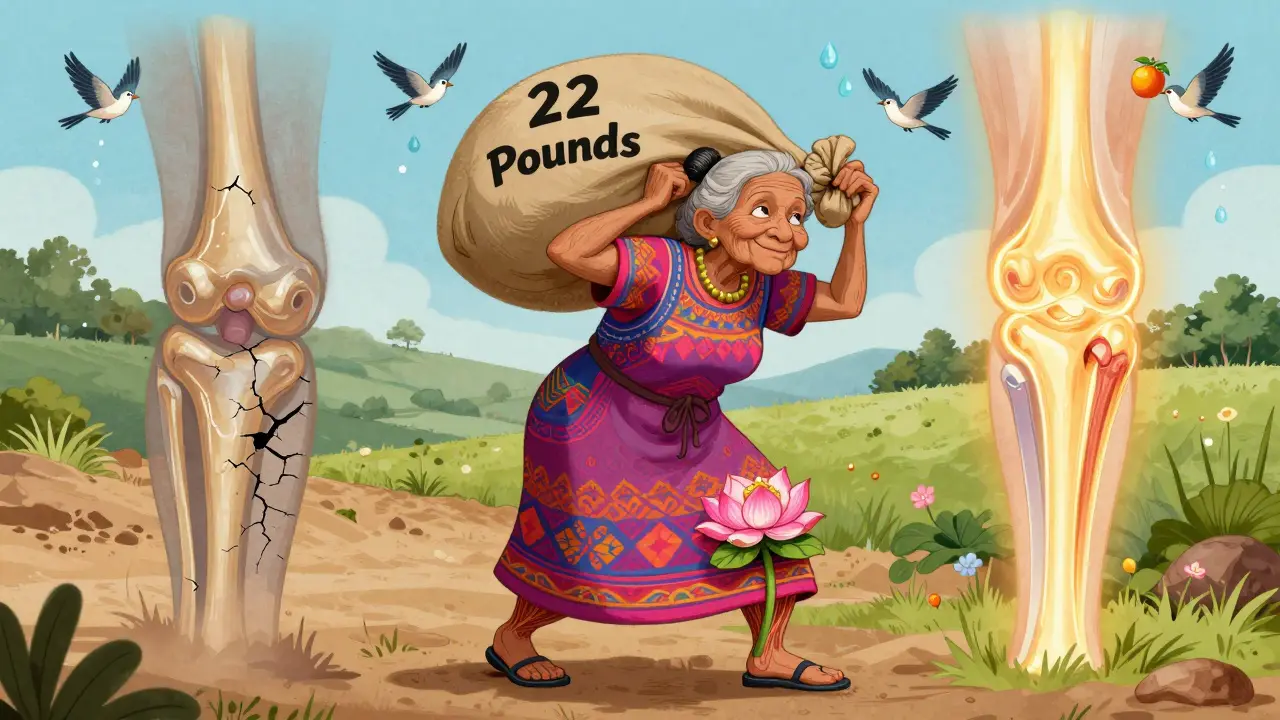
Here’s the kicker: losing 5% helped. Losing 7% helped more. But the biggest jump? That came at 10% or more. For someone weighing 220 pounds, that’s 22 pounds. Not 50. Not 100. Just 22. And the benefits didn’t stop at pain relief. Their hip function scores improved across the board - from sports activity to daily mobility.
Compare that to knee osteoarthritis, where weight loss is widely accepted as a game-changer. Hip OA? The story’s been messier. A 2023 study compared a very-low-calorie diet plus exercise to exercise alone. At six months, there was no big difference in hip pain. That led some experts to declare, "Hip OA is unaffected by weight loss." But wait - at 12 months, the group that lost weight showed clear gains. Pain was lower. Function was better. The body just needed more time to heal.
That delay matters. Your hip joint doesn’t respond like your knee. It’s deeper. Heavily supported by muscles. Less exposed. So changes happen slower. But they happen.
How Much Weight Do You Actually Need to Lose?
Forget the vague advice to "lose a few pounds." For hip OA, the science points to clear targets:
- 5% loss: Some improvement in pain and function. Good starting point.
- 7-10% loss: Clinically meaningful change. This is where most people start feeling real relief.
- 10%+ loss: Best results. Significant improvement in quality of life, stiffness, and daily movement.
That 10% threshold isn’t arbitrary. In the Nature study, people who lost over 10% saw a 14.42-point improvement on the Hip disability and Osteoarthritis Outcome Score (HOOS) - the largest gain in any symptom category. That’s not just statistically significant. It’s life-changing. Imagine being able to walk to the mailbox without stopping. Or playing with your grandkids without needing a nap afterward.
And here’s something most don’t realize: you don’t need to reach "normal" weight. You just need to lose enough to shift the load. For many, that’s 10-20% of current weight. A 2023 review in the Journal of Metabolic Health found no extra benefit from losing 20% versus 10%. So aim for 10%. Go beyond if you can. But don’t get stuck chasing perfection.
What Kind of Weight Loss Works?
Not all diets are created equal - especially when your joints are in trouble.
The most effective programs combine two things: reduced calorie intake and targeted movement. You can’t just diet. You can’t just exercise. You need both.
Low-carb diets have shown strong results. Cutting back on sugar and refined carbs reduces inflammation. Pair that with protein-rich meals, and you preserve muscle while losing fat. Muscle supports your hip. Fat fuels inflammation. So what you eat matters as much as how much you eat.
Exercise? Focus on low-impact movement. Swimming. Cycling. Water aerobics. Strength training for the glutes and thighs. These muscles act like shock absorbers for your hip. The more you strengthen them, the less stress your joint takes. A 2012 study of 35 people with hip OA showed a 32.6% improvement in physical function after eight months of combined diet and exercise. No surgery. No pills. Just smart habits.
Programs like the Osteoarthritis Healthy Weight For Life (OAHWFL) in Australia and New Zealand have been adapted for hip OA. They use telehealth coaching, weekly check-ins, and personalized plans. People who stuck with the full 18-week program lost an average of 7-10% of their weight. Those who dropped out? They had worse symptoms from the start. That’s a clue: if your hip pain is severe, you need more support - not less.
Why Some People Don’t See Results
If you’ve tried losing weight and your hip still hurts, you’re not alone. And it’s not your fault.
Here’s what often goes wrong:
- Going too slow: Losing 1-2 pounds a month won’t cut it. You need momentum. Aim for 1-2 pounds per week.
- Ignoring inflammation: Eating processed food, sugar, or fried items keeps inflammation high. Weight loss won’t help if your body is still in fight mode.
- Skipping strength training: If you only do cardio, you lose muscle along with fat. That makes your hip less stable.
- Quitting too soon: The 2023 study showed benefits at 12 months - not 6. Patience isn’t optional. It’s part of the treatment.
Also, some people have structural damage that’s too advanced. If the bone is grinding, cartilage is gone, and the joint is severely misaligned, weight loss alone won’t fix it. But it can still delay surgery. And if surgery becomes necessary, being leaner means fewer complications and faster recovery.

What About Weight Loss Medications?
For some, diet and exercise aren’t enough. That’s where FDA-approved weight loss drugs come in - but only under specific conditions.
The American College of Rheumatology says these medications are an option if:
- Your BMI is over 30 (obese), or over 27 with other health risks (like high blood pressure or diabetes),
- You’ve tried lifestyle changes for at least six months,
- You’re working with a doctor who can monitor side effects.
These aren’t magic pills. They’re tools. And they work best when paired with movement and nutrition. They’re not a replacement. They’re a boost.
And they’re not for everyone. If you have heart problems, a history of eating disorders, or are pregnant, they’re off the table. But for many, they can be the push needed to break through a plateau.
Joint Preservation: It’s Not Just About Pain
Weight loss isn’t just about feeling better today. It’s about protecting your joint for tomorrow.
Every extra pound adds pressure - but it’s not just a 1:1 ratio. When you walk, your hip bears 3-6 times your body weight. Lose 10 pounds? That’s 30-60 fewer pounds of force on your joint with every step. Over a year? That’s millions of impacts reduced.
Less pressure means slower cartilage wear. Less inflammation means less joint damage. That’s joint preservation. It doesn’t mean you’ll never need a replacement. But it might mean you don’t need one in your 50s. Maybe not even in your 60s. And if you do need surgery later, you’ll be healthier, recover faster, and have fewer complications.
This isn’t theoretical. The CDC says 32.5% of U.S. adults have obesity. That’s over 80 million people. Many of them are walking around with early hip OA right now - unaware that the solution might be as simple as eating less sugar, walking 30 minutes a day, and drinking more water.
Real Talk: Where to Start
You don’t need a gym membership. You don’t need a personal trainer. You don’t need to go keto or intermittent fast.
Start here:
- Track your food for one week. Use a free app. Just log what you eat. No judgment. Just awareness.
- Swap one high-sugar item per day. Soda → sparkling water. Candy → fruit. Cookies → nuts.
- Walk 15 minutes, twice a day. Morning and after dinner. That’s 30 minutes. No fancy shoes needed.
- Do two bodyweight exercises three times a week. Sit-to-stand from a chair (3 sets of 10). Glute bridges (3 sets of 15). That’s it.
- Set a goal: lose 10% of your current weight. Not "get skinny." Not "look better." Just 10%. That’s the number science backs.
Do this for 12 weeks. Then reevaluate. You might be surprised how much better your hip feels - not because you lost 50 pounds, but because you lost 10.
Can weight loss really help hip osteoarthritis, or is it just for knees?
Yes, weight loss can help hip osteoarthritis - but the effects are slower and less dramatic than with knee OA. A 2024 study in Nature found that losing over 10% of body weight led to significant improvements in pain, stiffness, and quality of life for hip OA patients. While some earlier studies questioned its impact, longer-term data (12 months) shows clear benefits. The key is consistency and reaching a meaningful weight loss target - not just a small reduction.
How much weight do I need to lose to see improvement in my hip pain?
Research shows that losing 5% of your body weight brings some relief, but the most noticeable improvements happen at 7-10%. Losing 10% or more leads to the greatest gains in function, mobility, and quality of life. For someone weighing 220 pounds, that’s about 22 pounds. You don’t need to reach a "normal" BMI - just enough to reduce pressure and inflammation on the joint.
Is diet more important than exercise for hip OA?
Both matter - but diet drives weight loss, and exercise protects the joint. Cutting calories helps you lose weight, which reduces mechanical stress. But without strength training, especially for the glutes and thighs, your hip loses support. That’s why the most successful programs combine the two: a balanced, lower-calorie diet with low-impact movement like walking, cycling, and resistance exercises.
Should I consider weight loss medications for my hip OA?
Weight loss medications may be an option if your BMI is over 30 (or over 27 with other health risks) and you’ve tried lifestyle changes for at least six months without success. These drugs aren’t magic - they work best alongside diet and movement. They’re not first-line treatment, but they can help break plateaus when combined with a structured plan. Always consult your doctor before starting any medication.
Can I avoid hip replacement if I lose weight?
Losing weight won’t reverse advanced joint damage, but it can delay or even prevent the need for hip replacement. By reducing pressure on the joint and lowering inflammation, weight loss slows cartilage breakdown. Many people who lose 10% or more of their weight find their symptoms manageable for years longer than expected. If surgery eventually becomes necessary, being at a healthier weight means a smoother recovery and fewer complications.
Hip osteoarthritis doesn’t have to be a life sentence. You don’t need to wait for pain to get unbearable. You don’t need to believe the myth that "it’s just aging." The science is clear: when you lose weight, especially 10% or more, your hip gets relief - not just from less pressure, but from less inflammation. And that’s the real key to joint preservation.
Brandie Bradshaw
February 26, 2026 AT 23:04Weight loss isn't a cure for osteoarthritis-it's a modulator of systemic inflammation. Cartilage degradation isn't just mechanical wear; it's an immunometabolic cascade. Adipose tissue secretes IL-6, TNF-alpha, leptin-all of which upregulate matrix metalloproteinases that degrade hyaline cartilage. Losing 10% body weight reduces these cytokines by 30-40% in longitudinal studies. This isn't anecdotal. This is molecular biology.
Noah Cline
February 27, 2026 AT 11:00You think this is about weight? It's about control. The medical-industrial complex wants you obsessed with calories so you don't ask why insulin resistance is epidemic. They push dieting like a religion while ignoring endocrine disruptors in plastics, pesticides, and processed food. Lose 10%? Sure. But don't fool yourself-this system is rigged.
Sumit Mohan Saxena
March 1, 2026 AT 05:59While the article presents compelling data, one must consider confounding variables. The 2024 Nature study had a sample size of 65, predominantly female, with BMI >30. Generalizability to males, younger populations, or non-obese OA patients remains unproven. Furthermore, the HOOS score improvements may reflect placebo effects or enhanced self-efficacy rather than purely biomechanical changes. A meta-analysis would strengthen this claim.
Sophia Rafiq
March 2, 2026 AT 20:3510% is the sweet spot. Not 20. Not 30. Just 10. I lost 18 lbs after my hip started locking up. Didn't even try hard. Swapped soda for sparkling water, walked after dinner, did chair squats three times a week. Six weeks in, I could tie my shoes without groaning. No magic. Just consistency.
Charity Hanson
March 4, 2026 AT 09:24THIS. I’m from Nigeria and we don’t have gym culture here but we have walking, we have plantains, we have beans, we have community. My aunt lost 12% just by walking to market every day and cutting out sugar tea. No pills. No fancy apps. Just movement and food as medicine. If she can do it, you can too. You got this.
Angel Wolfe
March 4, 2026 AT 20:37They say weight loss helps but what about the people who are thin and still have hip pain? The real issue is glyphosate in our water and vaccines causing autoimmune joint destruction. The CDC is hiding the truth. They don’t want you to know that 10% weight loss is just a distraction while Big Pharma sells you knee replacements. Wake up.
Brandon Vasquez
March 5, 2026 AT 04:59I’ve been through this. Took me 14 months to lose 11%. Didn’t track every calorie. Just ate until I wasn’t hungry, moved every day, slept better. The pain didn’t vanish overnight. But after month 10? I walked to the park with my dog for the first time in years. No drama. No hype. Just patience. You don’t need to be perfect. Just persistent.
Ajay Krishna
March 5, 2026 AT 10:35As someone from India, I’ve seen both sides. My father had hip OA and refused to change his diet. My cousin lost 15% and now hikes. The science is clear, but culture matters. In many communities, food is love. So we must reframe weight loss not as deprivation but as honoring your body so you can keep showing up-for family, for life, for tomorrow. Small steps. Always.
Vikas Meshram
March 6, 2026 AT 08:24Correction: The study cited was not in Nature, it was in The Lancet Rheumatology. Also, the 31% improvement was on the WOMAC scale, not HOOS. And the 14.42-point gain was for HOOS-ADL, not total HOOS. Misquoting data undermines credibility. Please fact-check before sharing. Also, 10% loss is not a universal target-individual biomechanics vary. One-size-fits-all advice is dangerous.
Ben Estella
March 7, 2026 AT 20:58They're all lying. If losing weight worked, why are 70% of hip replacements done on people who 'lost weight'? It's a scam. The system profits from your pain. Don't fall for it. Go to the VA. Get free rehab. Don't waste your time on diets. This whole thing is a distraction.