Missing a dose of your medication isn’t just a slip-up-it’s a risk. For people managing chronic conditions like high blood pressure, diabetes, or heart disease, even one missed pill can lead to serious complications. The good news? You don’t need fancy gadgets or expensive apps to stay on track. The most effective way to take your meds every day is to link them to habits you already do. This isn’t a new idea. It’s backed by decades of research, used by top health organizations, and trusted by millions of people who finally got their medication routine under control.
Why Most People Miss Their Medications
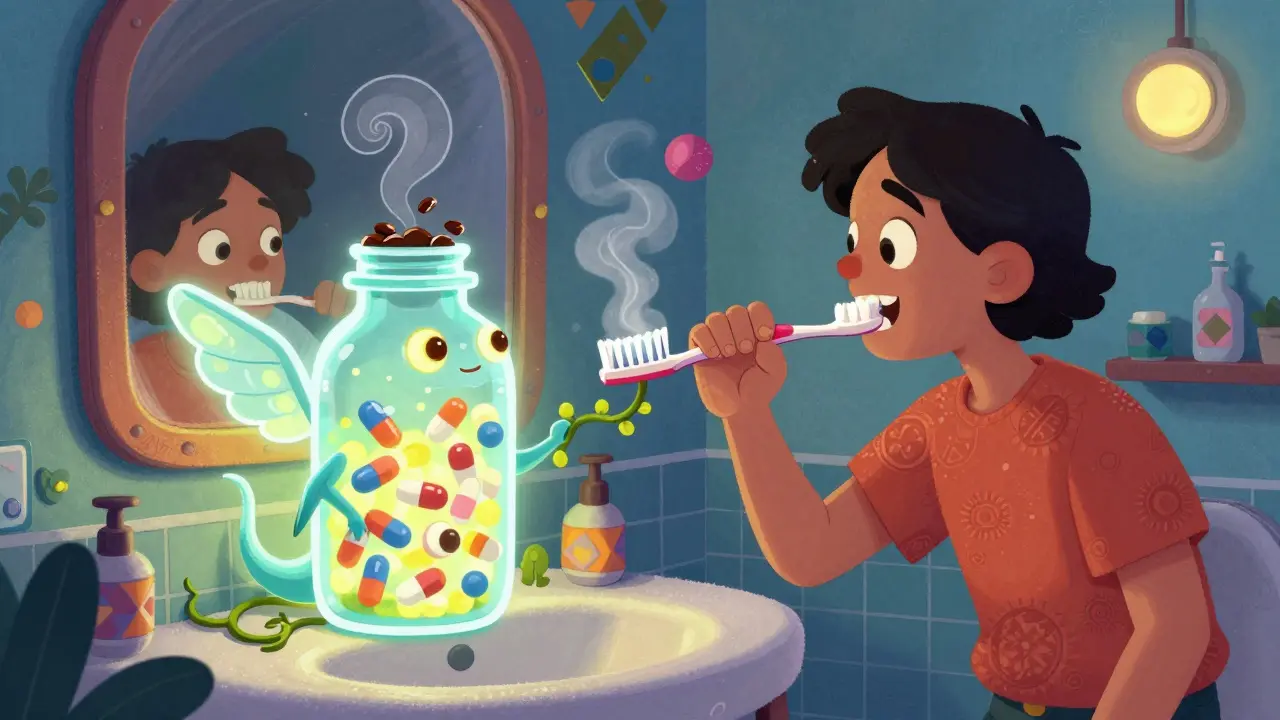
It’s not about laziness. Most missed doses happen because people forget-not because they don’t care. A 2018 analysis from the American Medical Association found that 60-70% of nonadherence is unintentional. You meant to take your pill. You just got distracted. Maybe you left for work early. Maybe you were in the shower. Maybe your day got chaotic. That’s where habit pairing comes in. Instead of relying on memory, you tie your medication to something you do every single day without thinking. Brushing your teeth. Making coffee. Eating breakfast. Checking your mail. These routines are automatic. Your medication becomes automatic too.
The Science Behind Habit Pairing
Habit formation isn’t magic. It’s biology. When you repeat a behavior in the same context, your brain starts to link the two. A 2020 study in the European Journal of Social Psychology found that it takes an average of 21 days for a new habit to stick-but that number varies. Some habits form in under two weeks. Others take up to 66 days, especially if the medication is complex or has side effects. The key is consistency. A 2015 NIH study of 1,247 patients with chronic conditions showed that those who paired their meds with daily routines cut their missed doses by 30-50%. That’s not a small improvement. That’s life-changing.
How to Do It: The 4-Step Plan
It’s simpler than you think. Here’s how to get started:
- Track your routine for 3-7 days. Write down what you do every day-when you wake up, when you eat, when you leave the house, when you go to bed. You don’t need to change anything. Just observe. This helps you spot natural anchors.
- Match your meds to your habits. Not every habit works for every pill. Morning meds? Pair them with brushing your teeth or making coffee. Evening meds? Link them to washing your face or turning off the lights. If you take meds with food, tie them to meals. If you’re on a statin, take it at night-it’s more effective. Your pharmacist can help you match timing to science.
- Place your meds where the habit happens. Keep your pill bottle right next to your toothbrush. Put your daily dose on the kitchen counter next to the coffee maker. Leave your afternoon pills on the dining table. Visibility matters. A 2023 Central Pharmacy study found that placing meds near the habit location boosted initial success by 31%.
- Stick with it for at least 21 days. Don’t give up if you miss one day. Habit formation isn’t perfect. But if you keep pairing your pill with the same routine, your brain will start to expect it. After three weeks, you won’t have to think about it.
Proven Pairings That Work
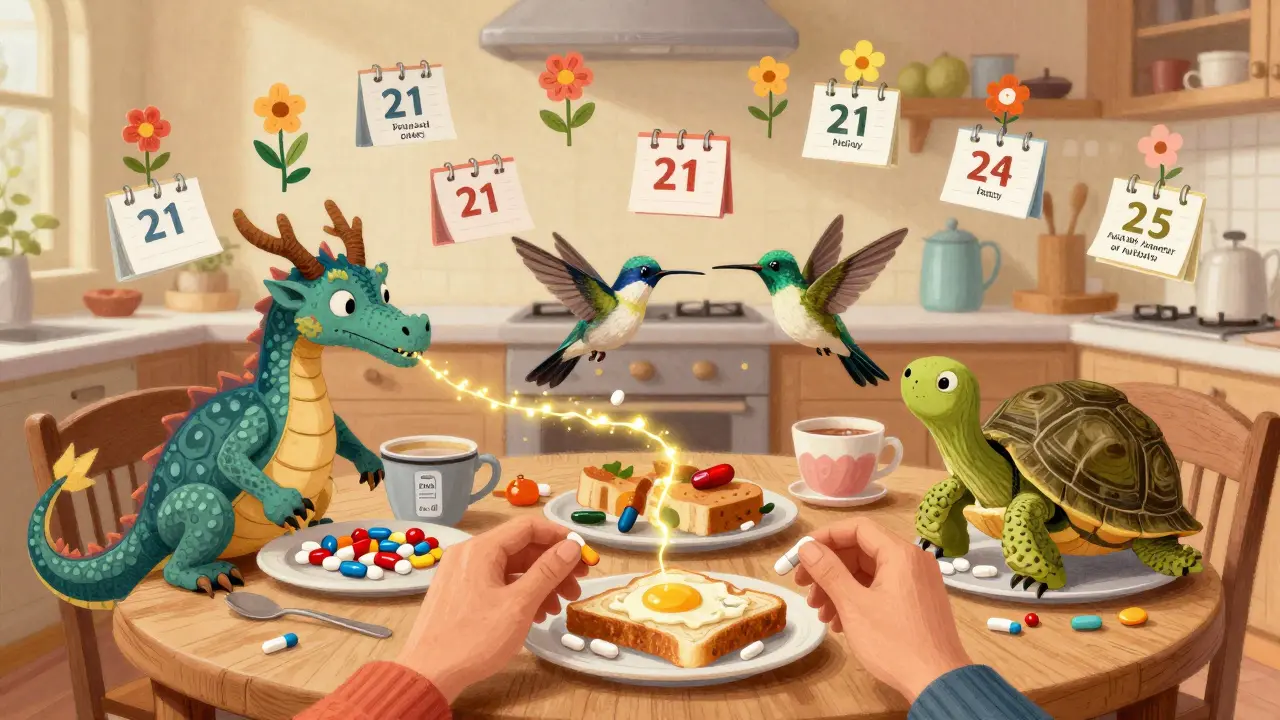
Not all habits are created equal. Some pairings have been tested in thousands of patients and show clear results:
- Toothbrushing (morning): 92% adherence rate when paired with morning meds, according to Central Pharmacy’s 2023 data. Dr. Jennifer L. Smith from the University of Michigan calls this the most effective low-tech strategy we have. It’s simple: after you brush, you take your pill. No extra steps.
- Breakfast (7:00-8:30 AM): The American Heart Association recommends this window for blood pressure meds. If you eat breakfast, use it. If you don’t, pick something else-like making your bed or checking your phone.
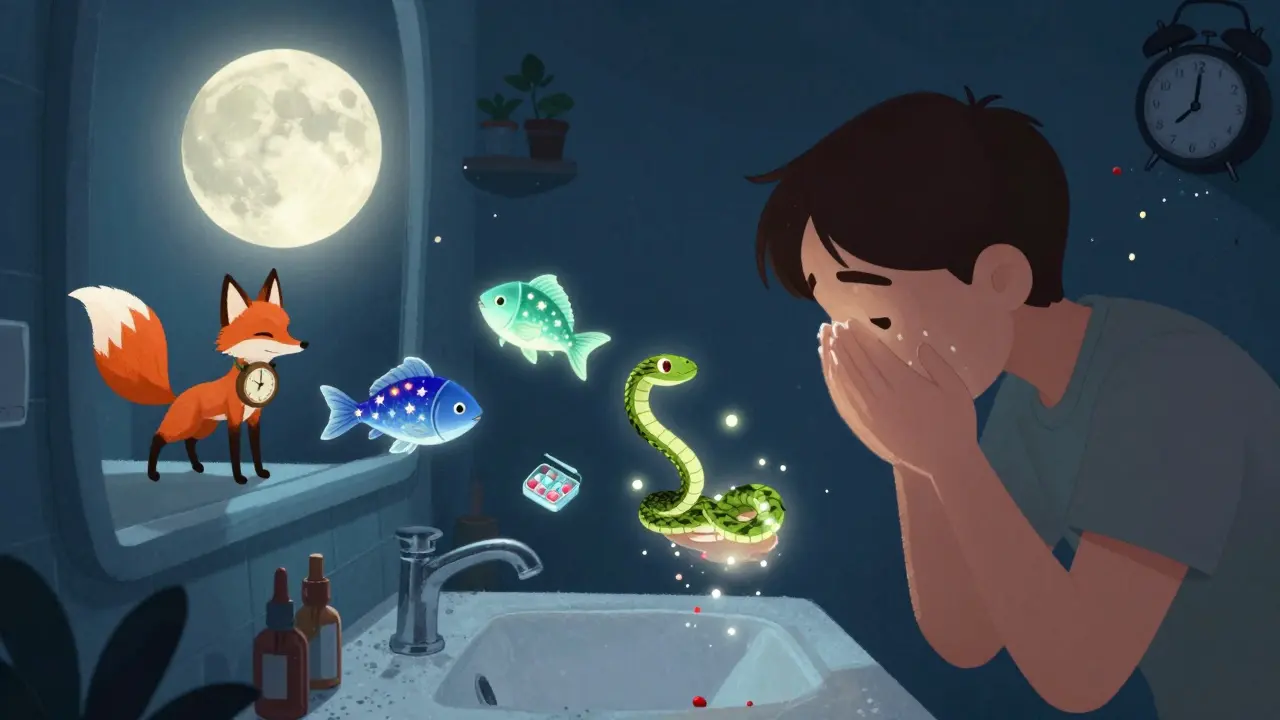
- Dinner or evening routine: For diabetes meds, heart medications, or cholesterol pills, pairing with dinner or washing up before bed works best. A 2021 study showed that patients who took their evening meds right after dinner were 41% more likely to stay on track than those who didn’t.
- Mail check (midday): If you get mail around noon, use it. This works especially well for people who don’t eat lunch regularly or have irregular schedules. It’s a quiet, predictable moment in the day.
What Doesn’t Work
Apps and alarms? They help at first. But a 2022 JMIR study found that 68% of people stop using medication apps after three months. Pill organizers? Useful-but only 28% adherence gain on their own. The real power comes when you combine them. Use a pill box for your weekly doses, but still pair each one with a daily habit. That way, even if you forget to check the box, you’ll still take your pill because you’re already brushing your teeth.
Shift workers, people with dementia, or those with wildly changing schedules may find habit pairing harder. A 2023 AMA update noted that shift workers see 18% lower success rates. That’s why it’s important to have backup anchors. If you work nights, pair your meds with turning on the kitchen light or drinking a glass of water before bed. Flexibility matters.
What Experts Say
Dr. David S. Sobel from Kaiser Permanente says habit pairing creates neural pathways that make adherence automatic within 21-66 days. The Agency for Healthcare Research and Quality rates it as “High Strength of Evidence” with a 0.82 effect size-meaning it’s one of the most reliable adherence tools available. But experts also warn: habit pairing doesn’t fix everything. If your meds are too expensive, or if you’re skipping them because of side effects, you need to talk to your doctor. Habit pairing helps you remember. It doesn’t fix the reason you don’t want to take the pill.
Real Stories, Real Results
On Reddit, user u/HealthyHabitHero shared: “I used to miss my 8 a.m. meds 12 times a month. I started pairing them with making coffee. After six weeks, I missed only two. Now I don’t even think about it-I just do it.”
Conversely, u/NightShiftStruggles said: “I’m a nurse. My shifts change every week. Habit pairing failed until I added a pill organizer and alarms synced to my schedule. Now I’m at 95% adherence.”
These stories show that the strategy works-but it’s not one-size-fits-all. You have to adapt it to your life.
Who Benefits Most
Seniors see the biggest gains. A 2022 National Council on Aging survey found that 42% of people over 65 use toothbrushing as their primary medication anchor. Medicare Part D plans now include habit pairing in their counseling programs. Community pharmacies offer free pairing guidance. And it costs nothing. No subscription. No app download. Just your existing routine and a little planning.
What’s Next
The future of adherence is smart. Central Pharmacy’s RoutineSync tool, launched in 2023, uses your activity logs to suggest the best time to pair your meds. Mayo Clinic is testing AI that watches your phone usage-like when you open the coffee app-and triggers a reminder. But none of this replaces the power of linking your pill to brushing your teeth. That’s the foundation. Everything else just builds on it.
If you’re struggling to remember your meds, start here: pick one daily habit. Put your pill next to it. Do it every day for three weeks. You might be surprised how easy it becomes.
Can I pair multiple medications with the same habit?
Yes. If you take two or more pills at the same time, you can pair them all with one habit-like brushing your teeth or eating breakfast. Grouping doses within a one-hour window improves adherence by 27%, according to a 2022 study in the Annals of Internal Medicine. Just make sure they’re all meant to be taken together. If one is supposed to be taken on an empty stomach and another with food, split them up.
What if I travel or change my routine?
Have a backup anchor. If you usually take your pill with breakfast but you’re on vacation and skip it, pair it with something else you’ll still do-like turning on the TV in the morning or washing your face. The goal is consistency, not perfection. The American Medical Association recommends always having two habit anchors ready-one primary, one backup.
Does it matter what time I take my meds each day?
Yes. Taking your medication at the same time every day-within a 30-minute window-boosts adherence by 37%, according to Oak Street Health’s 2022 data. If you take your blood pressure pill at 7:15 a.m. one day and 10:30 a.m. the next, your body doesn’t get the steady effect it needs. Stick to a window. Your doctor or pharmacist can help you pick the best one.
I have trouble remembering even with habits. What else can I do?
Combine habit pairing with a pill organizer. Use a seven-day box and fill it weekly. Put it next to your toothbrush or coffee maker. This adds a visual cue on top of the habit cue. Studies show this combo improves adherence by 41%. You can also set one weekly reminder on your phone for refills-just don’t rely on daily alarms.
Is this only for older adults?
No. Habit pairing works for anyone with a routine-teens on ADHD meds, young adults on birth control, adults with asthma or thyroid conditions. The key is having a consistent daily activity. A 2023 study in JAMA Internal Medicine found success rates of 85% in adults aged 18-35 who paired their meds with phone charging or morning scrolling.
Can I use this for antibiotics?
Yes. The CDC’s 2024 Antimicrobial Resistance Challenge now includes habit pairing as a core strategy. For antibiotics, pair them with meals if they’re food-sensitive, or with brushing your teeth if they’re not. Completing the full course matters more than ever-habit pairing helps you finish it without thinking.
How long does it take to see results?
Most people notice improvement within two weeks. A 2023 survey from Central Pharmacy showed 70% of users reported fewer missed doses by day 14. Full automaticity-the point where you don’t even think about it-usually hits around day 21 to 42. Don’t give up before then.
Do I need to tell my doctor about this?
You don’t have to, but it helps. Your doctor or pharmacist can confirm if your pairing plan matches the medication’s requirements. Some pills must be taken on an empty stomach. Others need to be spaced out. A pharmacist spends about 8.7 minutes per patient explaining this. It’s free, and it makes your plan safer.
If you’ve been forgetting your meds, this isn’t about being disorganized. It’s about designing a system that works with your brain, not against it. Start small. Pick one habit. Put your pill next to it. Do it every day. In a few weeks, you won’t even notice you’re doing it. And that’s exactly how you win.
Alfred Noble
February 25, 2026 AT 15:41Matthew Brooker
February 26, 2026 AT 04:32Emily Wolff
February 27, 2026 AT 23:07David McKie
March 1, 2026 AT 10:05Southern Indiana Paleontology Institute
March 1, 2026 AT 23:41Anil bhardwaj
March 2, 2026 AT 07:45lela izzani
March 2, 2026 AT 09:22Joanna Reyes
March 2, 2026 AT 11:07Nerina Devi
March 3, 2026 AT 04:33Dinesh Dawn
March 4, 2026 AT 14:01Vanessa Drummond
March 5, 2026 AT 07:13Nick Hamby
March 7, 2026 AT 04:53