When someone starts forgetting where they put their keys, or repeats the same question five times in ten minutes, it’s easy to brush it off as normal aging. But when those lapses grow into losing track of entire conversations, forgetting close family members’ names, or wandering away from home, it’s not just forgetfulness - it’s Alzheimer’s disease. This isn’t a single moment of confusion. It’s a slow, relentless unraveling of the mind, and it affects more than just the person diagnosed. It reshapes entire families, daily routines, and the meaning of care.
What Alzheimer’s Actually Does to the Brain
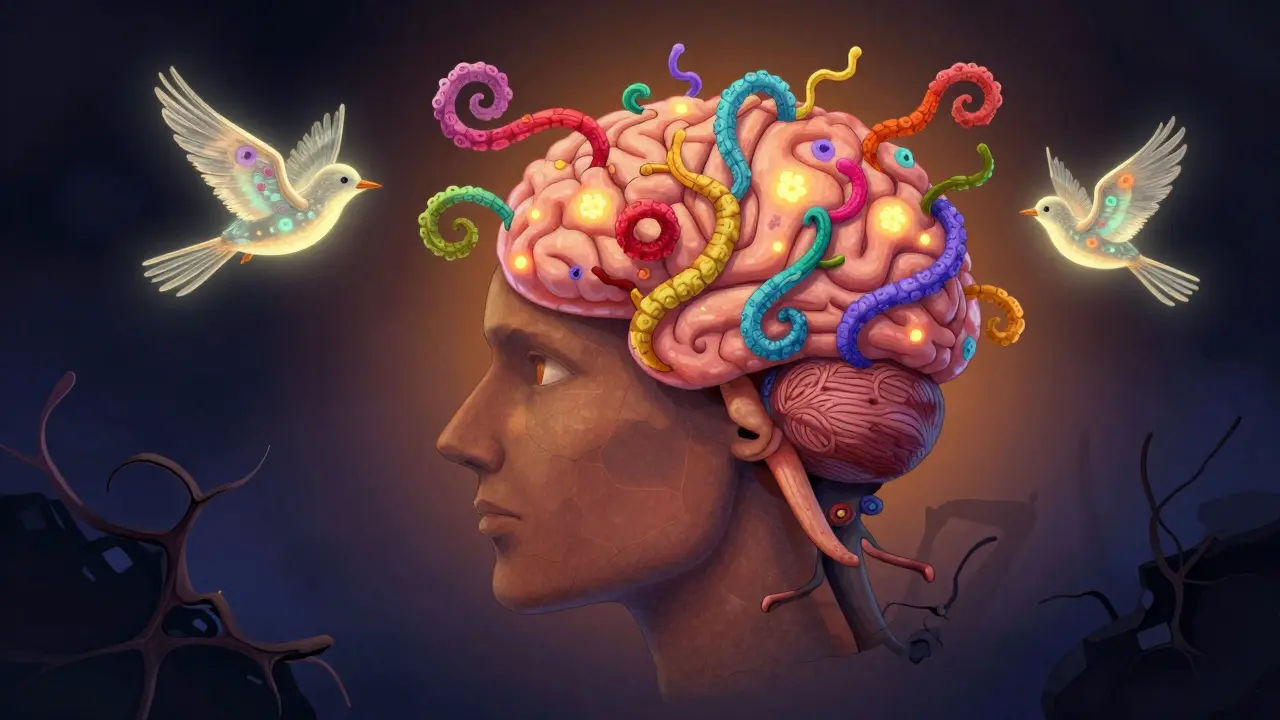
Alzheimer’s isn’t just about forgetting. It’s about the brain literally losing its structure. Two toxic proteins build up over time: amyloid-beta plaques and clumps of misfolded tau protein that form tangles inside neurons. These aren’t just random gunk - they clog communication between brain cells, starve them of energy, and eventually kill them. The first areas to go are the hippocampus and entorhinal cortex, the brain’s memory hubs. That’s why the earliest sign isn’t confusion about the date - it’s forgetting what you had for breakfast.
By the time symptoms show up, these changes have been brewing for 15 to 20 years. That’s why researchers now say Alzheimer’s isn’t something that starts when someone gets lost - it starts long before anyone notices. The FDA-approved drug lecanemab (Leqembi) targets these plaques and slows decline by 27% over 18 months, but it’s not a cure. It’s the first real step toward treating the disease before it destroys too much.
The Five Stages of Memory Loss - What to Expect
Alzheimer’s doesn’t hit all at once. It creeps in, then builds. Most experts break it into five stages, though no two people follow the exact same path.
Stage 1: Preclinical - No symptoms. But brain scans or spinal fluid tests might show plaques and tangles. This is the silent phase, detectable only through research or future routine screenings.
Stage 2: Mild Cognitive Impairment (MCI) - This is where families start noticing. The person forgets recent conversations, misplaces things constantly, struggles to find words, or repeats questions. They might still drive, work, and socialize - but they’re starting to need reminders. Formal testing shows poor recall of new information. They might remember a phone number from 30 years ago but not what they ate for lunch.
Stage 3: Early Dementia - Memory loss becomes obvious. They forget appointments, get lost in familiar neighborhoods, and have trouble managing money or medications. Personality changes creep in - irritability, suspicion, or withdrawal. They may accuse others of stealing their things. This is often the stage where families realize they need help.
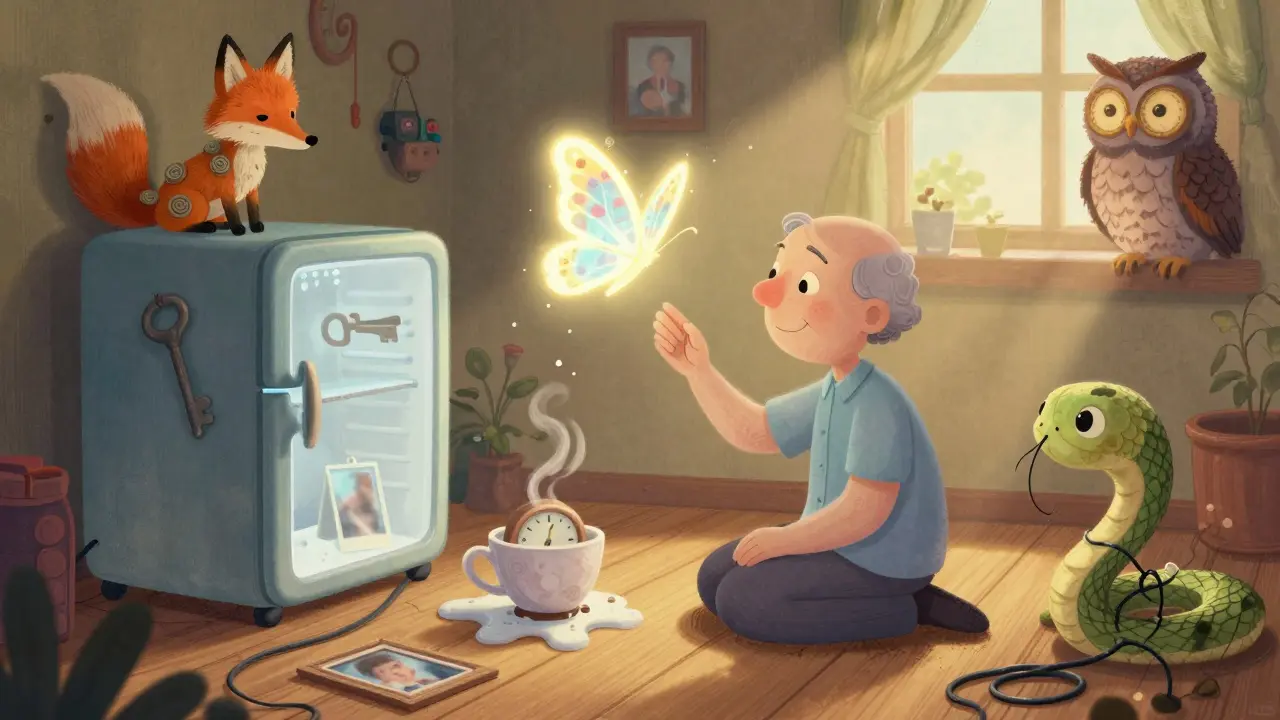
Stage 4: Middle Dementia - The longest stage, lasting years. The person forgets personal history - names of children, addresses, even their own birthdate. They need help dressing, bathing, and using the toilet. Incontinence starts. They wander. They repeat the same question 20 times an hour. Agitation, delusions, and sleep disruptions are common. One caregiver on Reddit described it: "She’d hide my keys, then scream that I stole them. I’d find them in the freezer. Again."
Stage 5: Late Dementia - The brain shuts down. The person can’t speak, can’t walk, can’t swallow. They may not recognize loved ones. They become bedbound. Communication is gone - but touch, music, or a familiar voice can still bring comfort. They need full-time care for everything: feeding, turning, cleaning. Many die not from Alzheimer’s itself, but from complications like pneumonia or infection.
How Memory Declines - The Pattern No One Talks About
Memory loss in Alzheimer’s isn’t random. It follows a pattern. Short-term memory goes first. You can ask someone what they had for dinner last night - they won’t remember. But ask them about their wedding day - they might still recall the dress, the song, the smell of the flowers.
As the disease spreads, long-term memory starts to fade. Names blur. Faces become unfamiliar. Eventually, even deeply stored memories - childhood pets, favorite songs - vanish. The brain doesn’t lose all memory at once. It loses it layer by layer, starting with the newest.
Here’s the cruel twist: people with Alzheimer’s often know they’re forgetting. In early stages, they feel shame. They hide mistakes. They lie about where they put things. By middle stage, they’re too confused to even realize they’ve forgotten. That’s when caregivers need to stop correcting and start validating. "I know you’re looking for your mother," instead of "Your mother died ten years ago."
What Caregivers Really Go Through - Not the Brochure Version
Most caregiving guides focus on "tips" and "tools." But the real experience? It’s exhaustion. Isolation. Guilt. And unexpected moments of connection.
According to the Alzheimer’s Association, caregivers spend an average of 27 hours a week providing unpaid care. That’s a second job. And 39% say their emotional stress is "high or very high." Thirty percent say they’re physically worn down from lifting, bathing, or restraining someone who’s agitated.
One caregiver shared: "I stopped going to my book club. I stopped talking to friends. I was too tired. Too scared to leave her alone. I felt like I was drowning and no one saw it."
But there are also quiet moments. A 2022 survey found that while middle-stage behavioral issues caused the most anxiety, late-stage care was often less emotionally taxing than expected. Why? Because the person is no longer aware of their loss. A touch on the arm. A song from their youth. A warm blanket. These things still matter. One daughter said: "She couldn’t speak, but when I held her hand, she’d squeeze back. That’s when I knew she was still there."
Practical Care Strategies for Each Stage
There’s no magic fix - but small changes make a huge difference.
Early Stage: Help them stay independent. Use labeled cabinets. Set up phone alarms for meds. Keep a daily calendar. Don’t take away their keys too soon - instead, drive with them, then talk about safety. Encourage social activities - isolation speeds decline.
Middle Stage: Focus on safety and routine. Install door alarms. Remove rugs and clutter. Lock up sharp objects and medications. Use simple, one-step instructions: "It’s time to brush your teeth," not "Can you please go to the bathroom and brush your teeth?" Validate feelings - don’t argue. If they think they’re supposed to go to work, say, "I’ll help you get ready," instead of "You’re retired."
Late Stage: Comfort is everything. Keep skin clean and dry to prevent pressure sores. Offer soft, easy-to-swallow foods. Play familiar music. Hold their hand. Speak softly. Even if they don’t respond, your presence matters. Many people in this stage still feel pain - they just can’t say it. Watch for grimacing, restlessness, or tense muscles.

Support Isn’t Optional - It’s Essential
One caregiver can’t do this alone. The CDC says 61% of home caregivers use respite care. Medicare covers up to five days of inpatient respite per benefit period for hospice patients. Local Alzheimer’s chapters offer free support groups, training, and even home visits.
Don’t wait until you’re broken. Join a group. Talk to a social worker. Ask for help. You’re not failing if you need a break - you’re surviving.
The Bigger Picture - Why This Matters
Alzheimer’s isn’t just a medical problem. It’s a societal one. In 2023, dementia cost the U.S. $345 billion - $155 billion in Medicare, $89 billion in Medicaid, and $340 billion in unpaid family care. Globally, 55 million people live with dementia. By 2050, that could hit 139 million.
And yet, most people still think it’s just "getting old." It’s not. It’s a disease with biological roots, measurable progression, and real treatments on the horizon. The next five years may bring blood tests that detect Alzheimer’s before symptoms start. New drugs targeting tau proteins are in phase 3 trials. But until then, the best medicine is understanding - and showing up.
Can you prevent Alzheimer’s disease?
There’s no guaranteed way to prevent Alzheimer’s, but certain habits lower risk. Regular physical activity - like brisk walking - reduces risk by up to 35%. Managing high blood pressure, diabetes, and cholesterol helps protect brain blood flow. Staying socially engaged and mentally active (reading, puzzles, learning new skills) also matters. The strongest evidence points to heart health = brain health. Smoking and heavy drinking increase risk. Sleep is critical - chronic poor sleep is linked to higher amyloid buildup.
Is Alzheimer’s hereditary?
Most cases aren’t inherited. Only about 1% of cases are caused by rare gene mutations that guarantee the disease, usually appearing before age 65. These are called familial Alzheimer’s. The vast majority of cases - late-onset Alzheimer’s - are influenced by a mix of age, lifestyle, and genes like APOE-e4, which increases risk but doesn’t guarantee illness. Having a parent with Alzheimer’s raises your risk slightly, but it doesn’t mean you’ll get it.
Why do people with Alzheimer’s get so angry or aggressive?
It’s not personal. Aggression usually comes from frustration, fear, or pain. They can’t explain why they’re upset. A loud noise, a bright light, being rushed to bathe, or being told they’re wrong - all can trigger outbursts. They may also be in physical discomfort (a UTI, constipation, or sore joints) and can’t say so. Look for triggers. Reduce noise. Give choices ("Do you want to shower now or in 10 minutes?"). Never argue. Validate their feelings. Often, the anger fades when they feel safe.
When should you consider memory care or a nursing home?
There’s no single answer - it’s about safety and sustainability. If someone is wandering at night, forgetting to turn off the stove, or you’re physically unable to lift or bathe them, it’s time to consider help. Memory care units offer 24/7 supervision, trained staff, secure environments, and structured activities. Many families feel guilty - but choosing professional care isn’t giving up. It’s making sure your loved one gets the level of care they need - and that you don’t burn out. Medicare doesn’t cover long-term care, but Medicaid might, depending on income and state rules.
Do people with Alzheimer’s still feel emotions?
Yes - even when they can’t speak, remember names, or recognize faces, they still feel joy, fear, comfort, and love. A gentle touch, a familiar song, or the scent of a perfume they loved can trigger calm or a smile. Studies show emotional memory lasts longer than factual memory. So don’t stop talking to them. Don’t stop holding their hand. Don’t stop singing. They may not respond the way they used to - but they still feel you there.
What Comes Next?
Research is moving fast. Blood tests for Alzheimer’s could be routine within five years. New drugs are targeting tau, inflammation, and metabolism - not just plaques. But science alone won’t fix this crisis. What will is better support for caregivers, earlier diagnosis, and a shift in how we see dementia. It’s not a tragedy to be hidden. It’s a condition that demands compassion, planning, and community.
If you’re caring for someone with Alzheimer’s - you’re not alone. And you’re doing something that matters more than you know.
christian jon
February 12, 2026 AT 12:18Pat Mun
February 14, 2026 AT 11:42andres az
February 15, 2026 AT 06:45Steve DESTIVELLE
February 16, 2026 AT 12:38Stephon Devereux
February 17, 2026 AT 07:19steve sunio
February 18, 2026 AT 10:11Neha Motiwala
February 18, 2026 AT 11:29athmaja biju
February 19, 2026 AT 10:07Gloria Ricky
February 19, 2026 AT 13:34Annie Joyce
February 21, 2026 AT 08:27Rob Turner
February 22, 2026 AT 15:03Luke Trouten
February 23, 2026 AT 19:30Gabriella Adams
February 25, 2026 AT 08:07Kristin Jarecki
February 26, 2026 AT 18:49