CNS Interaction Risk Estimator
Scenario Configuration
Select substances currently in your system to estimate combined risk.
Physiological Impact Analysis
Select options and click Analyze to see potential physiological changes.
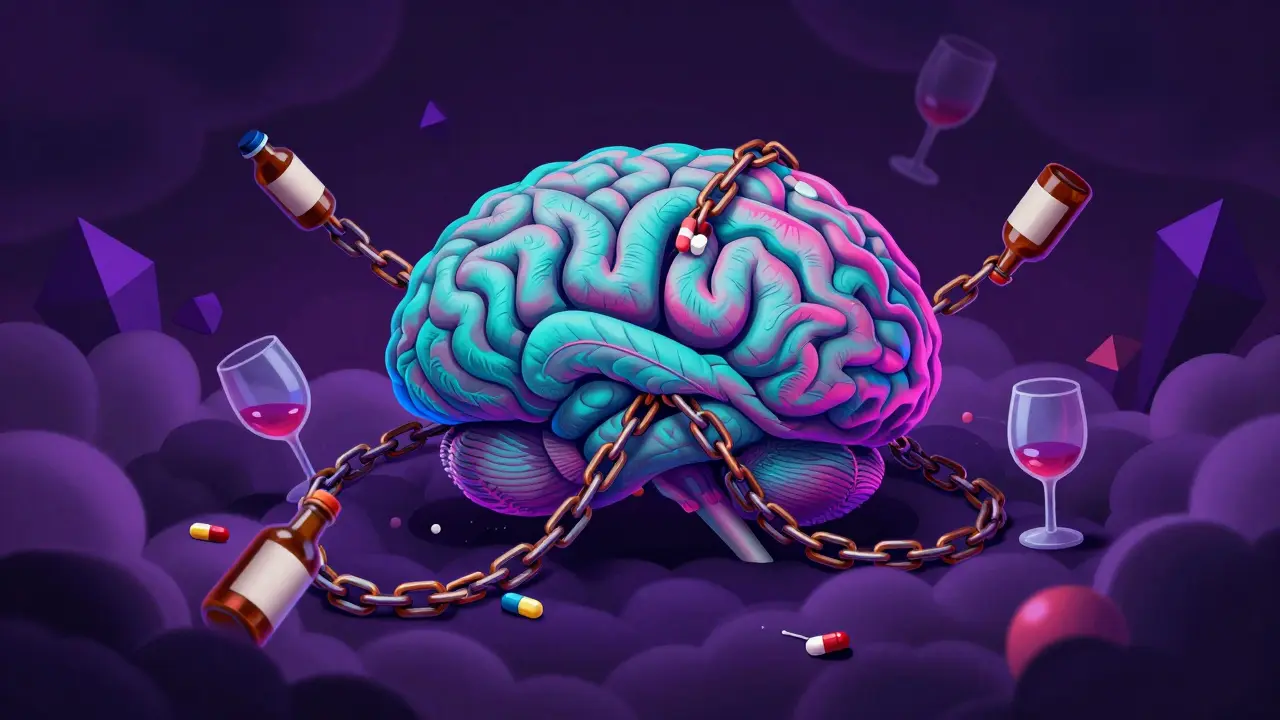
It might seem harmless to take a sleeping pill for insomnia and then have a glass of wine to help you relax. Or perhaps you’re prescribed an opioid for back pain and a benzodiazepine for anxiety, thinking they tackle different problems. But when these substances meet in your system, they don’t just add up-they multiply their effects. This phenomenon, known as central nervous system (CNS) depression, is one of the most dangerous drug interactions in modern medicine. It slows down the vital functions that keep you alive, potentially leading to respiratory failure, coma, or death.
You do not need to be a heavy user to face this risk. Even standard therapeutic doses can become lethal when combined with other depressants. Understanding how these drugs interact is not just medical trivia; it is a matter of life and safety for millions of people managing chronic pain, anxiety, or sleep disorders.
How CNS Depressants Slow Down Your Brain
To understand the danger, we first need to look at what these drugs actually do. CNS depressants are substances that reduce arousal and stimulation by slowing down communication between the brain and body. They work primarily by boosting the production of GABA (gamma-aminobutyric acid), a neurotransmitter that acts like a brake pedal for your brain activity.
This category includes several common medication types:
- Benzodiazepines: Such as alprazolam (Xanax) and diazepam (Valium), often used for anxiety.
- Opioids: Including oxycodone and hydrocodone, prescribed for moderate to severe pain.
- Barbiturates: Older sedatives now less commonly prescribed but still in use.
- Sleep Medications: Non-benzodiazepine hypnotics like zolpidem (Ambien).
- Alcohol: A widely available social lubricant that acts as a potent CNS depressant.
When you take one of these alone, your body manages the slowdown. But when you combine two or more, they create a cumulative effect. The U.S. Food and Drug Administration (FDA) issued a critical Drug Safety Communication in August 2016 warning about the 'serious risks and death' associated with combining opioids with benzodiazepines or other CNS depressants. This wasn't a minor advisory; it mandated updated boxed warnings on medication labels because the risk was so high.
The Physiology of Overdose: What Happens in Your Body
The danger isn't just feeling 'too sleepy.' It is a measurable, physiological collapse. When multiple CNS depressants hit your GABA receptors simultaneously, they produce additive or synergistic effects. Here is what happens inside your body during a dangerous interaction:
| Vital Sign / Function | Normal Range | Depressed State (Risk Zone) |
|---|---|---|
| Respiratory Rate | 12-20 breaths per minute | 4-8 breaths per minute |
| Oxygen Saturation | 95-100% | Below 85-90% (Hypoxia) |
| Blood Pressure (Systolic) | 90-120 mmHg | Drop of 15-25 mmHg |
| Pulse Rate | 60-100 beats per minute | Reduction of 10-20 bpm |
The most critical threat is respiratory depression. If your breathing slows to 4-6 breaths per minute, your oxygen saturation can drop below 85% within 15 to 20 minutes. This state, called hypoxia, means your brain is starving for oxygen. Permanent brain damage can occur after just 4 to 6 minutes of oxygen deprivation. Without immediate intervention, this leads to seizures, coma, and death.
Short-term symptoms often serve as warning signs before total collapse. These include dilated pupils, confusion, disorientation, dizziness, and significantly impaired judgment. In emergency departments, 68% of visits involving polypharmacy (the use of multiple medications) report confusion or disorientation as a primary symptom.
High-Risk Combinations You Must Avoid
Not all combinations are equally dangerous, but many are deadly. The FDA specifically highlights the combination of opioids and benzodiazepines as creating a 2.5- to 4.5-fold increased risk of overdose death compared to using opioids alone. This is the most studied and most lethal pairing.
However, other combinations carry significant risks:
- Opioids + Alcohol: A study of 1,848 chronic opioid therapy patients found that 12-13% reported concurrent alcohol use within two hours of taking their medication. This mix unpredictably spikes blood alcohol levels and deepens sedation.
- SSRIs + CNS Drugs: Research published in Frontiers in Psychiatry (2022) showed that Selective Serotonin Reuptake Inhibitors (SSRIs) can inhibit the clearance of other CNS drugs. About 69% of hospitalizations for major depression involve treatment with more than one drug, yet clinicians often lack clear guidance on these specific interactions.
- Multiple Benzodiazepines: Taking a long-acting benzo (like diazepam) alongside a short-acting one (like alprazolam) creates a rolling wave of sedation that never fully lifts, increasing fall risk and cognitive impairment.
A longitudinal cohort study in the Journal of the American Geriatrics Society found that combined use of CNS medications, especially at high doses, was associated with a 27% increased risk of clinically important cognitive decline. This decline was measured as a 5-point drop on the Modified Mini-Mental State Examination, a significant marker for dementia-like symptoms.
Who Is Most Vulnerable?
While anyone can suffer from CNS depression, certain groups face exponentially higher risks due to biology and lifestyle factors.
Elderly Patients As we age, our bodies metabolize drugs more slowly. Elderly patients on CNS-active polypharmacy experience 2.8 times more falls and 3.4 times more hip fractures than non-users. The American Geriatrics Society Beers Criteria lists 34 CNS-active medications that should be avoided in older adults precisely because of this high fall risk. Polypharmacy involving three or more CNS depressants increases the risk of fall-related hospitalization by 45%.
Patients with Substance Use Disorder History A study by Saunders et al. (2012) identified specific predictors for dangerous polypharmacy. Among chronic opioid users, 39% of those with a history of substance use disorder concurrently used sedatives, compared to only 29% of those without such a history. Female gender and a diagnosis of depression also increased the odds of risky co-use by 1.7 and 2.1 times, respectively.
Long-Term Users Chronic use brings its own set of dangers. Long-term consequences include chronic fatigue (reported in 45% of users), weight gain averaging 12-18 pounds over 12 months, and sexual dysfunction affecting 32% of users. More alarmingly, 19% of long-term users documented suicidal thoughts after six months of continuous polypharmacy.

Strategies for Safer Medication Management
If you are prescribed CNS depressants, you are not powerless. Clinical management strategies have proven effective in reducing harm. The key is proactive oversight rather than passive acceptance.
- Regular Medication Reviews: Experts recommend reviewing your medication list every 3-6 months. Deprescribing-the planned reduction or cessation of unnecessary meds-has shown a 32% reduction in fall risk and a 27% reduction in cognitive impairment over 12 months.
- Use Clinical Decision Support: Modern electronic health records often include alerts for dangerous combinations. Studies show that implementing Clinical Decision Support (CDS) systems incorporating the Beers Criteria can reduce inappropriate CNS polypharmacy by 28%. Ask your doctor if they use these tools.
- Choose Lower-Risk Alternatives: Replacing long-acting benzodiazepines with non-benzodiazepine alternatives has been shown to reduce emergency department visits by 19% in elderly patients. For pain, non-opioid options or physical therapy may offer safer long-term relief.
- Education and Adherence: Patient education programs focusing on CNS depressant risks have demonstrated a 23% improvement in medication adherence and a 31% reduction in dangerous combinations. Know exactly what you are taking and why.
Regulatory efforts are also catching up. The CDC’s 2016 guidelines recommending against co-prescribing opioids and benzodiazepines contributed to a 15.1% reduction in concurrent prescribing between 2014 and 2018. However, vigilance remains crucial, as 10.2% of patients receiving chronic opioid therapy continued to receive high-risk benzodiazepine co-prescriptions in 2020.
Recognizing the Emergency Signs
Time is tissue when it comes to CNS depression. If you suspect someone is experiencing an overdose or severe interaction, look for these red flags:
- Inability to wake the person up (unresponsiveness).
- Slow, shallow, or irregular breathing.
- Blue or purple tint to lips or fingernails (cyanosis).
- Clammy or cold skin.
- Gurgling or snoring sounds while unconscious.
If you see these signs, call emergency services immediately. Do not wait to see if they 'sleep it off.' Administer naloxone (Narcan) if available and if an opioid is suspected, as it can reverse opioid-induced respiratory depression. Keep the person on their side to prevent choking if they vomit.
Can I drink alcohol if I am taking prescription sleep aids?
No. Alcohol is a powerful CNS depressant. Combining it with sleep aids like zolpidem or benzodiazepines significantly increases the risk of respiratory depression, memory blackouts, and dangerous behaviors. Even small amounts of alcohol can amplify the sedative effects to lethal levels.
What is the difference between additive and synergistic effects?
An additive effect means the combined result equals the sum of the individual drugs (1 + 1 = 2). A synergistic effect means the drugs work together to create a result greater than the sum of their parts (1 + 1 = 3 or more). CNS depressants often act synergistically on GABA receptors, making the combination much more dangerous than simple addition would suggest.
Are natural supplements safe to mix with sedatives?
Not necessarily. Supplements like valerian root, kava, and melatonin can also have mild sedative properties. When combined with prescription CNS depressants, they can contribute to cumulative depression. Always disclose all supplements to your healthcare provider.
How does age affect the metabolism of sedatives?
As we age, liver function and kidney filtration slow down, causing drugs to stay in the body longer. Elderly patients are also more sensitive to the effects of CNS depressants, meaning lower doses can cause the same level of sedation and fall risk as higher doses in younger adults.
What is deprescribing?
Deprescribing is the medically supervised process of reducing or stopping medications that are no longer beneficial or pose more risk than benefit. For CNS depressants, gradual tapering under professional guidance can reduce fall risk by 32% and improve cognitive function.