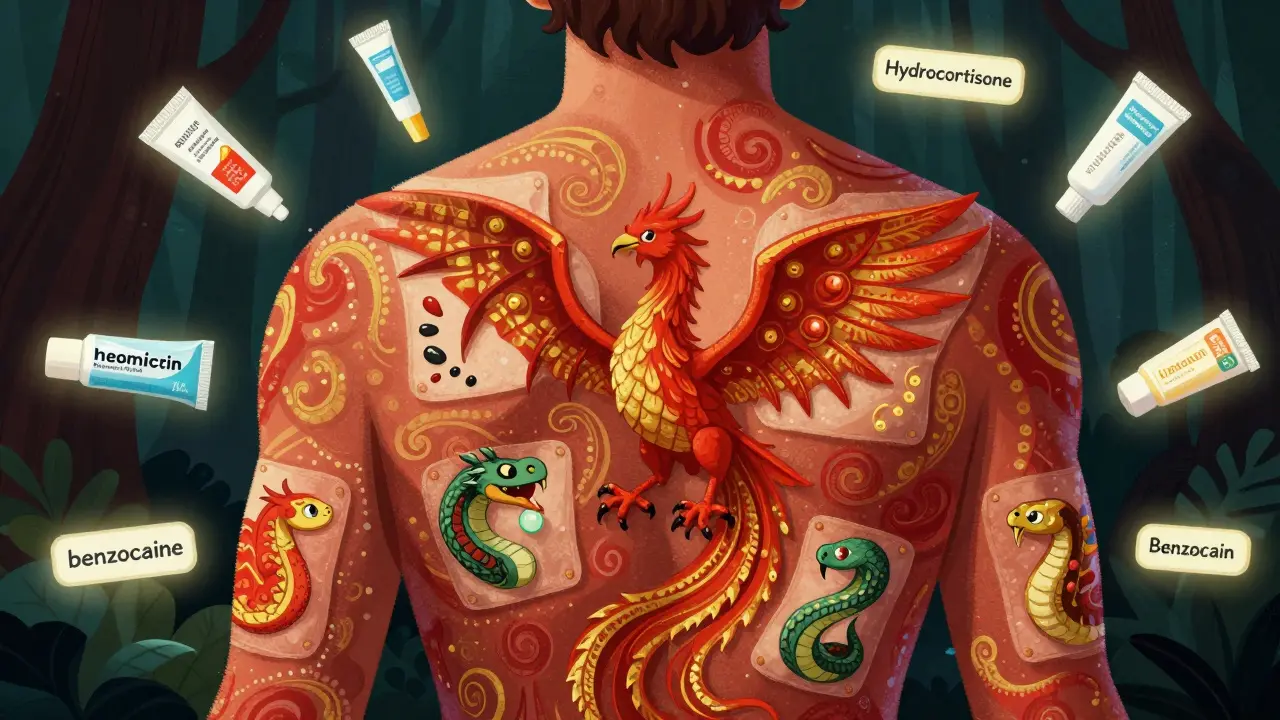
What Exactly Is a Topical Medication Allergy?
Most people think of allergies as sneezing from pollen or swelling after eating peanuts. But your skin can react too - and not always because of something you ate or breathed in. Topical medication allergies are a hidden problem that affects thousands of people every year. They show up as red, itchy, flaky, or blistered skin where you applied a cream, ointment, or lotion. This isn’t just a rash. It’s your immune system reacting to something in the medicine you thought was helping you.
When you use a topical drug like hydrocortisone cream for eczema or neomycin ointment for a cut, your skin can mistake the ingredients for invaders. That triggers a delayed reaction called allergic contact dermatitis. It doesn’t happen right away. It takes days - sometimes weeks - to show up. That’s why so many people think the medicine is working, until suddenly their skin gets worse. And that’s when the confusion begins.
How It’s Different From Irritation
Not every skin reaction from a topical product is an allergy. In fact, most aren’t. About 15 to 20% of people who think they’re allergic to a cream are actually dealing with irritant contact dermatitis. That’s when a substance - like alcohol, fragrance, or even too much scrubbing - physically damages your skin barrier. It burns, stings, or peels, but it’s not your immune system fighting back.
Allergic contact dermatitis is different. It’s a Type IV hypersensitivity reaction. That means your T-cells remember the allergen from a past exposure. The next time you touch it, even in tiny amounts, your body launches a slow, stubborn attack. That’s why the rash appears 24 to 72 hours after contact. It’s not a quick burn. It’s a delayed response that lingers for weeks if you keep using the product.
What Medicines Cause the Most Allergies?
It’s not just the big-name drugs. The most common culprits are things you’d never suspect.
- Antibiotics: Neomycin (found in 9.9% of positive patch tests), bacitracin, and gentamicin are top offenders. They’re in first-aid ointments, wound dressings, and even some moisturizers.
- Corticosteroids: Ironically, the very creams used to treat rashes - like hydrocortisone, triamcinolone, and clobetasol - can cause allergic reactions in 0.5% to 2.2% of users. This creates a vicious cycle: you apply steroid cream for eczema, your skin gets worse, so you apply more - and the reaction grows.
- Local anesthetics: Benzocaine, used in numbing sprays and teething gels, triggers reactions in over 2% of patch-tested patients.
- NSAIDs: Ketoprofen, common in pain-relief gels for muscles and joints, is another frequent allergen.
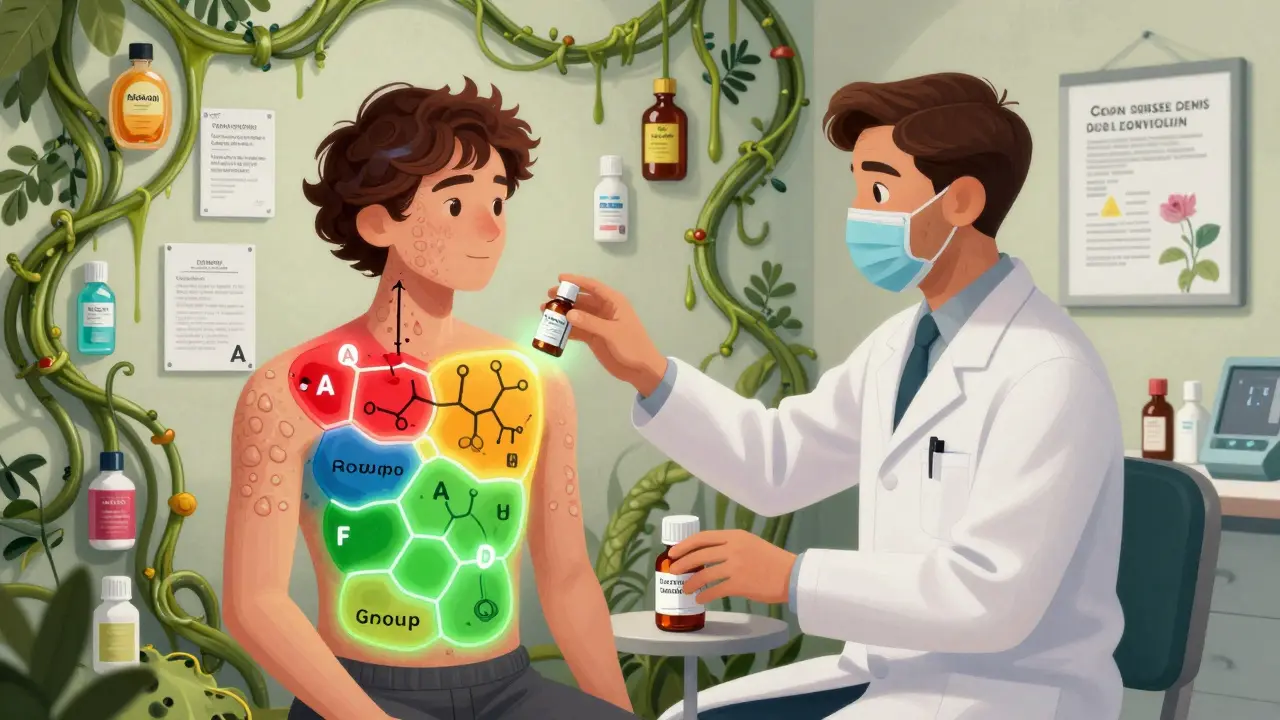
What’s worse? Cross-reactivity. If you’re allergic to one steroid, you might react to others in the same chemical group. But here’s the good news: steroids are grouped into six classes (A through F). If you’re allergic to Group A (like hydrocortisone), you can often safely use Group B (triamcinolone) or Group D (methylprednisolone aceponate). That knowledge can save you months of trial and error.
How Doctors Diagnose It
There’s no blood test for topical medication allergies. The gold standard is patch testing. It’s simple, but it takes time.
You’ll have small amounts of 30 to 80 common allergens - including antibiotics, steroids, and preservatives - taped to your back. You wear them for 48 hours. Then, your doctor checks for redness or swelling. They check again at 72 hours and sometimes even at 96 hours. Why? Because allergic reactions take time to show up.
When done right, patch testing finds the cause in about 70% of cases. But here’s the problem: most doctors don’t do it. A 2023 review in Dermatology Times found that 40 to 60% of topical medication allergies are missed at first because doctors assume the treatment can’t be the problem. That’s why people often see three or more doctors before getting the right diagnosis.
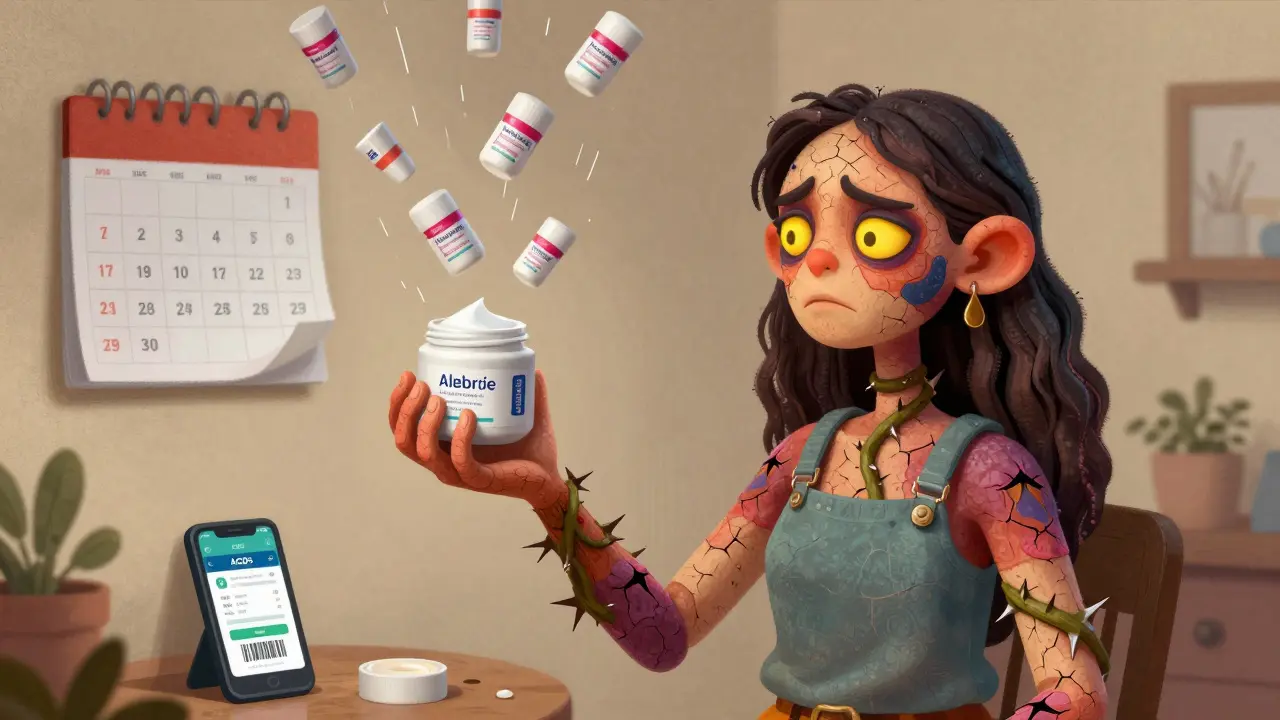
How to Treat It
The most important step? Stop using the allergen. That’s it. No fancy creams. No magic pills. Just avoidance.
Once you stop the trigger, your skin starts healing. But you still need help managing the reaction.
- Mild cases: Over-the-counter hydrocortisone 0.5% or 1% can help. But if you don’t see improvement in 7 days, you need a stronger prescription.
- Moderate to severe cases: Doctors usually prescribe mid- to high-potency steroids like triamcinolone 0.1% or clobetasol 0.05%. These work fast - most people feel relief within 12 to 24 hours.
- Sensitive areas: Don’t use strong steroids on your face, eyelids, or groin. Use low-potency ones like desonide instead. High-potency steroids used too long on thin skin can cause atrophy - skin that thins out, tears easily, or shows stretch marks. This happens in up to 35% of people who misuse them.
- Large areas: If more than 20% of your body is affected, you’ll need oral prednisone. A 2- to 3-week course, with a slow taper, clears up 85% of severe cases.
For people who can’t use steroids - or who’ve had bad reactions - topical calcineurin inhibitors like pimecrolimus (Elidel) and tacrolimus (Protopic) are options. They’re not FDA-approved for contact dermatitis, but dermatologists use them off-label all the time. About 60 to 70% of patients see improvement. The catch? They can cause a burning sensation when first applied. That usually fades after a few days.
What You Can Do at Home
Diagnosis is only half the battle. Avoidance is the rest.
Start by listing every product you apply to your skin - even the ones you think are harmless. That includes:
- Prescription creams and ointments
- Over-the-counter pain gels
- Antibiotic ointments
- Moisturizers
- Shampoos and conditioners
- Makeup and sunscreen
Bring all of them to your dermatologist. About 30% of allergens are hidden in products you don’t consider “medications.”
Use the American Contact Dermatitis Society’s free mobile app. It lets you scan product barcodes and checks them against a database of 3,500+ allergens. Thousands of patients have found hidden triggers this way.
Also, avoid fragrances, alcohol, and harsh soaps. They damage your skin barrier and make you more likely to react to anything else.
Why This Problem Is Getting Worse
Topical medication allergies are rising. Patch testing in the U.S. has increased 27% since 2018. Why? Two big reasons.
First, more people are treating chronic skin conditions at home. Eczema, psoriasis, and rosacea patients use multiple topical products daily. More exposure = more chances for allergy.
Second, the FDA now requires full ingredient lists on prescription topical products. That’s helped cut misdiagnosis by 15%. But many people still don’t read labels. They assume “natural” or “hypoallergenic” means safe. It doesn’t.
And then there’s the rise of online health advice. People buy products based on Instagram posts or Reddit threads - without knowing what’s in them. A 2023 Reddit thread about steroid allergies had 147 comments. Two-thirds of people said their condition got worse before they figured out the cause.
What’s Next in Treatment
The field is changing fast. Researchers are developing new tools to predict who’s at risk before they even use a product.
Johns Hopkins researchers found that diluting topical medications 10-fold during patch testing reduces false negatives from 32% to just 9%. That’s huge for people with damaged skin barriers.
The American Academy of Dermatology launched a national registry in January 2023. It’s already tracked over 1,200 cases - uncovering new cross-reactivity patterns between biologics and traditional topical drugs.
And there’s promising work on barrier creams that block allergens from penetrating the skin. Clinical trials show they reduce allergen absorption by 73%. Three products are in Phase 3 trials as of mid-2023.
The NIH has also invested $4.7 million in molecular diagnostics that could one day predict allergy risk from a simple skin swab - potentially preventing 150,000 cases a year.
Real Stories, Real Impact
One woman in Ohio used hydrocortisone cream for years for her eczema. Her skin kept flaring. She tried stronger creams. Nothing worked. She went to five doctors. Each said, “You’re not using enough.” Finally, a dermatologist did patch testing. She was allergic to hydrocortisone. Within two weeks of stopping it - and switching to tacrolimus - her skin cleared. She didn’t need steroids anymore.
A nurse in Texas developed red, cracked hands after applying antibacterial ointment before every shift. She thought it was from washing her hands too much. Patch testing revealed an allergy to neomycin. She switched to a non-antibiotic hand cream. Her hands healed in six weeks.
These aren’t rare cases. A 2022 National Eczema Association survey found that 57% of people with topical medication allergies had to change treatments at least once. It took them an average of 8.3 weeks to find something that worked.
Key Takeaways
- Topical medication allergies cause delayed, persistent rashes - not immediate burns.
- Neomycin, hydrocortisone, benzocaine, and ketoprofen are the most common triggers.
- Patch testing is the only reliable way to diagnose these allergies - and most doctors don’t do it.
- Stopping the allergen is the #1 treatment. Medication alone won’t fix it.
- Always bring all your topical products to your dermatologist - even lotions and sunscreens.
- Use the ACDS app to scan products for hidden allergens.
- Don’t use strong steroids on your face, eyelids, or groin. Use low-potency ones instead.
- If you’ve had a rash for over six months without a clear cause, ask for patch testing.
Frequently Asked Questions
Can I develop a topical medication allergy after using a product for years?
Yes. Allergic contact dermatitis is a delayed reaction that builds over time. You can use a product safely for months or even years, then suddenly develop an allergy. Your immune system just needs one more exposure to recognize the ingredient as a threat. This is why many people are surprised when their long-used cream suddenly causes a rash.
Is it safe to use steroid creams if I’m allergic to one?
It depends. Steroids are grouped into six chemical classes. If you’re allergic to one in Group A (like hydrocortisone), you may still safely use steroids in Group B, D, or F. Your dermatologist can test which groups you react to and recommend alternatives. Don’t guess - get tested. Up to 65% of patients avoid unnecessary restrictions when they know their specific cross-reactivity profile.
Can I outgrow a topical medication allergy?
Once you develop a true allergic contact dermatitis reaction, you usually don’t outgrow it. The immune system remembers the allergen for life. Avoidance is lifelong. Even small exposures - like touching a product that contains the allergen - can trigger a reaction. That’s why identifying the trigger early is so important.
Why do some people react to the same cream while others don’t?
Genetics, skin barrier health, and exposure frequency all play a role. People with eczema or damaged skin are more likely to develop allergies because their skin lets allergens penetrate more easily. Also, repeated use increases risk. A nurse applying antibiotic ointment 10 times a day has a much higher chance than someone who uses it once a month.
Are natural or organic topical products safer?
No. Many natural products contain plant extracts like tea tree oil, lanolin, or balsam of Peru - all common allergens. “Natural” doesn’t mean non-allergenic. In fact, some botanical ingredients are more likely to trigger reactions than synthetic ones. Always check ingredient lists, even on organic labels.
How long does it take for the rash to go away after stopping the allergen?
It varies. Itching usually improves within 48 to 72 hours after stopping the allergen. Full healing takes 2 to 4 weeks. If the rash doesn’t improve after 4 weeks, you may still be exposed to the allergen - or there’s another trigger. Keep a product diary and review everything you apply to your skin.
Can I use over-the-counter hydrocortisone if I have a steroid allergy?
If you’re allergic to hydrocortisone, even the 1% OTC version can trigger a reaction. Don’t assume it’s safe just because it’s weak. Patch testing will tell you exactly which steroids you react to. If you’re allergic to hydrocortisone, switch to a non-steroid option like tacrolimus or pimecrolimus - but only under a doctor’s guidance.
What should I do if I think I have a topical medication allergy?
Stop using the product immediately. Take photos of the rash. Write down every topical product you’ve used in the last 30 days - including brand names and ingredients. Schedule an appointment with a dermatologist who does patch testing. Bring all your products with you. Don’t wait. The longer you’re exposed, the harder it is to heal.
Chris porto
December 19, 2025 AT 13:00It's wild how your body can turn something meant to heal into something that hurts. We assume meds are safe because they're prescribed or sold over the counter. But skin doesn't care about labels.
William Liu
December 21, 2025 AT 09:19jessica .
December 22, 2025 AT 19:56Ryan van Leent
December 23, 2025 AT 06:07Glen Arreglo
December 24, 2025 AT 20:59shivam seo
December 25, 2025 AT 23:07Andrew Kelly
December 27, 2025 AT 14:12Isabel Rábago
December 28, 2025 AT 01:53Mike Rengifo
December 29, 2025 AT 08:11