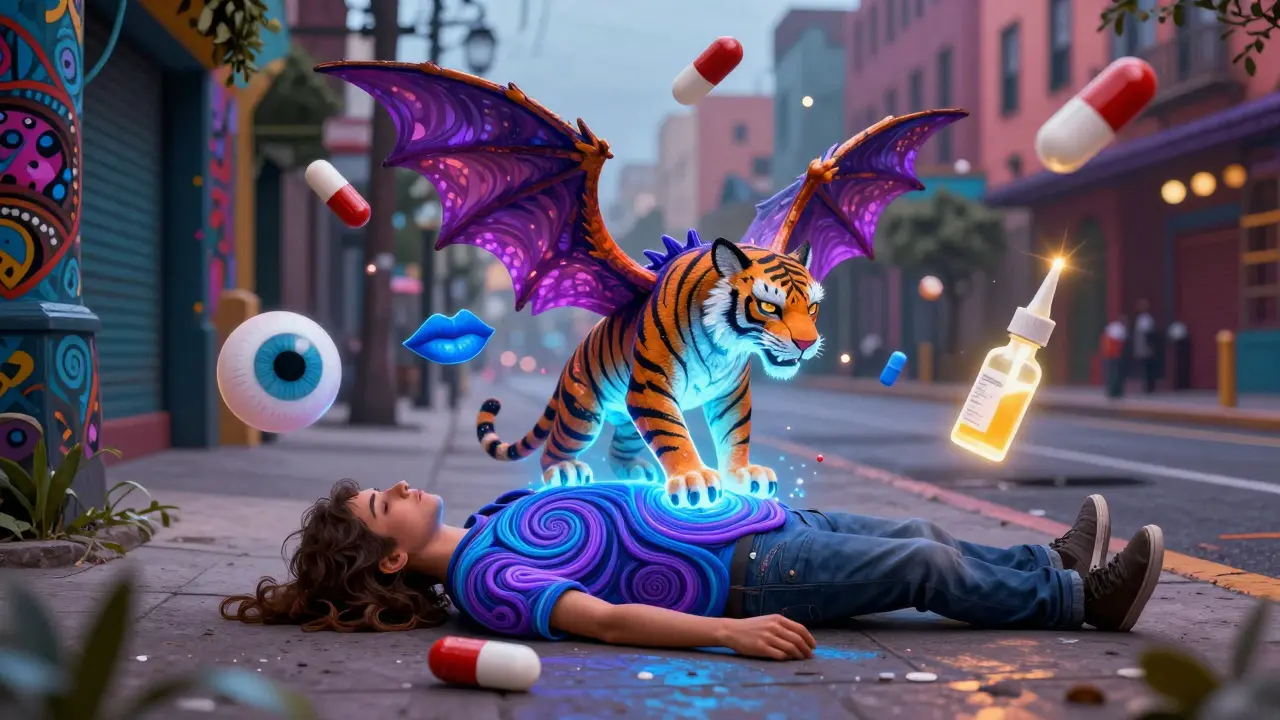
Opioid Overdose Response Simulator
Emergency Scenario
Unresponsive
Slow breathing
Pinpoint pupils
This is a simulation. In real emergencies, act immediately.
Your Response
Step 1: Check for Response
Step 2: Check Breathing
Step 3: Check Pupils
Emergency Response
Every day in the U.S., 187 people die from drug overdoses. Most of them involve opioids - whether it’s prescription painkillers, heroin, or, more often now, fentanyl hidden in pills that look like Xanax or oxycodone. The scary part? You don’t need to be a drug user to be near someone who overdoses. It could be a friend, a family member, or even a stranger on the street. The good news? You can learn to recognize the signs, act fast, and save a life - even if you’ve never held a syringe or a nasal spray before.
What Happens During an Opioid Overdose
Opioids, including oxycodone, hydrocodone, fentanyl, and heroin, work by binding to receptors in your brain that control pain and pleasure. But they also shut down the part of your brain that tells you to breathe. When too much of the drug is in your system, your breathing slows down, then stops. Your body isn’t getting oxygen. Your lips turn blue. Your skin gets cold and clammy. Your brain starts to die - within minutes. This isn’t just a risk for people with addiction. Someone taking prescribed pain meds might accidentally take too much. Someone might not know their pill contains fentanyl. Someone might mix opioids with alcohol or benzodiazepines. All of it can turn deadly in seconds.How to Spot an Opioid Overdose
You don’t need medical training to recognize an overdose. Look for these three key signs, often called the “opioid overdose triad”:- Unresponsive or unconscious - Shake the person’s shoulder. Shout their name. Try to wake them up. If they don’t respond at all, it’s a red flag.
- Slow, shallow, or stopped breathing - Watch their chest. Listen for breaths. You might hear gurgling, snoring, or choking sounds. That’s not sleep - that’s drowning on your own saliva because your airway is blocked and you’re not breathing.
- Pinpoint pupils - Shine a light in their eyes. If their pupils are tiny, like pinpricks, it’s a classic sign. But don’t wait for this - some overdoses don’t show it.
- Blue, purple, or gray lips and fingernails
- Cold, clammy skin
- Limp body - they’ll feel like a ragdoll
- Slow heartbeat or no pulse
What to Do Immediately: The 3-Step Emergency Response
Time is everything. Brain damage starts after just 4 to 6 minutes without oxygen. Here’s what to do - in order:- Call 911 right away. Even if you’re not sure, call. Say: “I think someone is overdosing on opioids.” Give your location. Stay on the line. The dispatcher can guide you while you act.
- Give naloxone if you have it. Naloxone (brand name Narcan) reverses opioid overdoses. It’s safe, easy to use, and won’t hurt someone who hasn’t taken opioids. Most naloxone today comes as a nasal spray. Tilt the person’s head back. Spray half the dose into one nostril, half into the other. You don’t need to insert it deep - just spray and let gravity do the work.
- Stay with them until help arrives. Naloxone wears off in 30 to 90 minutes. Opioids stay in the body longer. The person could stop breathing again. Keep checking their breathing. If they stop, start CPR. Push hard and fast on the center of the chest - at least 100 pushes per minute. Don’t stop unless they start breathing on their own or paramedics take over.
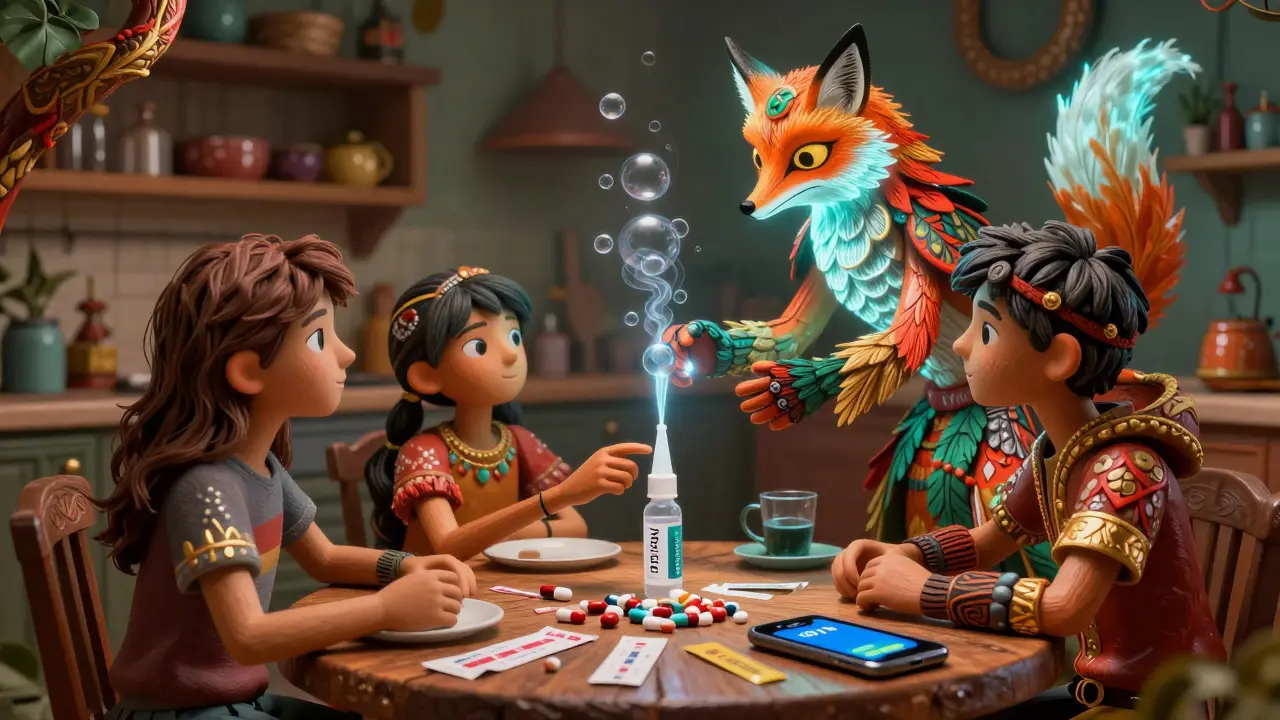
How Naloxone Works - And Why It’s Safe
Naloxone is a drug that kicks opioids off the brain’s receptors. It doesn’t feel good. It doesn’t get you high. It doesn’t work on alcohol, cocaine, or meth. It only reverses opioids. And it’s safe - even if you give it to someone who didn’t take opioids, it won’t hurt them. It’s not a cure. It’s a bridge. It buys you time until emergency help arrives. That’s why you must still call 911 - even after giving naloxone. Naloxone is now available without a prescription in 49 states. You can get it at most pharmacies for $25 to $50 for a two-dose kit. Many community centers, health clinics, and harm reduction programs give it out for free. If you know someone who uses opioids - or even if you just want to be prepared - get a kit. Keep one in your car, your purse, your backpack.What Comes After the Overdose
Once the person is breathing and the paramedics arrive, they’re not out of danger. Opioid overdose can cause lung injury, heart problems, or brain damage from lack of oxygen. They need to go to the hospital, even if they feel fine. After the emergency, they need more than medical care - they need support. Many people who survive an overdose don’t want to use drugs again. But without treatment, the risk of another overdose is high. Medication-assisted treatment (MAT) with drugs like buprenorphine or methadone can cut overdose risk by half. Counseling, peer support, and mental health care are just as important. Don’t assume they’re “just a junkie.” Addiction is a medical condition. Relapse is common. Compassion saves lives - not judgment.
Fentanyl Is Changing Everything
In 2023, fentanyl was involved in over 73,000 overdose deaths in the U.S. - more than any other drug. Fentanyl is 50 to 100 times stronger than morphine. A dose the size of a few grains of salt can kill. And it’s not just in heroin anymore. Fake pills, cocaine, meth, and even marijuana are being laced with it - often without the user’s knowledge. That’s why fentanyl test strips matter. They cost less than a dollar each. You rub a tiny bit of the drug on the strip. It changes color if fentanyl is present. It won’t make the drug safe, but it lets someone decide whether to use it - or not. Many harm reduction groups hand out test strips along with naloxone. If you’re helping someone who uses drugs, give them both.You Don’t Need to Be a Hero - Just Ready
You don’t need to be a doctor, a nurse, or a first responder to save a life. You just need to know what to look for and what to do. Get a naloxone kit. Keep it where you can find it. Teach the people around you how to use it. Practice with a trainer spray (many pharmacies give them out for free). Talk about it - not in hushed tones, but openly. Opioid overdoses aren’t rare. They’re happening in living rooms, in parking lots, in college dorms. And they’re preventable - if we act.Can naloxone hurt someone who didn’t take opioids?
No. Naloxone only works on opioid receptors. If someone hasn’t taken opioids, it has no effect. It won’t make them sick, won’t cause an allergic reaction, and won’t be harmful in any way. If you’re unsure whether someone overdosed on opioids, give naloxone anyway - it’s safe and could save their life.
How long does naloxone last, and why might someone need more than one dose?
Naloxone usually works within 2 to 5 minutes and lasts 30 to 90 minutes. But many opioids, especially fentanyl, stay in the body much longer. That means the person can stop breathing again once naloxone wears off. That’s why you need to call 911 and stay with them - and why having two doses on hand is critical. If they stop breathing again, give the second dose right away.
Can I give naloxone to a child or teenager?
Yes. Naloxone is safe for people of all ages, including children and teens. The dose doesn’t change based on weight for nasal spray versions. If a child or teen is unresponsive and showing signs of opioid overdose, give naloxone immediately. Don’t wait for an adult or for EMS to arrive.
What if I’m afraid to call 911 because I’m using drugs too?
Good Samaritan laws protect people who call for help during an overdose in 48 states and D.C. These laws shield you from arrest or prosecution for minor drug possession if you’re seeking help for someone else. Your priority is saving a life - not legal consequences. Calling 911 is the most important thing you can do.
Where can I get naloxone for free?
Many community health centers, harm reduction organizations, pharmacies, and local health departments offer naloxone for free. You can also order it online from trusted groups like Next Distro or Harm Reduction Therapeutics. Some states even mail it to your home. Ask your pharmacist - they’re required to give you information on how to get it.
Do I need training to use naloxone?
No. Naloxone nasal spray is designed for anyone to use - no training required. The instructions are printed right on the box. But if you want to feel more confident, many free online videos and local workshops teach you how. Just watch a 5-minute tutorial. Practice with a trainer spray. Being ready is better than hoping you’ll figure it out in a crisis.
Jody Kennedy
December 28, 2025 AT 04:20Just got my naloxone kit from the pharmacy today-$30, no prescription, and the pharmacist gave me a free demo spray. I keep it in my glovebox now. If you’re reading this, do the same. It’s not about being brave-it’s about being ready.
christian ebongue
December 30, 2025 AT 04:16lol i used to think naloxone was some fancy med lab drug. turns out its just a nasal spray that costs less than my morning coffee. why dont we hand these out at every gas station? 🤔
jesse chen
December 31, 2025 AT 12:12I’ve trained five friends how to use Narcan. One of them saved their brother last month. It’s not complicated. It’s not heroic. It’s just… human. If you’re not sure, give it anyway. It won’t hurt. It might save them.
Joanne Smith
December 31, 2025 AT 15:52So fentanyl’s in everything now? My cousin thought she was buying Xanax on Snapchat. Got a pill that killed her in 90 seconds. We found the test strip in her pocket-unused. Why don’t we teach this in high school? Not just ‘just say no’-but ‘here’s how to not die’?
Prasanthi Kontemukkala
December 31, 2025 AT 17:05In my village in India, we don’t have naloxone-but we have neighbors who sit with the sick until help comes. Maybe the real medicine isn’t the spray-it’s not leaving someone alone when they’re drowning. We all need that kind of courage.
Alex Ragen
January 1, 2026 AT 02:59Let’s be honest: this article reads like a corporate PSA written by a nonprofit intern with a thesaurus. Naloxone is not a ‘bridge’-it’s a band-aid on a gunshot wound. The real problem? We treat addiction like a moral failure instead of a neurochemical disaster. But hey-nice bullet points.
Lori Anne Franklin
January 2, 2026 AT 15:24my friend overdosed last year. we didnt have naloxone. i did chest compressions for 12 mins until the ambulance came. he lived. but i still wake up thinking about how his skin felt cold. dont wait. get the spray. please.
Bryan Woods
January 3, 2026 AT 08:25While the article provides a comprehensive overview of opioid overdose response protocols, I would suggest integrating data from the CDC’s 2023 surveillance report to contextualize regional disparities in naloxone accessibility. Additionally, the psychological burden on bystanders who administer naloxone remains underdiscussed.
Ryan Cheng
January 4, 2026 AT 09:45My mom used to say, ‘If you see someone falling, don’t ask if they’re drunk-just catch them.’ That’s naloxone. You don’t need to understand addiction to save a life. Just know how to spray. Keep one in your bag. Teach your kids. That’s all.
wendy parrales fong
January 5, 2026 AT 09:22we are all just trying to get through the day. someone might be high. someone might be hurting. someone might be scared. if you can help, help. no judgment. just breath. just hands. just now.
Jeanette Jeffrey
January 5, 2026 AT 14:46Ugh. Another ‘you can save a life’ guilt trip. People choose to do drugs. If they die, it’s not your fault. Stop pretending you’re some kind of hero with a nasal spray. Get a life.
Shreyash Gupta
January 6, 2026 AT 03:31bro i just tried a fentanyl strip on my weed… it turned blue 😱 so i threw it out. but then i thought… what if i just took a tiny hit? like… one puff? 🤔
Ellie Stretshberry
January 6, 2026 AT 05:08i got the spray last week after my cousin overdosed. i keep it next to my toothbrush. dont know if ill ever use it. but if i do… i wont be scared anymore
Sarah Holmes
January 7, 2026 AT 19:31It is profoundly disingenuous to frame this as a matter of individual preparedness when systemic failures-deinstitutionalization, pharmaceutical lobbying, the criminalization of addiction, and the complete absence of universal healthcare-have created this epidemic in the first place. You cannot spray your way out of a societal collapse. Naloxone is a temporary palliative for a terminal diagnosis of American capitalism. The real tragedy is not that people die from overdoses-it is that we have normalized this as inevitable. We have been conditioned to applaud the bystander who administers a life-saving device, while refusing to dismantle the structures that make such devices necessary in the first place. Compassion without justice is performative. And performative compassion is the opiate of the privileged.